

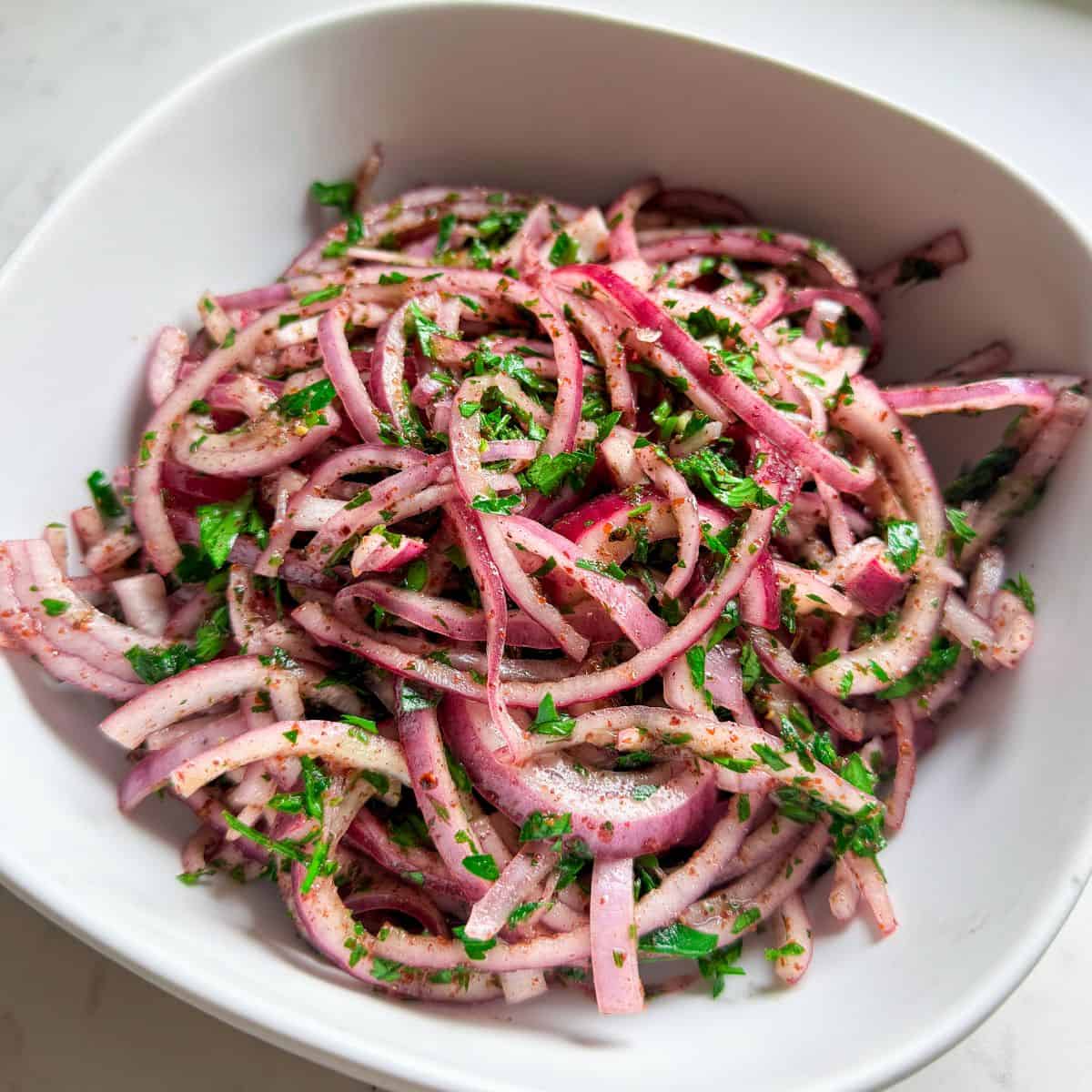
If you have a jar of sumac in your spice cabinet and you haven't made this salad yet, tonight is the night. This sumac salad is one of those recipes that sounds like a side dish but functions like a secret weapon. It goes on kabobs. It goes in pita. It replaces coleslaw on a burger. It brightens up a bowl of rice pilaf. And it takes about ten minutes to make.
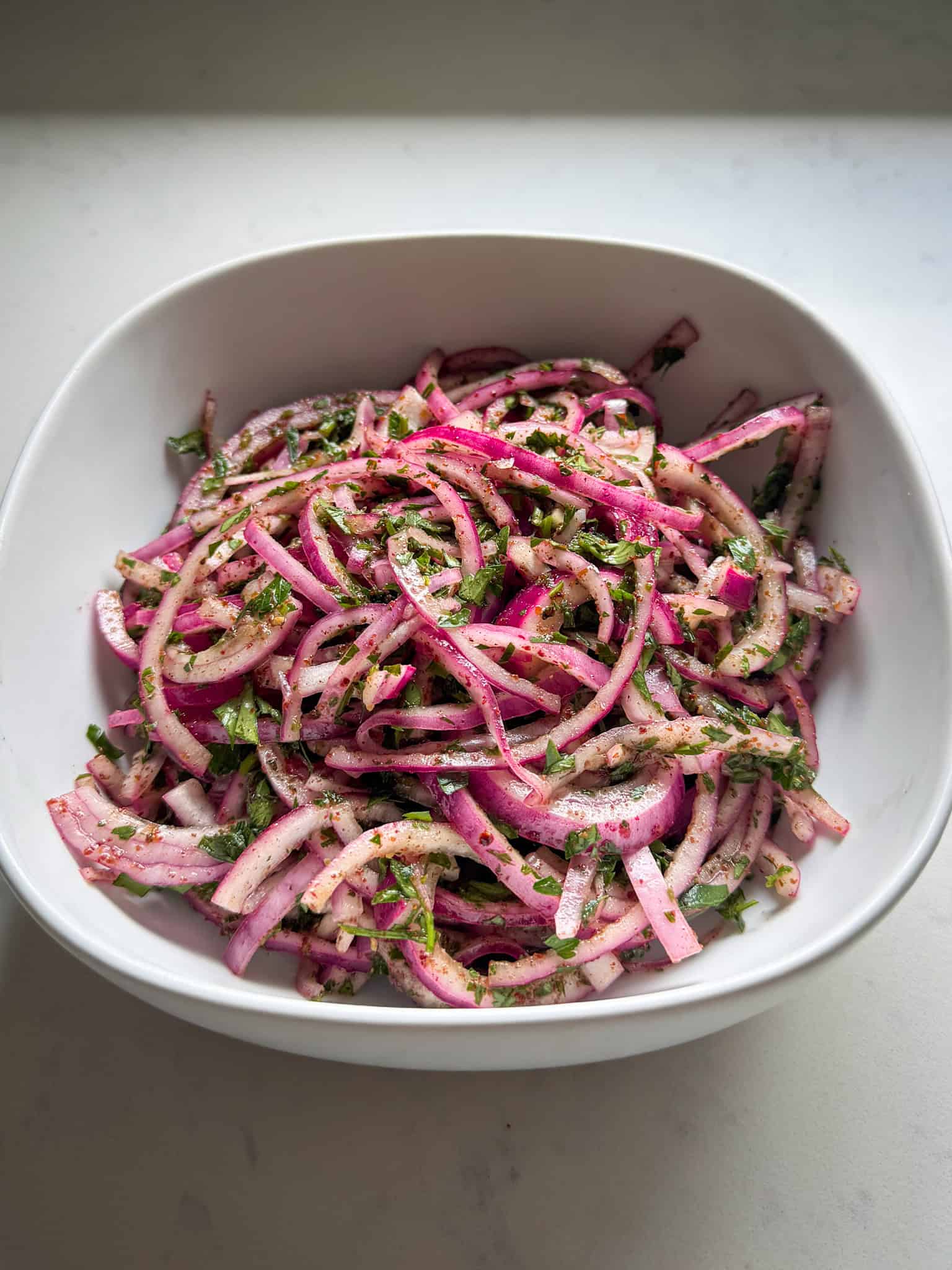
The base is simple: thinly sliced red onion, ground sumac, fresh lemon juice, olive oil, and parsley. That's it. But from there, you can build it any direction you want, and I'll show you how.
This salad has deep roots in Armenian, Syrian, and Levantine cooking, where sumac has been used as a souring agent for thousands of years. Growing up Armenian American, sumac wasn't a trend in our house. It was just the thing that went on the onions. It took me a long time to realize not everyone knew that.
You Might Also Love
If you loved this sumac salad, here are a few recipes from the Mom's Dinner Bell table that pair beautifully with it or share the same roots:
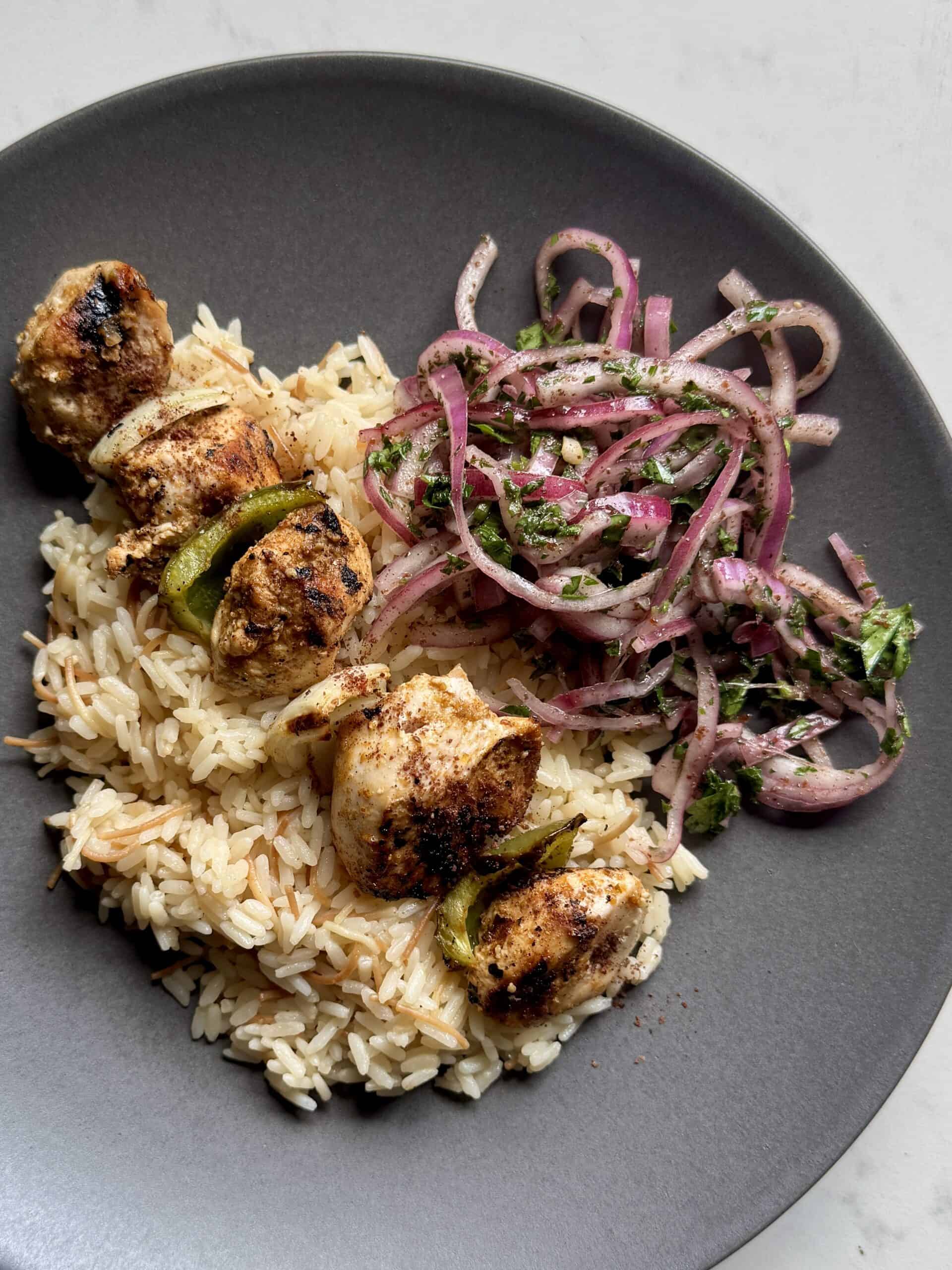
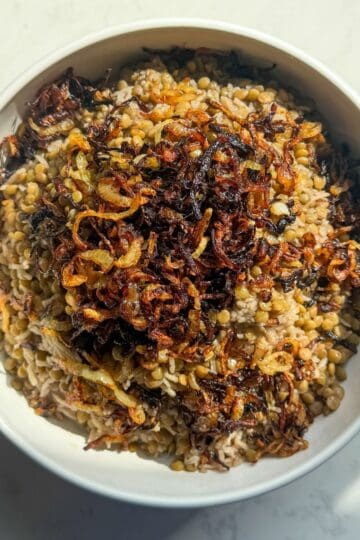
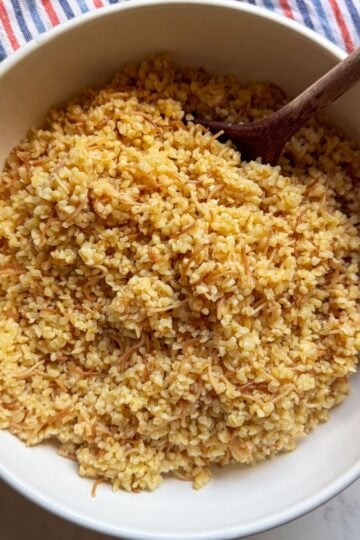
- Armenian Rice Pilaf — The classic base for this whole meal. Spoon the sumac salad right over the top and the pilaf comes alive. This is the combination my family has been making forever.
- Aleppo Pepper Chicken and Potatoes — Bold, smoky, deeply savory. The bright tartness of this sumac salad is exactly the contrast that plate needs.
- Chicken Doner Kabob — Pile the sumac salad inside the pita right alongside the doner meat. This is the move.
- Sarma (Stuffed Grape Leaves) — Another dish from the same Armenian and Levantine table. If sumac salad is the bright acid on the plate, sarma is the rich, slow-cooked heart of the meal. They belong together.
- Fattoush — Another salad built around sumac and lemon. If you're already reaching for the sumac jar, fattoush is the next natural place to use it.
- Lahmajoun — Armenian flatbread that begs for something fresh and tart alongside it. This sumac salad is it.
Jump to:
- You Might Also Love
- What Is Sumac and Why Does It Make Everything Better?
- The History Behind This Sumac Salad
- Sumac Salad Ingredients
- How to Make Sumac Salad
- Ways to Use This Sumac Salad
- Sumac Salad Variations
- Equipment You'll Need for This Sumac Salad
- How to Store Sumac Salad
- Tips for the Best Sumac Salad
- What makes this sumac salad a healthy choice?
- Frequently Asked Questions About Sumac Salad
- Other Salads
- Main Dishes
What Is Sumac and Why Does It Make Everything Better?
Sumac is a deep burgundy-red spice ground from the dried berries of the Rhus coriaria plant, which grows across the Mediterranean and Middle East. It tastes bright and tart, almost like lemon but earthier, with none of the sharpness of vinegar. Before lemons were widely available across the region, sumac was the primary souring agent in cooking.
In Armenian cooking, sumac shows up on onions, in salad dressings, over grilled meats, and sprinkled on flatbread. It's the spice that does what lemon does but stays on the food. It clings to the onion. It stains everything a beautiful deep pink. And it has been doing this for a very long time.
If you've seen it in the spice aisle and weren't sure what to do with it, this sumac salad is the best possible place to start.
The History Behind This Sumac Salad
Sumac onion salad is a dish with roots across the entire Eastern Mediterranean, from Turkey through Lebanon, Syria, and into the Armenian highlands. For centuries it was the standard accompaniment to grilled meat, because the tartness of sumac cuts through fat the way a bright salad dressing cuts through richness.
In Armenian cooking specifically, this combination appears in Kessab, the small Armenian community on the northwestern coast of Syria where my family is from. Kessab sits on the Mediterranean, and the food there reflects that geography: olive oil, lemon, fresh herbs, and sumac on everything. The flavors are bold and simple and built to feed people who worked hard and gathered around a common table.
My great-grandmother came from Kessab. She was a nurse who helped care for orphans after the 1909 attack on the village, received her nursing degree from the University of Beirut, and came to America through Ellis Island in the 1910s. She brought her food with her. And somewhere in that lineage is this salad, the tart onions and the deep red spice and the olive oil, served next to whatever was coming off the fire.
It's not a complicated dish. It was never meant to be. It was meant to be made quickly, with what you had, to make everything else at the table taste better. That's still exactly what it does.
Sumac Salad Ingredients
Here's what you need for the base:
- 2 large red onions, halved and very thinly sliced
- 2 tablespoons ground sumac
- 2 tablespoons fresh lemon juice
- 2 tablespoons olive oil
- ½ teaspoon salt
- ¼ cup fresh flat-leaf parsley, roughly chopped
Optional add-ins (all delicious, none required):
- 1 Persian or English cucumber, thinly sliced
- 1 cup cherry tomatoes, halved
- ½ green bell pepper, thinly sliced
- A handful of thinly sliced radishes
See recipe card for quantities.
How to Make Sumac Salad
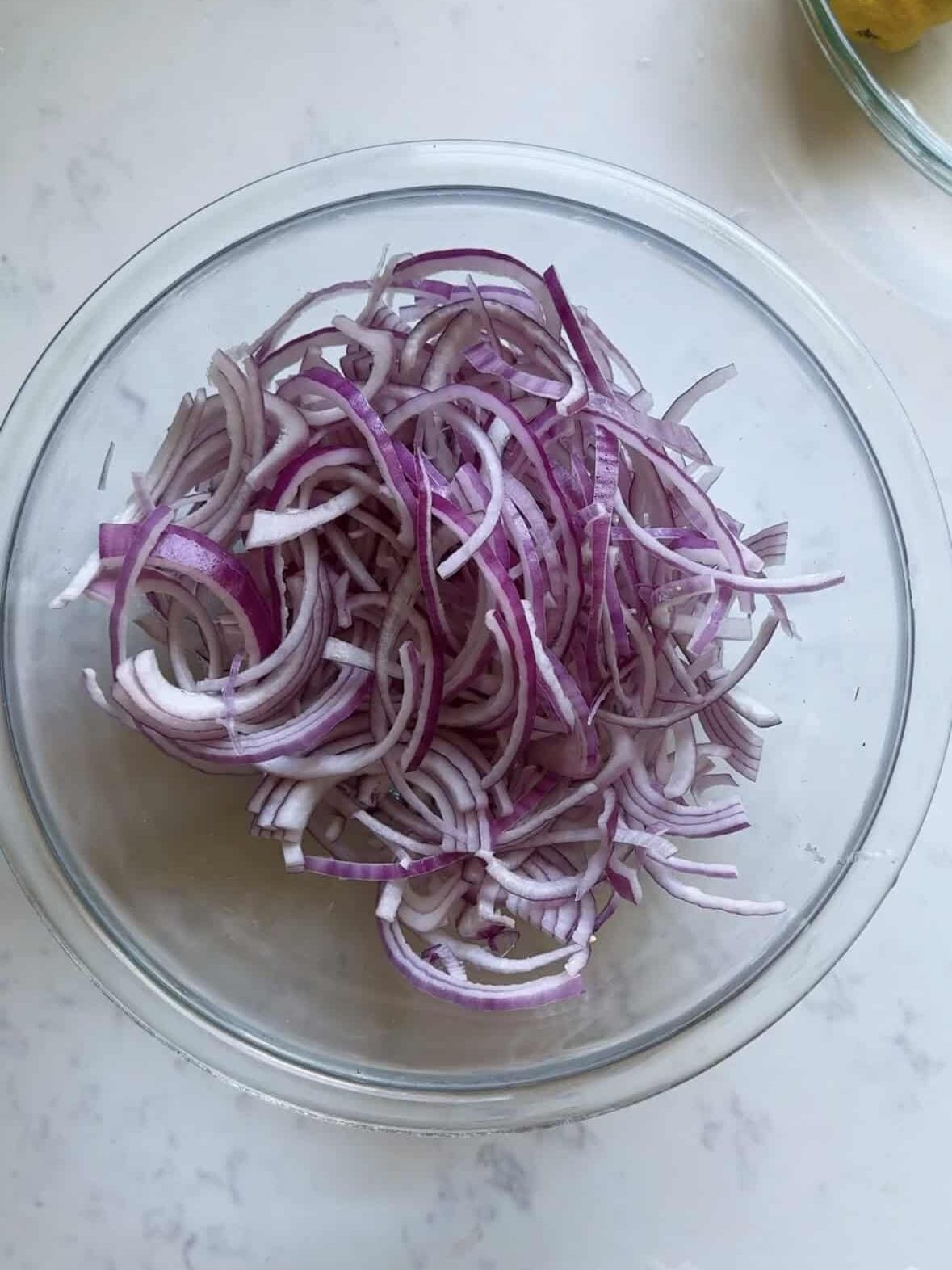
- Step 1: Slice the onions thin. Salt and massage. Add the salt and work the onions with your hands for about 30 seconds. This draws out moisture and softens the sharp bite of raw onion. Let them sit for 5 minutes.
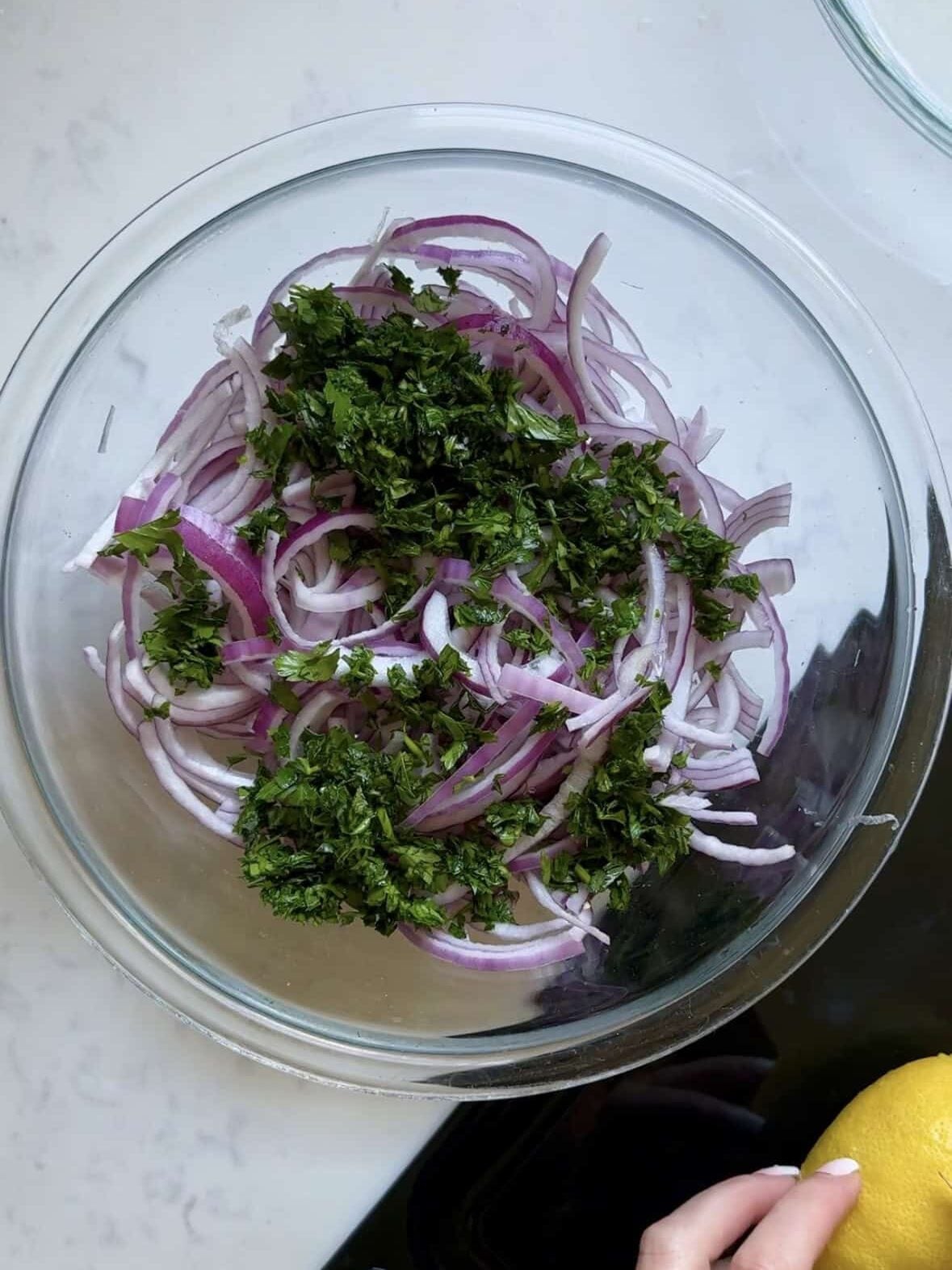
- Step 2: After the onions and salt sat together add the parsley.
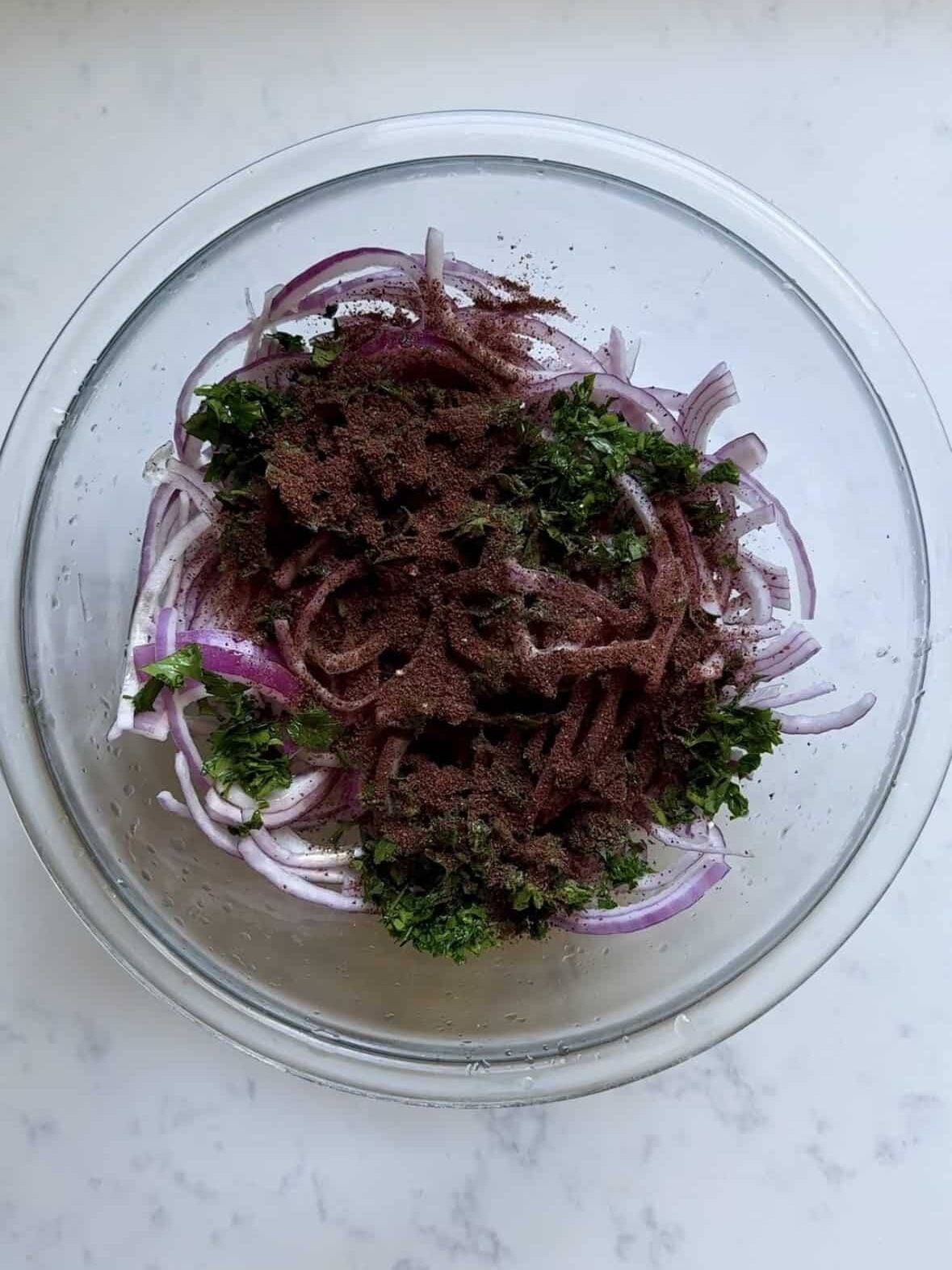
- Step 3: Dress the salad with the rest of the ingredients.
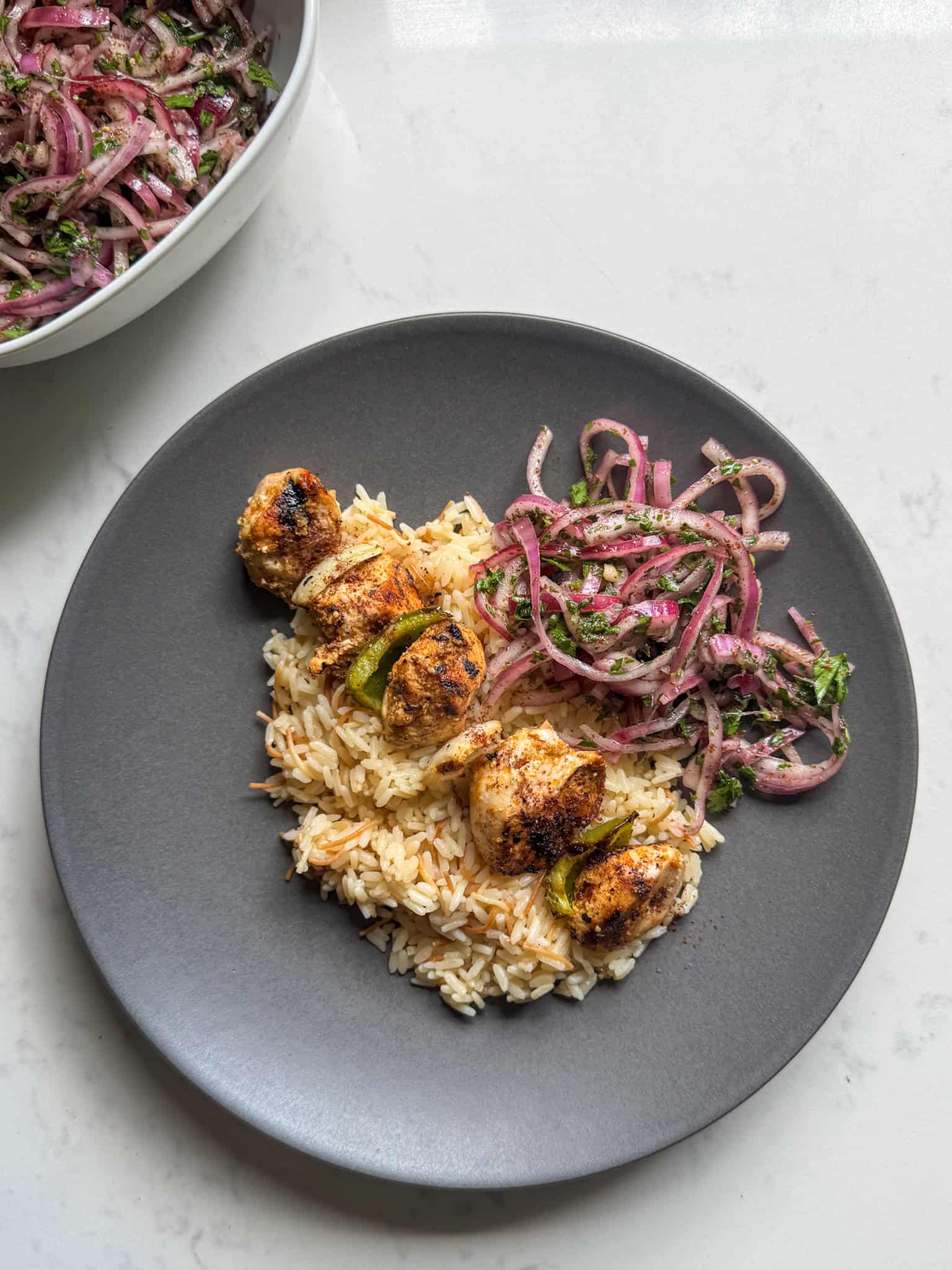
- Step 4: Rest. Let the dressed salad sit for at least 10 minutes. The longer it sits, the more the onions mellow and absorb the dressing.
Ways to Use This Sumac Salad
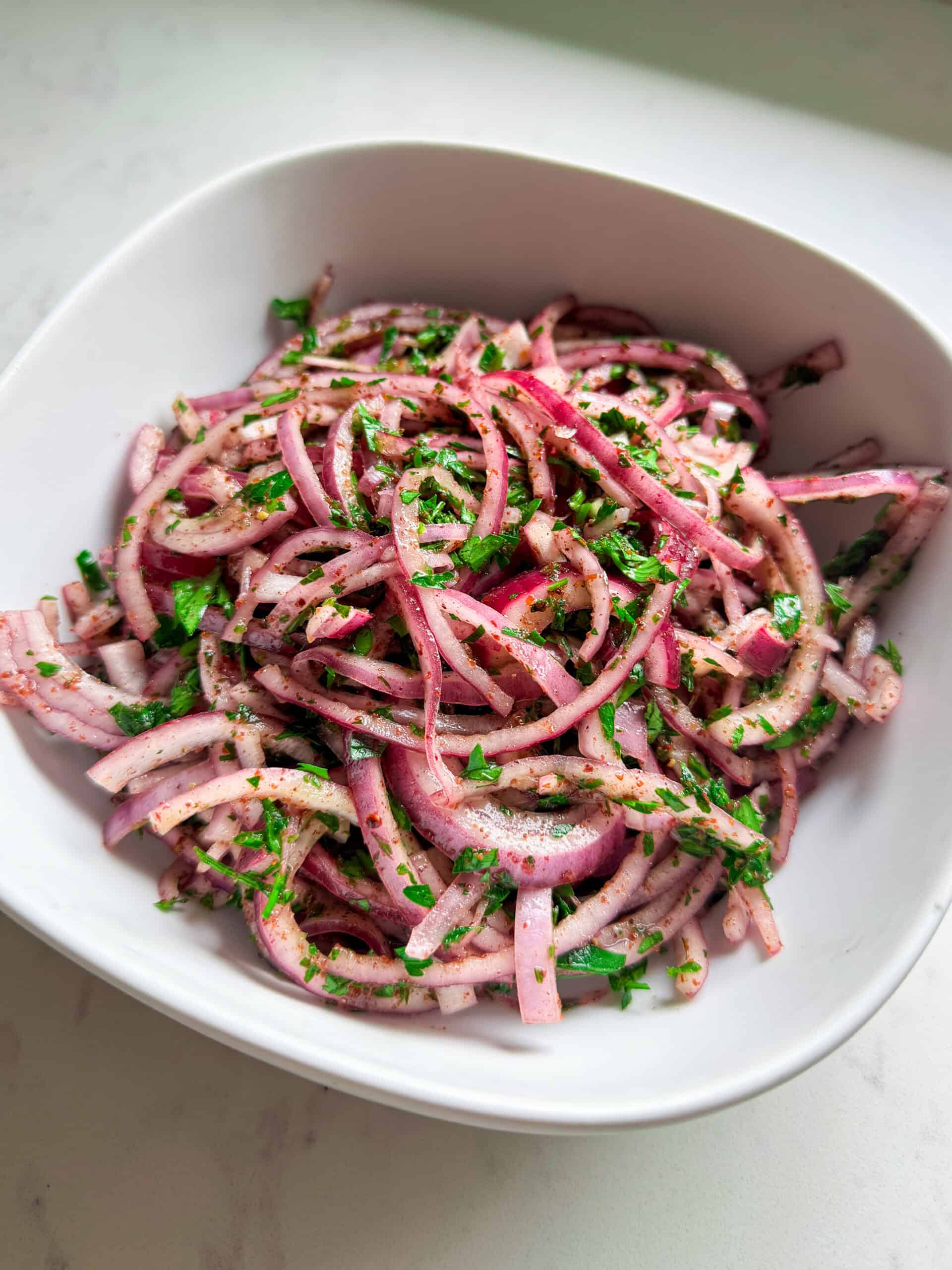
This is where sumac salad goes from a side dish to a weekly staple:
- Next to chicken kabobs or any grilled meat (its original purpose)
- Spooned over Armenian Rice Pilaf to add brightness and color
- Stuffed inside pita with Chicken Doner Kabob meat
- Used as a slaw on burgers in place of traditional coleslaw
- Rolled into wraps with grilled chicken, feta, and hummus
- Served alongside Aleppo Pepper Chicken and Potatoes
- Piled on a shawarma plate with rice and yogurt sauce
Think of it like coleslaw with a passport. Anywhere you'd use a bright, acidic crunch, this works.
Sumac Salad Variations
This is a salad built for customizing. The sumac onion base is the foundation, and everything else is just what you feel like adding.
Sumac Cucumber Salad
Add thinly sliced Persian cucumbers to the base. Cool, crisp, very Mediterranean. This is the version that works best as a standalone side salad or alongside grilled fish.
Armenian Sumac Salad
The Armenian version of this salad often includes sumac, red onion, fresh parsley, and sometimes tomato or pomegranate seeds. It's served alongside kebabs.
Mediterranean Salad with Sumac Dressing
Use the sumac-lemon-olive oil mixture as a dressing over a chopped salad of cucumber, tomato, green pepper, and parsley. It becomes a full Mediterranean salad with sumac dressing, no additional dressing needed. This is the version that travels best to potlucks.
Equipment You'll Need for This Sumac Salad
This is a no-cook recipe, which means no special equipment required. Here's what you'll want to have on hand:
- Large mixing bowl — big enough to toss the onions without making a mess. Glass or ceramic works best so the sumac doesn't stain.
- Sharp knife and cutting board — the thinner the onion slices, the better this salad eats. A sharp knife makes that much easier.
- Mandoline slicer (optional) — if you want paper-thin onions, a mandoline gets you there in half the time. Not required, but great to have.
- Citrus juicer — fresh lemon juice makes a real difference here. A simple handheld juicer works perfectly.
- Airtight container — for storing leftovers. Glass is best since sumac can stain plastic.
How to Store Sumac Salad
One of the best things about this salad is that it actually gets better as it sits. The onions continue to mellow and absorb the sumac dressing over time.
Refrigerate
Store leftover sumac salad in an airtight glass container in the refrigerator for up to 2 days. The onions will soften slightly but the flavor deepens beautifully. Give it a quick toss before serving and taste for lemon or sumac.
Can You Make It Ahead?
Yes, and you should. This salad is best made 20 to 30 minutes before you need it, and it's even better if you make it a few hours ahead. The onions need time to fully absorb the dressing and mellow out. If you're serving it for a dinner party or alongside kabobs, make it first and let it sit while everything else comes together.
Can You Freeze Sumac Salad?
No. Freezing is not recommended. The onions will turn mushy when thawed and the fresh parsley won't survive the process. This is a make-fresh recipe, but since it takes ten minutes, that's never a problem.
A Note on Containers
Sumac will stain plastic containers. Use glass whenever possible for storage, both to protect your containers and to keep the flavor clean.
Tips for the Best Sumac Salad
- Slice the onions as thin as you can. A mandoline works great if you have one.
- Don't skip the salt-and-rest step. It's what makes the onion mellow enough to eat raw.
- Good sumac matters here. Use a fresh, fragrant sumac, not one that's been in the back of the cabinet for three years.
- This salad is better after it sits. Make it 20-30 minutes before you need it if you can.
- It keeps in the fridge for a day. The onions get even more mellow overnight.
What makes this sumac salad a healthy choice?
- Red onions are rich in quercetin, a natural anti-inflammatory antioxidant.
- Sumac is high in antioxidants and has been used in traditional medicine for centuries.
- Olive oil provides heart-healthy monounsaturated fats.
- Fresh parsley is a good source of Vitamin K and Vitamin C.
- The whole salad is naturally low in calories, sugar, and sodium.
Whether you're eating Mediterranean-style, following a Whole30, or just trying to get more vegetables on the plate, this sumac salad earns its spot.
Frequently Asked Questions About Sumac Salad
Sumac brings a tart, citrusy brightness to a salad without adding any liquid. The flavor starts with a tangy punch similar to lemon, then settles into a deeper earthy, almost savory note. It's bold but it doesn't overpower. Instead, it lifts everything around it and adds a beautiful deep red color.
The sumac salad dressing in this recipe is made with ground sumac, fresh lemon juice, and olive oil, plus a pinch of salt. That's it. It's technically a vinaigrette, but without the vinegar. The sumac does all the acidic work on its own. You can drizzle this dressing over any salad, grain bowl, or roasted vegetables.
Essentially, yes. Sumac onion salad and Armenian onion salad refer to the same dish with slightly different regional names. The base is always red onion, sumac, and parsley. The Armenian version sometimes adds pomegranate molasses or Aleppo pepper. The Levantine versions tend to be simpler, leaning heavily on the sumac and lemon. This recipe is closest to the Levantine and Armenian tradition.
Red onions are strongly recommended here. They have a natural sharpness that softens beautifully under the sumac and lemon, and their color combines with the sumac to create that stunning deep burgundy the salad is known for. White or yellow onions will work in a pinch, but you'll lose a lot of the visual impact and some of the flavor complexity.
Sumac is easier to find than ever. Look for it at Middle Eastern or Mediterranean grocery stores, Whole Foods, Trader Joe's, or online. Make sure you're buying culinary sumac (Rhus coriaria), not a blend that includes added salt. The label should list sumac as the only ingredient. A good sumac should be deep burgundy-red and smell faintly fruity and tart.
Yes to both. This sumac salad is naturally vegan, gluten-free, and dairy-free. It's also low in calories, making it a great addition to a wide range of diets and dietary needs.
The lemon juice adds brightness and works with the sumac to soften the onions. If you don't have lemon, a small splash of red wine vinegar can substitute. The flavor won't be identical, but it will still work. What you shouldn't skip is the sumac itself. That's non-negotiable.
Other Salads
Looking for other recipes like this Sumac Salad? Try these:


Main Dishes
These are my favorite dishes to serve with Sumac Salad:

Sumac Salad
Ingredients
- 2 large red onions halved and very thinly sliced
- 2 tablespoons ground sumac
- 2 tablespoons fresh lemon juice
- 2 tablespoons olive oil
- ½ teaspoon salt
- ¼ cup fresh flat-leaf parsley roughly chopped
- Optional add-ins:
- 1 Persian or English cucumber thinly sliced
- 1 cup cherry tomatoes halved
- ½ green bell pepper thinly sliced
Instructions
- Place sliced onions in a bowl. Sprinkle with salt and massage with your hands for 30 seconds. Let sit 5 minutes.
- Add sumac, lemon juice, and olive oil. Toss well to coat. The onions will turn deep pink.
- Let the dressed salad rest for at least 10 minutes.
- Fold in parsley and any optional vegetables. Taste and adjust lemon or sumac. Serve.
Notes
This salad is better after it rests. Make it 20-30 minutes ahead if you can.
Leftovers keep in the fridge for one day. The onions mellow beautifully overnight.
Sumac quality matters. Use a fresh, fragrant sumac for best results.



Comments
No Comments