

The First Time I Had Shawarma
I didn't grow up eating shawarma at home. This is not a recipe that was passed down to me. It's one I'm passing forward.
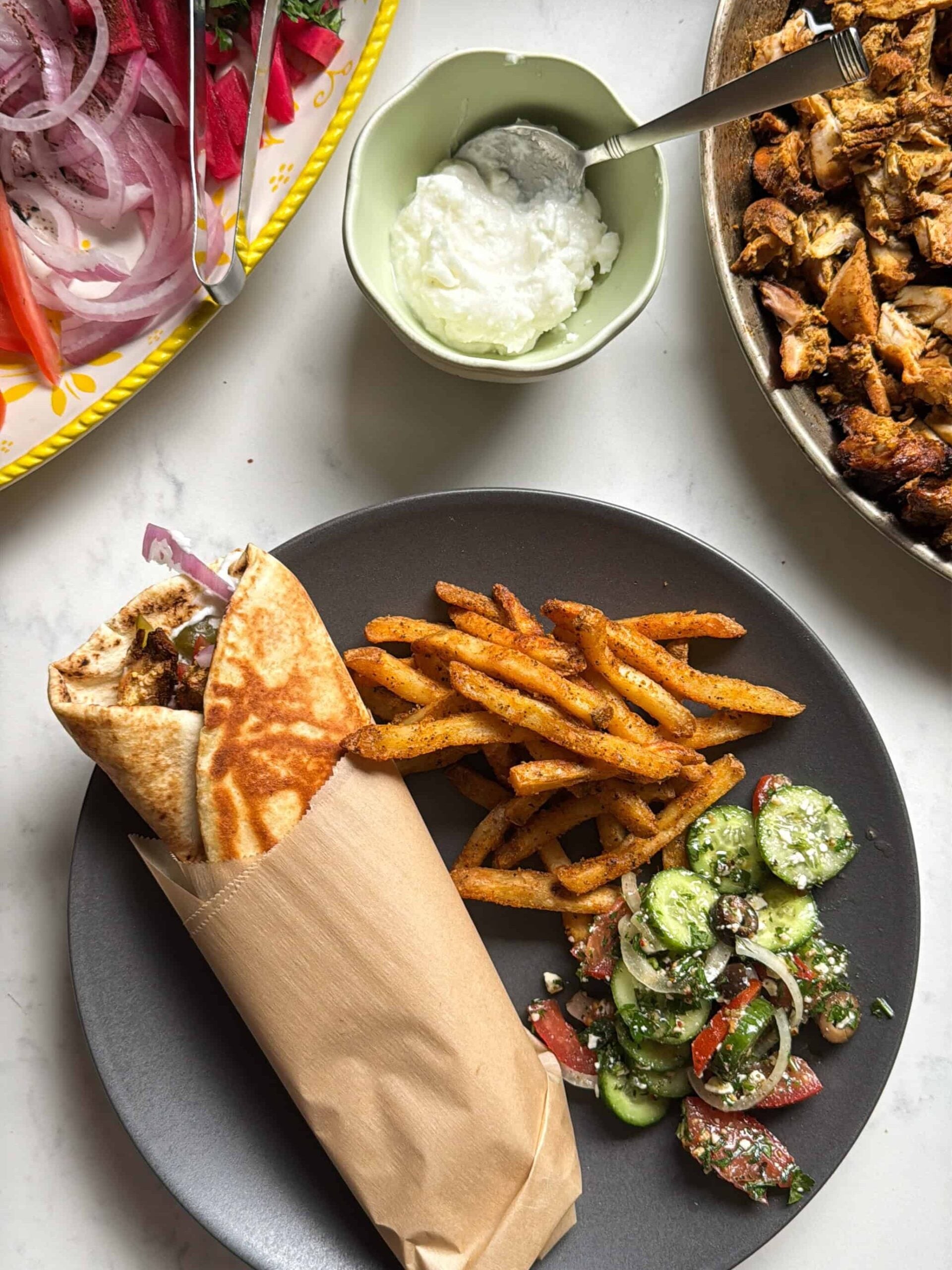
The first time I had a shawarma sandwich, I was probably out to eat with my mom at a Lebanese restaurant. Growing up Armenian American in southeast Michigan, the Lebanese community was woven into our everyday life. The food, the hospitality, the way they fed people, it shaped me just as much as my own heritage did. Shawarma wasn't something I learned from my grandmother. But it became mine anyway. That's how food works when you grow up inside a community rather than just beside it.
So while this recipe isn't Armenian by origin, I consider it part of who I am as an Armenian person. It's a dish I now make for my own family, and one I hope my kids will make someday without even thinking twice about it. That's the whole point.
Jump to:
- The First Time I Had Shawarma
- What Is Shawarma? A Little History Worth Knowing
- What You Need Before You Start
- Chicken Breast or Chicken Thighs: Which Should You Use?
- Ingredients for the Shawarma Marinade
- Overnight vs. Quick Marinade
- How to Make Oven Baked Chicken Shawarma on a Vertical Spit
- How to Make Chicken Shawarma Wraps
- Chicken Shawarma Bowl
- Substitutions and Variations
- How Much Does This Cost to Make?
- How do I store leftover shawarma?
- Chicken Shawarma Frequently Asked Questions
- Middle Eastern Inspired Recipes to Try!
- Side Dishes
What Is Shawarma? A Little History Worth Knowing
Shawarma is a Levantine street food made from marinated meat, stacked on a vertical spit, and slow-roasted until the outside is caramelized and the inside is tender and juicy. It's typically served shaved thin, either stuffed into flatbread or over rice, loaded with pickles, fresh vegetables, and garlic or tahini sauce.
The vertical spit technique has roots that run through the Eastern Mediterranean. The word shawarma itself comes from a word meaning "to turn," which makes sense once you've watched meat slowly rotating on a skewer. Over time, Levantine cooks in Syria, Lebanon, Palestine, and Jordan made it entirely their own, developing distinct spice blends, serving styles, and regional traditions. Syrian cooks in particular helped shape the sandwich-style version we know today, serving shaved meat in flatbread with pickles, garlic sauce, and fresh herbs.
Today shawarma is one of the most recognized street foods in the world. Lebanese and Syrian diaspora communities brought it everywhere, and every community that adopted it put their own stamp on it. That's what food does. It travels, it transforms, and somehow it still carries its roots.
What You Need Before You Start
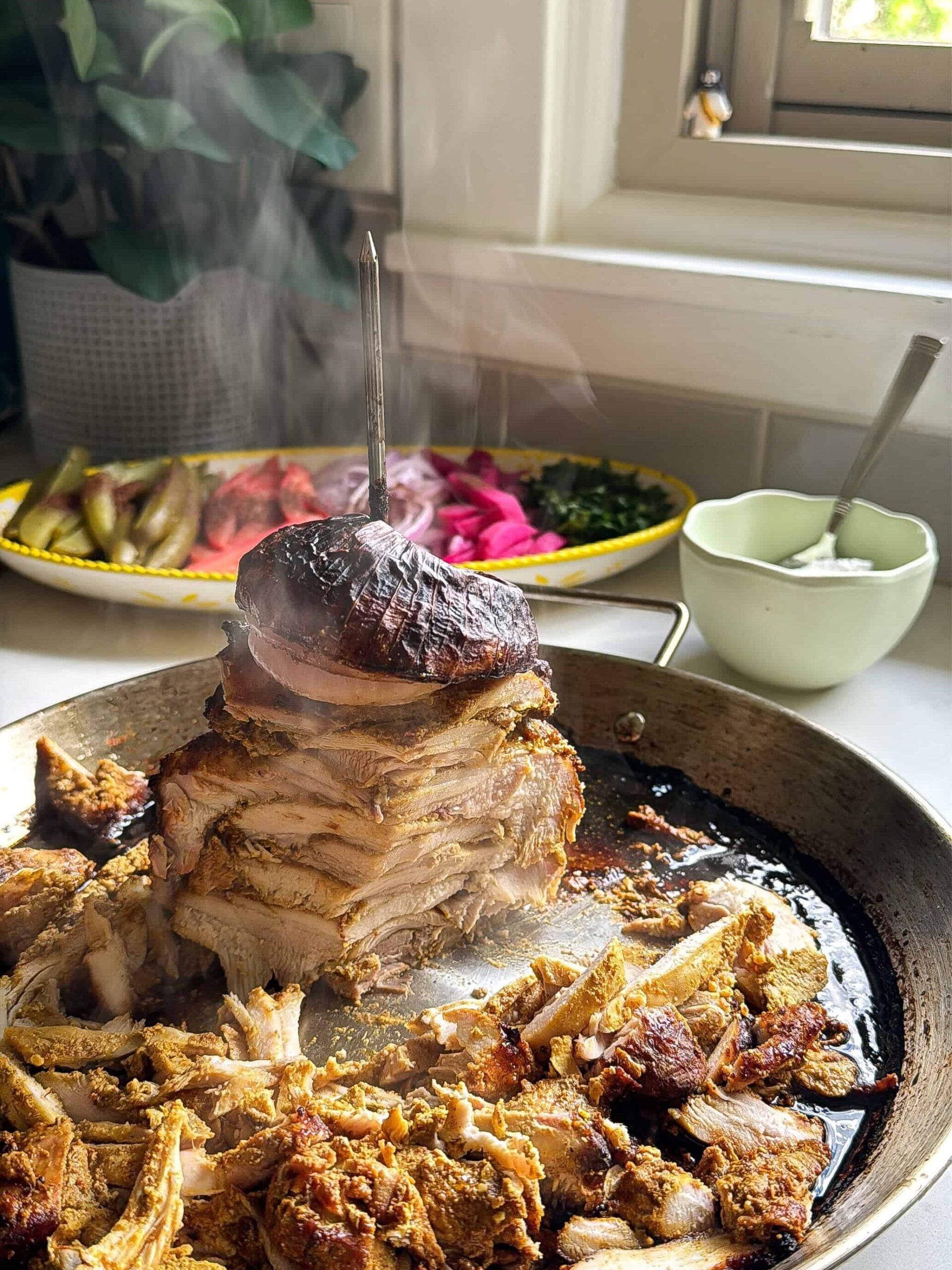
The Vertical Spit Pan
This recipe requires a vertical spit pan, which is a vertical metal skewer attached to a base pan that catches the drippings while the meat roasts upright in your oven. You do not need a commercial rotisserie or any fancy equipment. I will link the exact one I use below. If you don't have one yet, this is the one investment this recipe truly needs.
A Meat Thermometer
I cannot stress this enough: you absolutely cannot make this recipe without a meat thermometer. This is not optional. The meat needs to reach 165 degrees Fahrenheit internally, measured as close to the vertical spit as possible since that's the last part to cook through. Without a thermometer, there is no way to know when it's done. Do not guess.
Chicken Breast or Chicken Thighs: Which Should You Use?
I've made this with both chicken breasts and chicken thighs and honestly, they both work beautifully. Here's what you need to know about each.
Chicken Breast
For chicken breasts, I use four large breasts and slice each one horizontally in half so they're thinner and more uniform. This helps them stack evenly on the spit and cook more consistently. Chicken breasts are leaner, which means they benefit even more from a good long marinade, and they cook faster than thighs. Plan on about 90 minutes in the oven, then check every 10 to 15 minutes with your thermometer until you hit 165 degrees near the spit.
Chicken Thighs
For chicken thighs, I use approximately 3.5 to 4 pounds of boneless thighs. I do trim off a good portion of the fat before marinating, mostly because I prefer eating it that way, but you don't have to. Thighs are more forgiving and naturally juicier than breasts, so they're a great option if you want a little more richness. They take longer, so plan on about 2 hours total. Start checking every 10 to 15 minutes after the 90-minute mark until you reach 165 degrees near the spit.
This recipe is written primarily around chicken breast, but every step and timing note for thighs is included throughout so you can make whichever you prefer.
Ingredients for the Shawarma Marinade
This marinade is what makes the whole thing work. You can absolutely use store-bought Shawarma seasoning in a pinch, but if you have my homemade Shawarma seasoning blend, use that. I'll link it below.
- Shawarma seasoning (homemade or store-bought), to taste
- olive oil
- plain Greek yogurt
- lemon juice
- white vinegar
- tomato paste
- minced garlic
See recipe card for quantities.
Overnight vs. Quick Marinade
If you're marinating overnight (which I strongly recommend), use the marinade exactly as written above. Combine everything with your chicken in an airtight container and refrigerate overnight. The yogurt helps tenderize the meat and the spices have time to really work their way in.
If you only have a few hours, double the lemon juice and vinegar. The extra acid helps break down the meat proteins faster and speeds up the process. It won't be quite the same as overnight, but it still makes a great shawarma.
How to Make Oven Baked Chicken Shawarma on a Vertical Spit
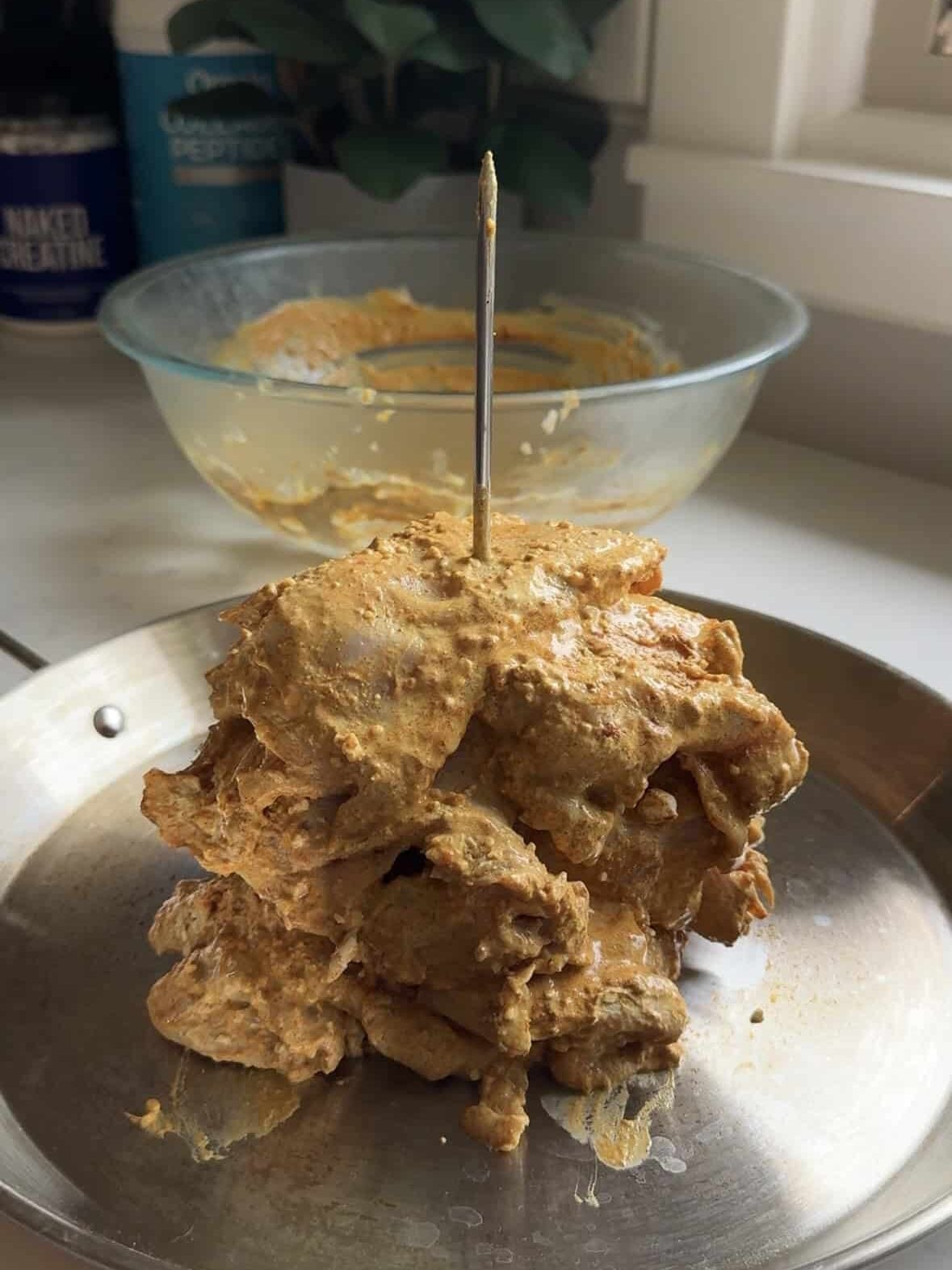
- Step 1: Stack the chicken pieces onto the vertical spit, pressing them down firmly as you go. You want a compact, tight stack so the meat holds together and is easy to slice cleanly afterward.
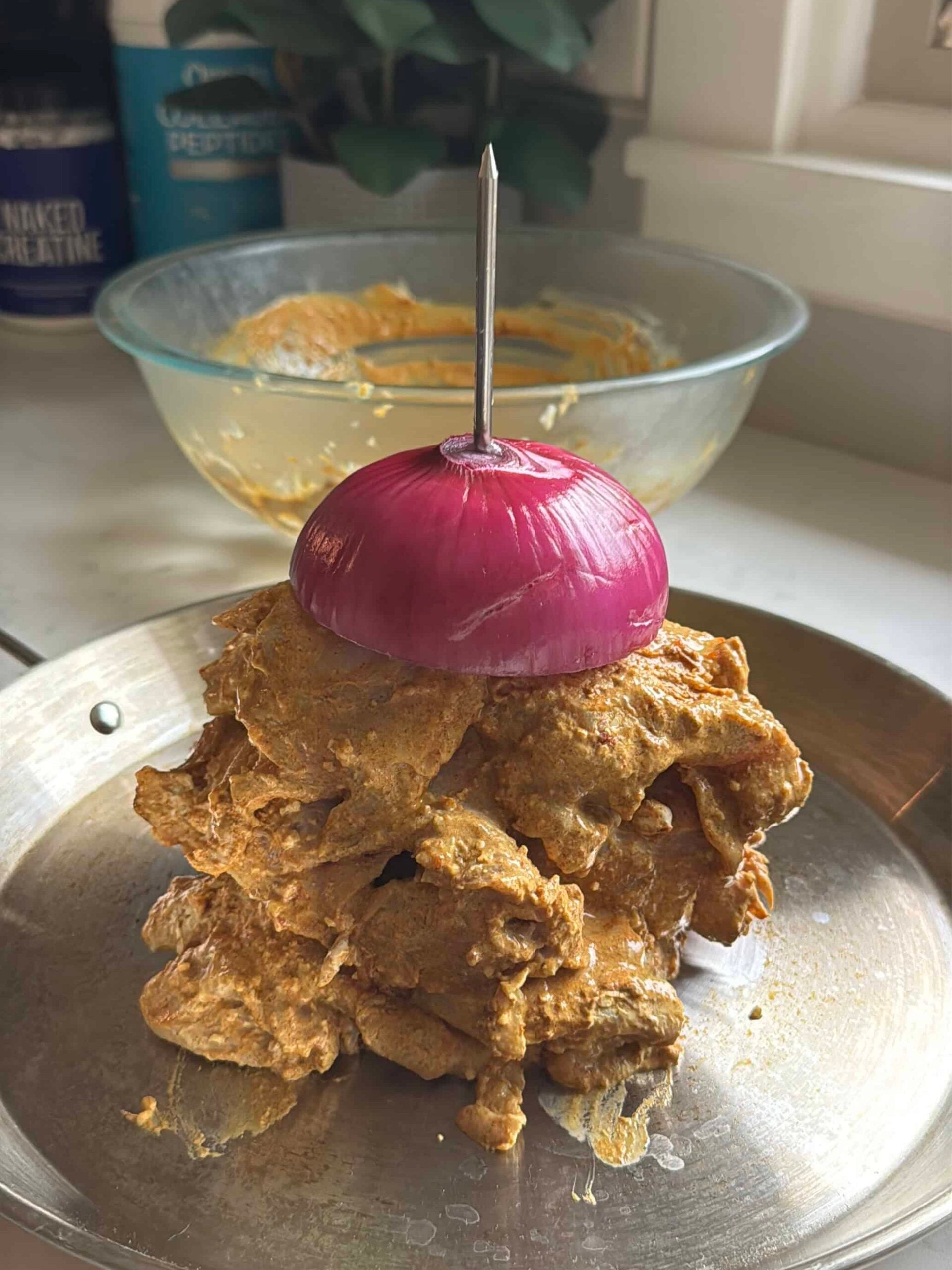
- Step 2: Place a red onion (or whatever onion you have) on top of the stack. This is not optional if you want moist results. The onion keeps the top pieces from drying out during baking and adds flavor to the drippings at the same time. I learned this the hard way the first time I made it without one.
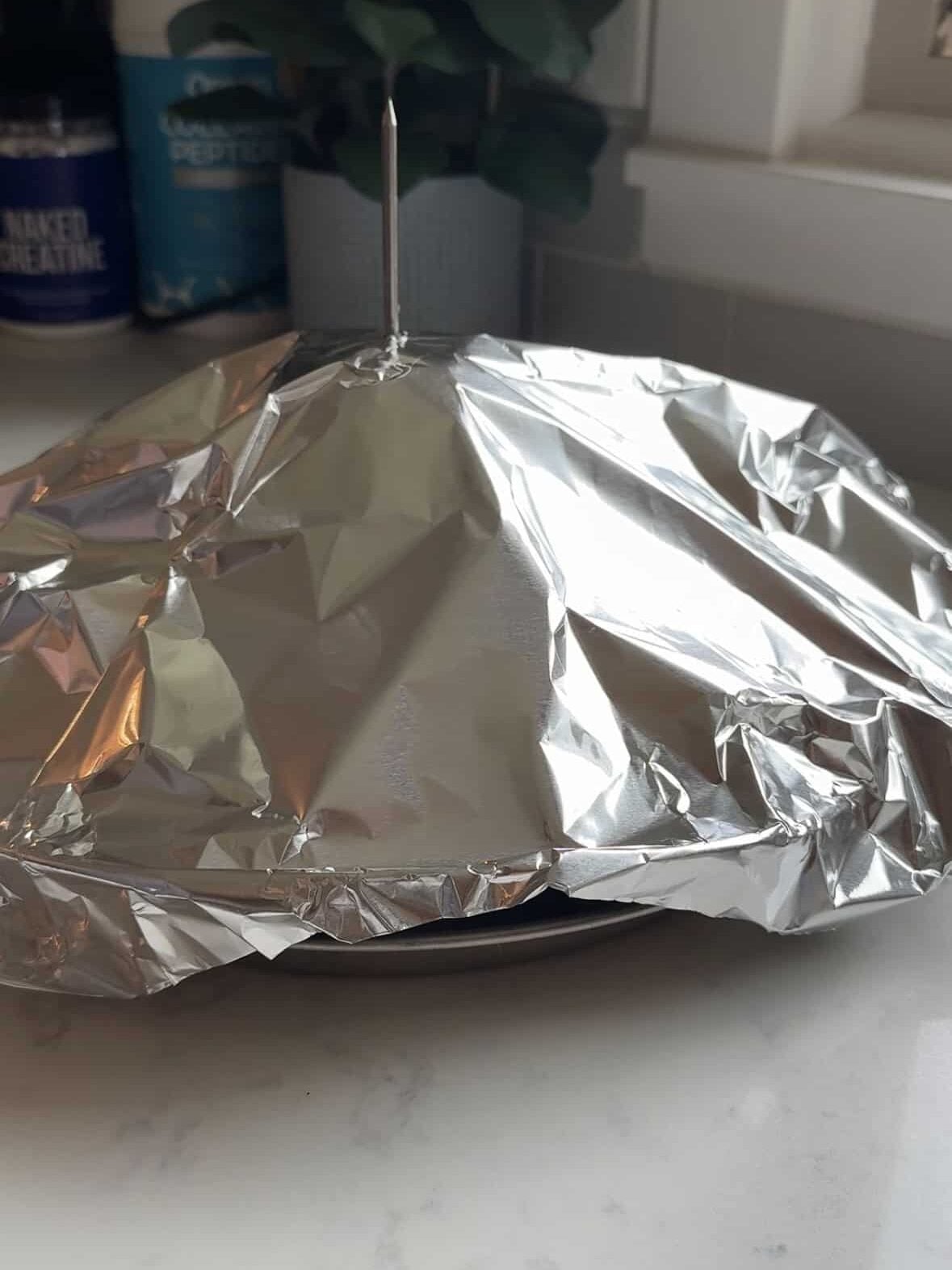
- Step 3: Loosely tent the top of the stack with aluminum foil. Keep this foil on for the first half of the bake time. This helps the meat cook through without the exterior getting too dark too soon.
- Step 4: Place the spit pan in the oven and bake at 425 degrees. For chicken breast, start checking at 60 minutes. For chicken thighs, start checking at 90 minutes. Use your meat thermometer inserted as close to the vertical spit as possible to check the internal temperature.
Hint: leave a useful hint here, like let the grill run for 4-5 minutes to burn off any remnants, then clean it. I like to use this bristle-free barbecue brush (affiliate link) for cleaning the grill.
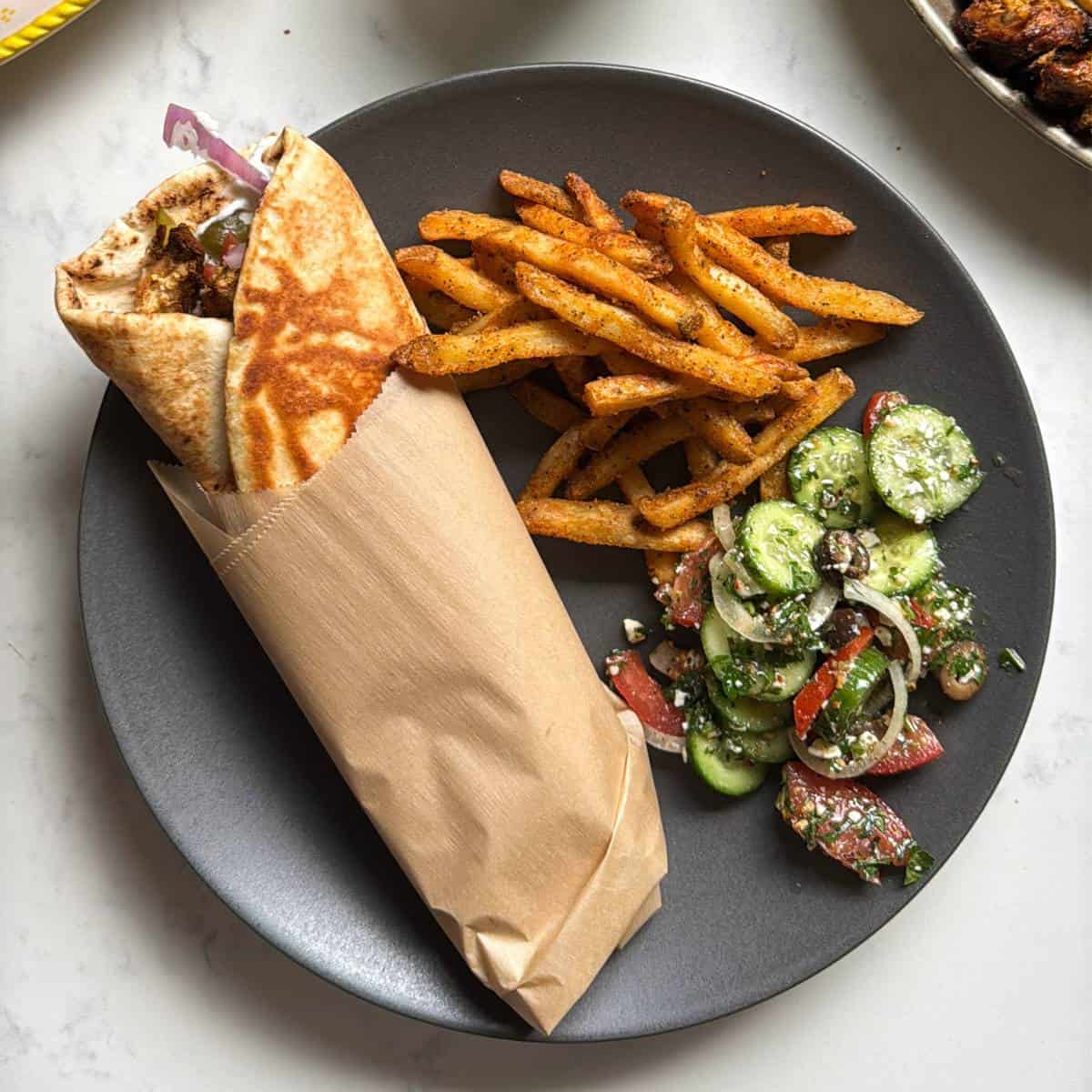
How to Make Chicken Shawarma Wraps
This is my favorite way to serve it, and the pan-fry at the end is what takes it from a good wrap to an unforgettable one.
Wrap Toppings
- Pickles
- Pickled turnips (the pink ones, sometimes called torshi)
- Red or white onion, thinly sliced
- Fresh parsley
- Tomatoes
- Cucumbers (optional)
- Hummus or garlic sauce (toum), spread on the bread first
Assembly
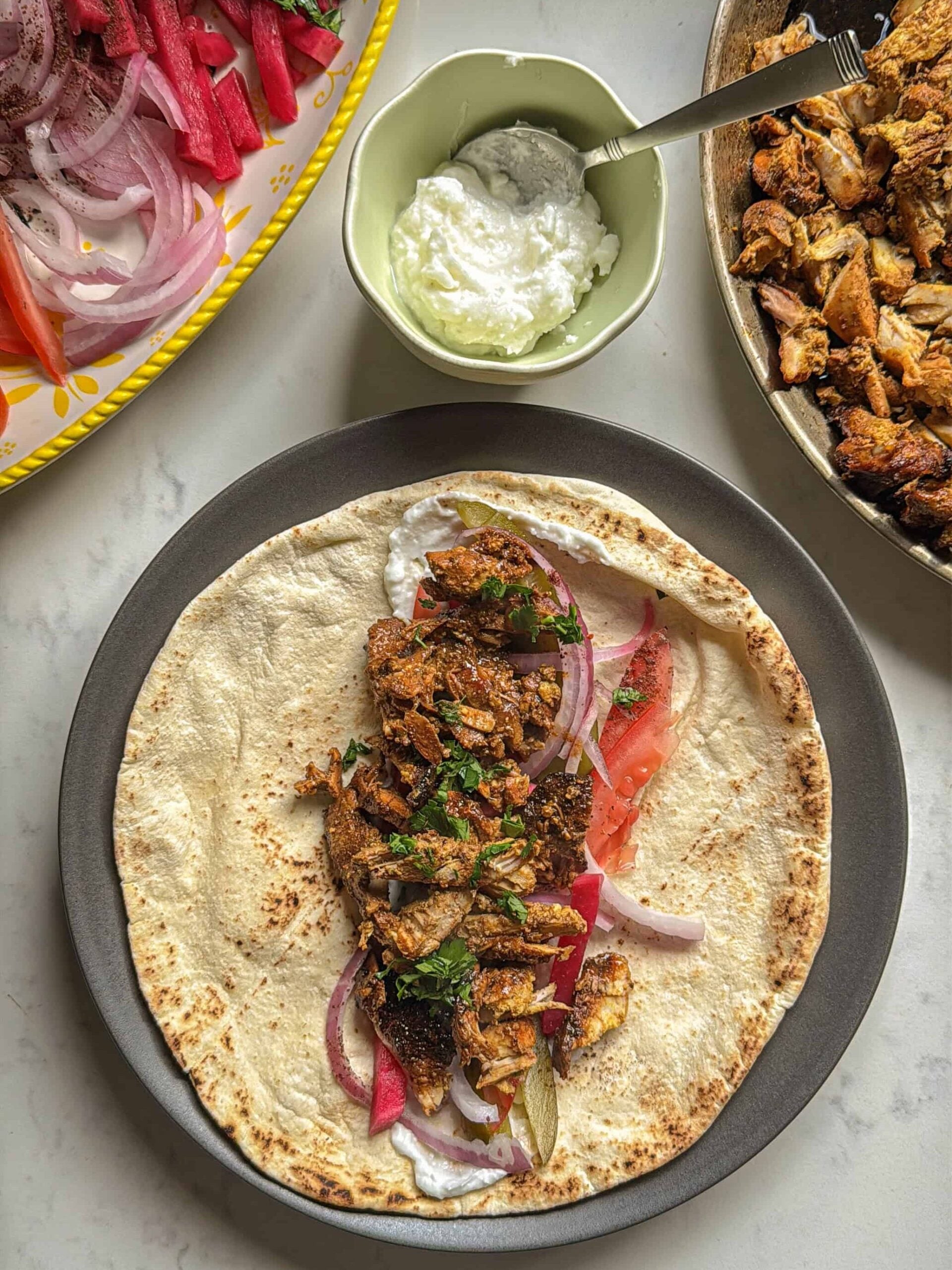
- Spread hummus or garlic sauce generously on your flatbread.
- Add a good portion of sliced shawarma meat.
- Top with your chosen vegetables and pickles.
- Roll it up tightly.
- Melt a small pat of butter in a skillet over medium heat. Place the wrap seam-side down and pan-fry all four sides until golden and slightly crisp.
- Wrap the bottom half in a piece of parchment paper before serving. This keeps it from dripping and makes it so much easier to eat.
Chicken Shawarma Bowl
If you'd rather skip the wrap, a shawarma bowl is just as satisfying and honestly a little easier to put together for a crowd.
Start with a base of white or yellow rice, or if you want to keep it lighter, use a bed of romaine or mixed greens. Add a generous portion of sliced shawarma chicken, then pile on your toppings: diced tomatoes, cucumbers, red onion, fresh parsley, pickles, and pickled turnips if you have them. Drizzle hummus or garlic sauce over the top and finish with a squeeze of fresh lemon.
If you're serving this for meal prep, keep the chicken, rice, and toppings in separate containers and assemble right before eating. The chicken reheats beautifully.
Substitutions and Variations
Protein Options
- Chicken breast: The base recipe. Lean, clean, slightly faster cook time.
- Chicken thighs (boneless): Richer flavor, more forgiving if slightly overcooked. Add approximately 30 extra minutes to cook time.
- Beef sirloin: A traditional option I haven't tested on the spit yet, but it's on my list. If you try it, marinate overnight and adjust cook time with your thermometer since beef targets a different internal temp.
- Lamb: The most traditional Levantine shawarma protein. Slice thin, marinate overnight.
Marinade Swaps
- No Greek yogurt? Use plain whole milk yogurt or skip it. The yogurt helps tenderize, so if you skip it, lean on the lemon and vinegar more.
- No tomato paste? A small amount of ketchup works in a pinch, though the flavor shifts slightly.
- Store-bought Shawarma seasoning works fine if you don't have the homemade blend. Look for one with cumin, coriander, paprika, and turmeric as the base.
Serving Variations
- Over rice: Classic and delicious. Yellow rice or plain white rice both work.
- With pita chips and hummus as an appetizer plate.
- Over a salad with a tahini or lemon-garlic dressing.
- In a grain bowl with farro or quinoa.
How Much Does This Cost to Make?
One of the things I love about this recipe is how far it stretches. Here's a rough cost breakdown based on what I typically pay.
| Item | Estimated Cost |
| 2.5 lbs chicken breast ($2.99/lb) | ~$7.50 |
| 3.5-4 lbs boneless chicken thighs (~$2.49/lb, on sale) | ~$8.70-$9.96 |
| Marinade ingredients (olive oil, yogurt, lemon, spices) | ~$2.00-$3.00 |
| Flatbread, vegetables, pickles (for wraps) | ~$4.00-$6.00 |
| Total estimated cost (wraps for 4-6 people) | ~$14-$20 |
I always watch for chicken sales and stock up when I see a good price. Chicken thighs especially tend to go on sale regularly at most grocery stores. This meal feeds my whole family with leftovers, which makes the per-serving cost even lower.
How do I store leftover shawarma?
Store sliced chicken in an airtight container in the refrigerator for up to 4 days. Keep it separate from your toppings and bread so nothing gets soggy. It also freezes well for up to 2 months. Thaw overnight in the fridge before reheating.
Chicken Shawarma Frequently Asked Questions
Yes, and it's actually one of the best ways to reheat it. Place sliced shawarma in the air fryer at 375 degrees for 3 to 5 minutes until warmed through and slightly crisped on the edges. It brings the texture back much better than a microwave.
A chicken shawarma wrap with flatbread, chicken, and light toppings is roughly 450 to 600 calories, depending on the size of your wrap and how generously you load it. For the most accurate count based on your specific ingredients and portions, I recommend running it through a nutrition calculator like Nutritionix.
It goes by a few different names: vertical spit, vertical skewer, or sometimes a shawarma cone pan. The setup I use is a vertical spit that comes attached to its own base pan, so everything stays contained in the oven. I'll link the one I use at the top of this post.
You can. Double the lemon juice and vinegar in the marinade and let it sit for at least 2 to 3 hours. The extra acid helps break down the proteins faster. Overnight is always better if you have the time, but same-day shawarma is still very much worth making.
Middle Eastern Inspired Recipes to Try!
Looking for other recipes like this? Try these:
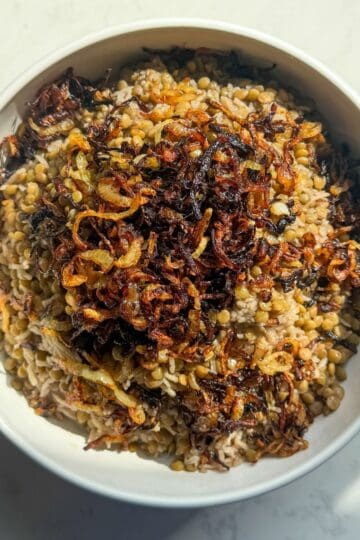

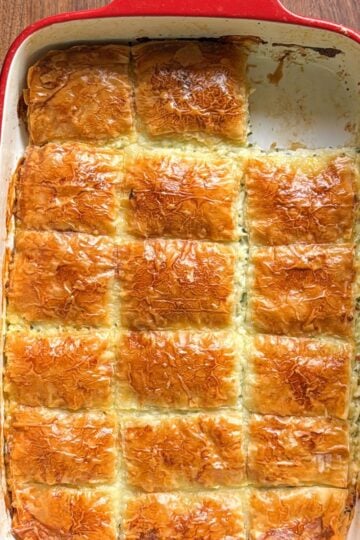
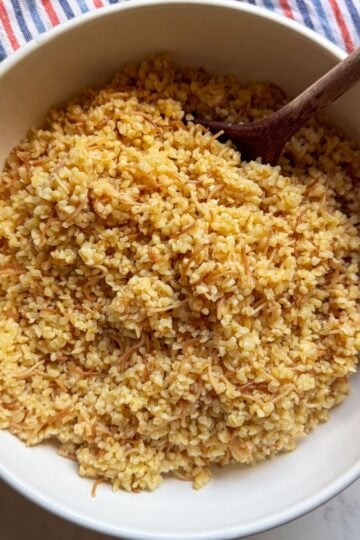
Side Dishes
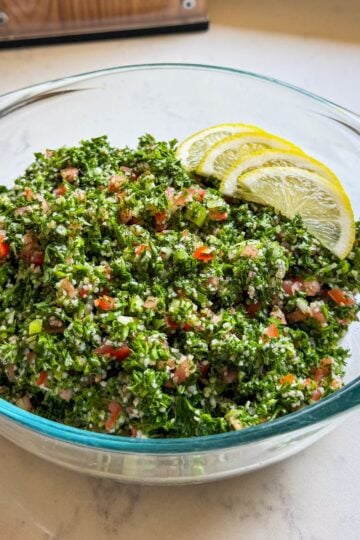
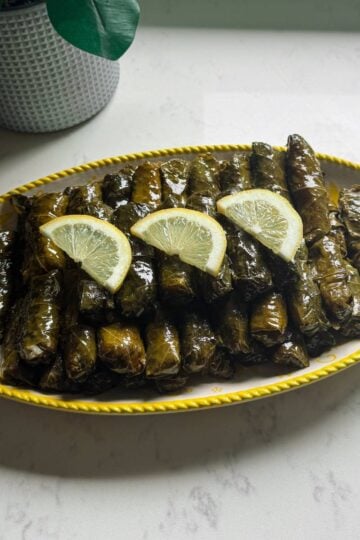
These are my favorite dishes to serve with Chicken Shawarma:
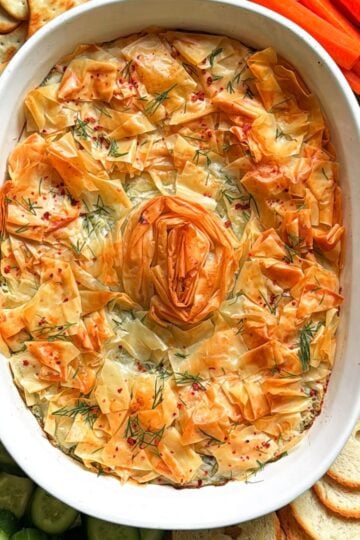
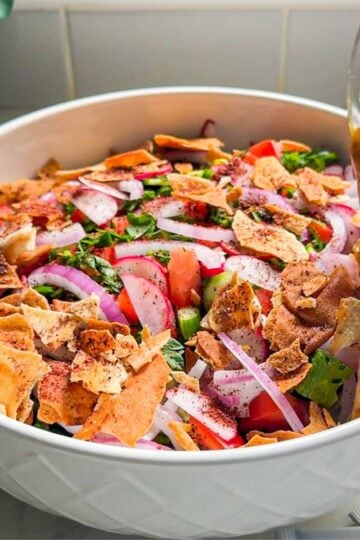
Oven Baked Chicken Shawarma on a Vertical Spit
Equipment
- Vertical spit pan
- Meat thermometer
- Aluminum foil
- mixing bowl
Ingredients
- 4 tablespoons Shawarma seasoning homemade or store-bought
- 3 tablespoons olive oil
- 2 tablespoons plain Greek yogurt
- 1 tablespoon lemon juice
- 1 tablespoon white vinegar
- 1 tablespoon tomato paste
- 1 to 2 tablespoons minced garlic
Instructions
- Remove your marinated chicken from the refrigerator and let it sit at room temperature for about 15 minutes while you preheat your oven to 425 degrees Fahrenheit.
- Stack the chicken pieces onto the vertical spit, pressing them down firmly as you go. You want a compact, tight stack so the meat holds together and is easy to slice cleanly afterward.
- Place a red onion (or whatever onion you have) on top of the stack. This is not optional if you want moist results. The onion keeps the top pieces from drying out during baking and adds flavor to the drippings at the same time. I learned this the hard way the first time I made it without one.
- Loosely tent the top of the stack with aluminum foil. Keep this foil on for the first half of the bake time. This helps the meat cook through without the exterior getting too dark too soon.
- Place the spit pan in the oven and bake at 425 degrees. For chicken breast, start checking at 60 minutes. For chicken thighs, start checking at 90 minutes. Use your meat thermometer inserted as close to the vertical spit as possible to check the internal temperature.
- When you're about 20 minutes away from the chicken being done (based on your thermometer), remove the foil and pour about 1 cup of chicken broth into the base of the pan. This mixes with the drippings and creates a basting liquid.
- Continue baking uncovered for the final 20 minutes until the outside is golden and caramelized and the internal temp reads 165 degrees at the spit.
- Remove from the oven. Spoon or brush the pan drippings generously over the top of the meat.
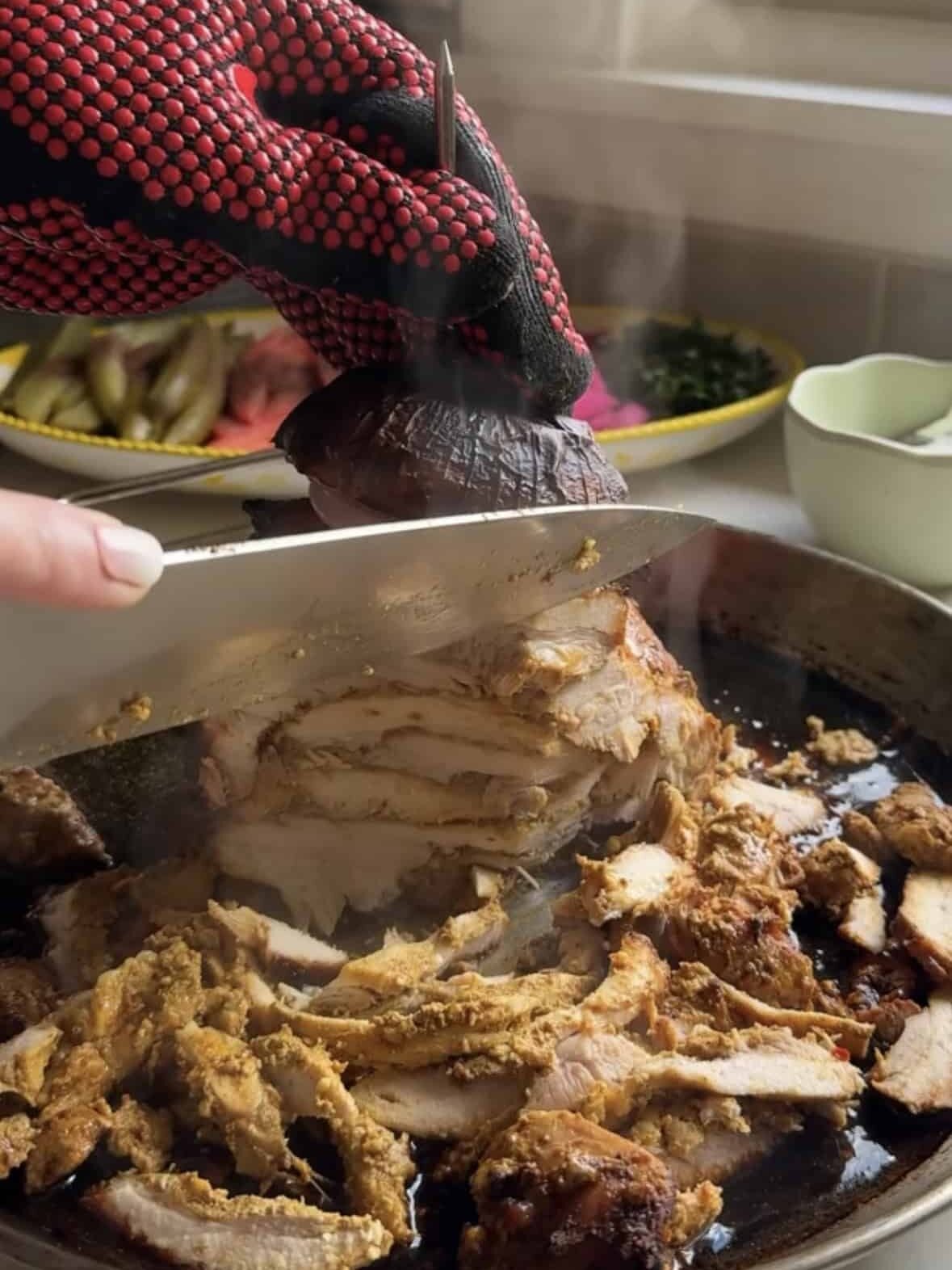
- Let the chicken rest for a few minutes, then slice immediately. Work quickly once you start slicing, thin shaved pieces just like street shawarma.
Notes
- Thermometer is non-negotiable. Internal temp at the spit is your only reliable guide to doneness.
- Do not skip the onion on top. It prevents the upper pieces from drying out.
- The foil tent for the first half of baking keeps moisture in and prevents over-browning before the inside is cooked through.
- Leftovers reheat beautifully in the air fryer at 375 degrees for 3 to 5 minutes.
- For chicken thighs, add approximately 30 minutes to the total cook time and begin checking at 90 minutes.
Comments
No Comments