

Also known as lahmajun, lahmacun, or simply "Armenian pizza". However you spell it, this is the one.
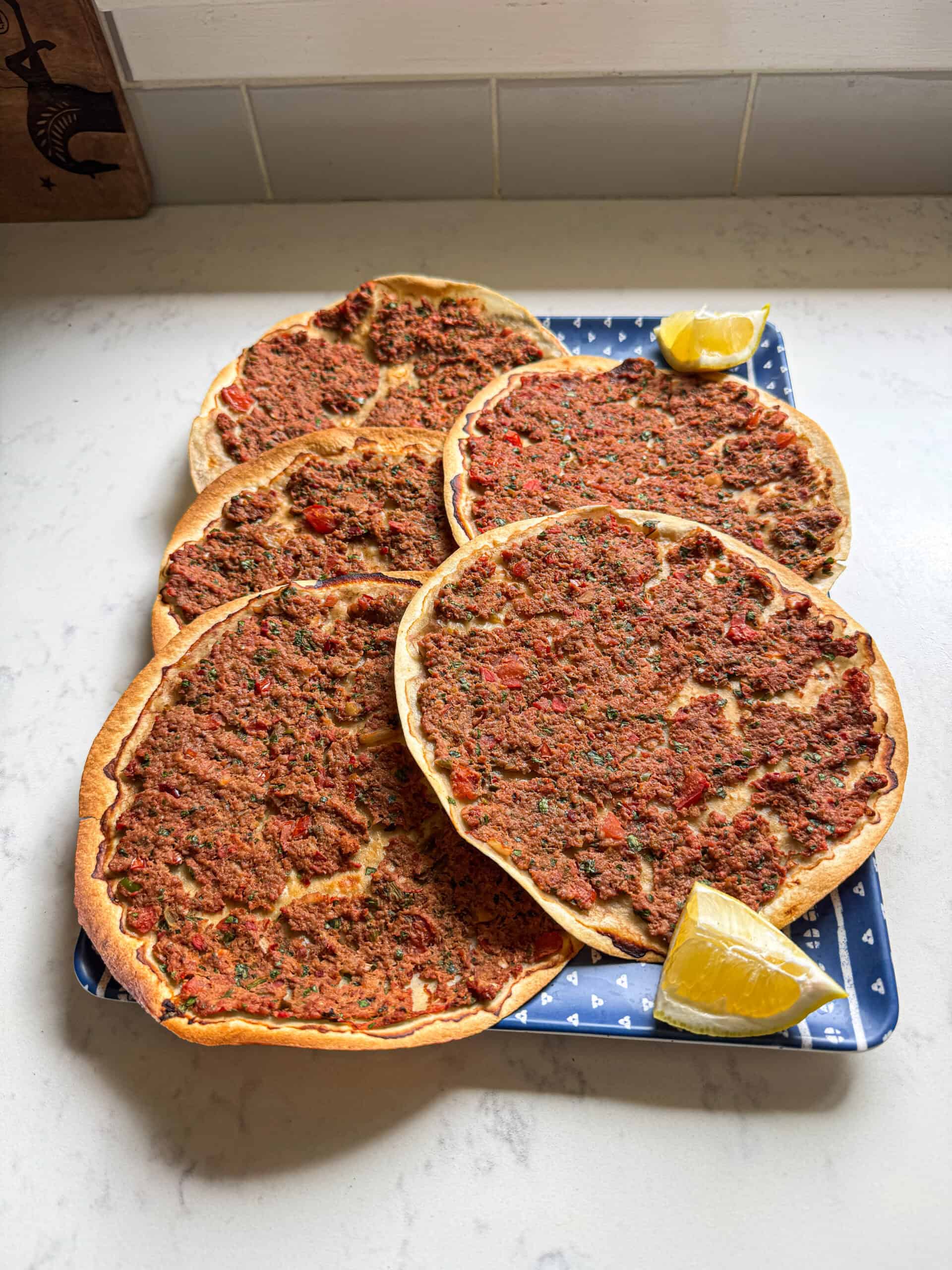
There are recipes you make. And then there are recipes that make you.
This is the second kind.
I finished a batch of Armenian lahmajoun this afternoon and walked straight out the door to take my daughter to the dentist. Halfway through the waiting room, I realized I still smelled it. In my hair. And honestly? I didn't mind one bit because that smell took me right back to my grandmother's house, every single week, knowing to leave our jackets on the porch before we walked in. Unless, of course, we wanted our coats smelling like Armenian cuisine for the next three days.
That's the thing about lahmajoun. It doesn't just feed you. It fills up the whole house. And if you grew up eating it, it lives in your memory the way only food can.
Fresh out of the oven, this batch tasted exactly like those weekly lunches at grandma's. Perfect. And I want that for you too.
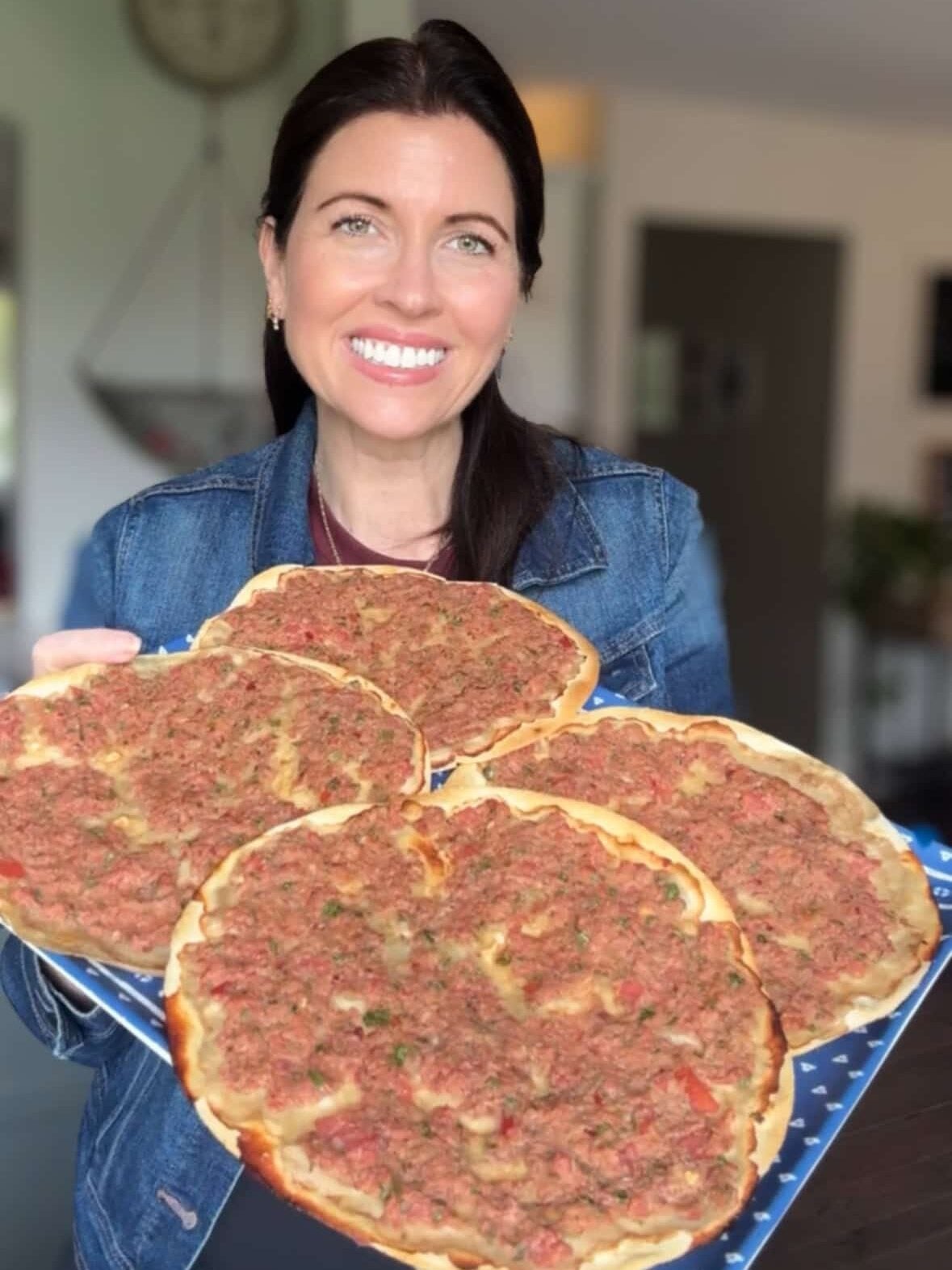
So What Exactly Is Armenian Pizza (Lahmajoun)?
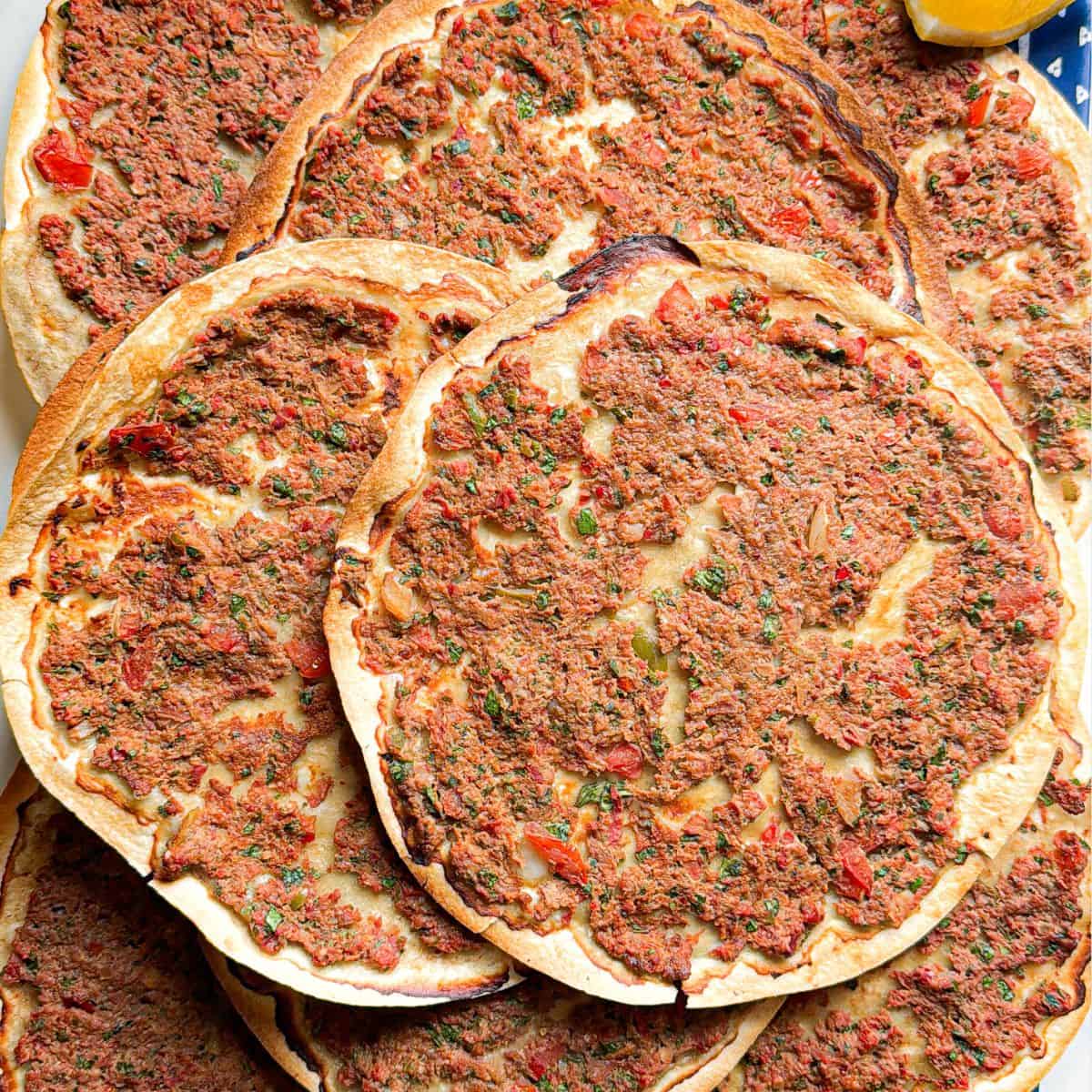
Lahmajoun (also spelled lahmajun, lahmacun, or eaten lahmacun wrap-style when you roll it up) is a thin flatbread topped with a boldly spiced ground meat mixture, baked until the edges are crispy and the topping is deeply fragrant. It's been called Armenian pizza, Lebanese pizza, and Turkish pizza and that naming debate? It actually tells a whole story in itself.
The short version: it's one of the oldest flatbreads in the world, and it belongs to anyone who has ever kept making it when they had nothing else left.
The long version? Keep reading.
If You Love This Armenian Lahmajoun, Try These Next
If this recipe brought you to the table, these will keep you there:
- Chicken Doner Kabob Recipe - If you've been looking for a chicken doner kabob recipe you can make at home without a rotisserie, you've found it.
- Armenian Yogurt Soup (Tutmaj Abour) - This is Tutmaj Abour (տուտմաջ ապուր), a creamy, tangy, deeply comforting Armenian yogurt soup made with small shell pasta, sautéed onions, and mint.
- Armenian Manti Recipe with Wonton Wrappers - It is made with a seasoned meat mixture tucked inside small pieces of dough, shaped into little open-faced boats, baked until golden and crisp, and then served in warm chicken broth with plain yogurt spooned over the top.
Jump to:
- If You Love This Armenian Lahmajoun, Try These Next
- Ingredients for Armenian Lahmajoun
- How to Make Armenian Pizza (Lahmajoun) — 4 Simple Steps
- Tips for the Best Armenian Lahmajoun
- Substitutions for Armenian Pizza (Lahmajoun)
- Variations on Armenian Lahmajoun
- Equipment Used for This Armenian Pizza Recipe
- Storage Instructions for Leftover Armenian Lahmajoun
- One Last Thing
- Armenian Lahmajoun FAQ
- Other Armenian Family Recipes
- Side Dishes
The History Behind Every Bite of Armenian Lahmajoun
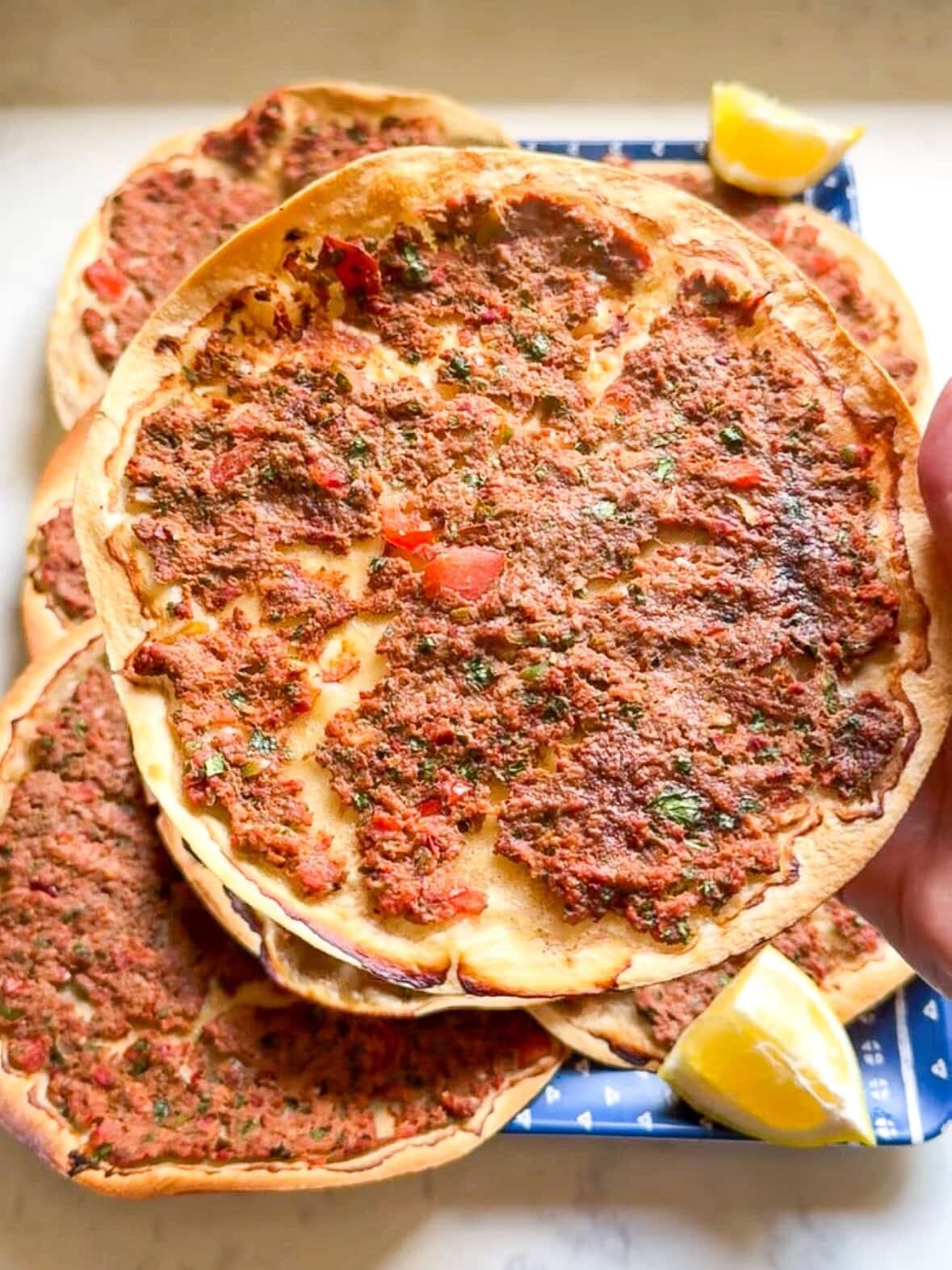
This dish traces back to the city of Aleppo, Syria not because it was born there, but because that's where Armenian merchants landed after being driven from their ancestral homeland. They arrived with almost nothing. But they carried their recipes.
In Aleppo, Armenians rebuilt. They opened bakeries. They dominated the bread trade. And they began preparing lahmajoun, spreading spiced meat over thin flatbread and baking it in their wood-fired ovens and offering it to their neighbors. Local cooks fell in love with it. It spread through Syria, through Lebanon, through Turkey, through the entire region, picking up different names along the way. In Lebanon it became lahm bi ajin. In Turkey, lahmacun. But the soul of it, the spiced meat, the thin crispy crust, the squeeze of lemon, stayed the same.
Could lahmajoun have originated in an Armenian oven, long before Aleppo? Possibly. Accounts point to the ancient Armenian cities of Aintab and Urfa cities with roots going back centuries. But it's hard to prove. Because the historic Armenian quarter of Urfa was reduced to rubble in 1915. The people who lived there, along with their homes, their hearths, their bakeries, and their records, were gone.
That's the painful reality of the Armenian Genocide. It didn't just take lives. It tried to take the paper trail too. Recipes, community histories, culinary lore, erased. So the absence of Armenian documentation isn't proof that lahmajoun wasn't Armenian. It's proof of what was lost.
What we do know: Armenian women carried this recipe through genocide, through displacement, through diaspora — and they kept making it. In church kitchens. In small apartments. On cookie sheets lined with parchment paper.
This dish belongs to the people who kept making it when they had nothing else left. Today it's claimed by many cultures, Armenian, Turkish, Lebanese, Syrian. And that makes sense, because those cultures once shared the same land for centuries, before borders and genocide tore them apart.
The dish remembers what history tries to forget.
My Grandmother's Shortcut — And Why It Makes This Lahmajoun Recipe Special
Here's where my family's version of this story comes in.
My grandmother was a working mother. Busy, stretched thin, holding her culture together with both hands. She was not going to let this dish leave our family, but she also did not have time to make bread dough from scratch every time the craving hit.
So she used uncooked flour tortillas.
At first glance it might seem like a shortcut. But when you understand that Armenian women have been adapting and improvising to keep their culture alive for over a century finding workarounds, making do, feeding their families with whatever they had, it feels less like a shortcut and more like a continuation of that same spirit.
She stayed true to her roots with what she had. And it worked. The uncooked tortilla bakes up thin and crispy, almost identical to traditional lahmajoun dough, in a fraction of the time.
This is the recipe she passed down to me. And now I'm passing it to you.
Tips Before You Start
Use Aleppo pepper if you can find it. Given everything you just read about Aleppo, it's a beautiful full-circle moment to use the pepper named after the very city where Armenian women kept this recipe alive. It's mild, fruity, and slightly oily. Totally different from regular chili flakes.
Run everything through the food processor. The onion, tomatoes, green pepper, parsley, mint, all of it. You want the mixture fine enough to spread like a paste. Chunky topping = uneven bake.
Spread it thin. Almost translucent. If you put too much on, it won't crisp up and you'll lose that signature lahmajoun texture.
Leave your jacket on the porch. Trust me.
Ingredients for Armenian Lahmajoun
Simple, real ingredients. Nothing fancy. Just the same combination of meat, vegetables, and warm spices that Armenian women have been spreading onto flatbread for generations.
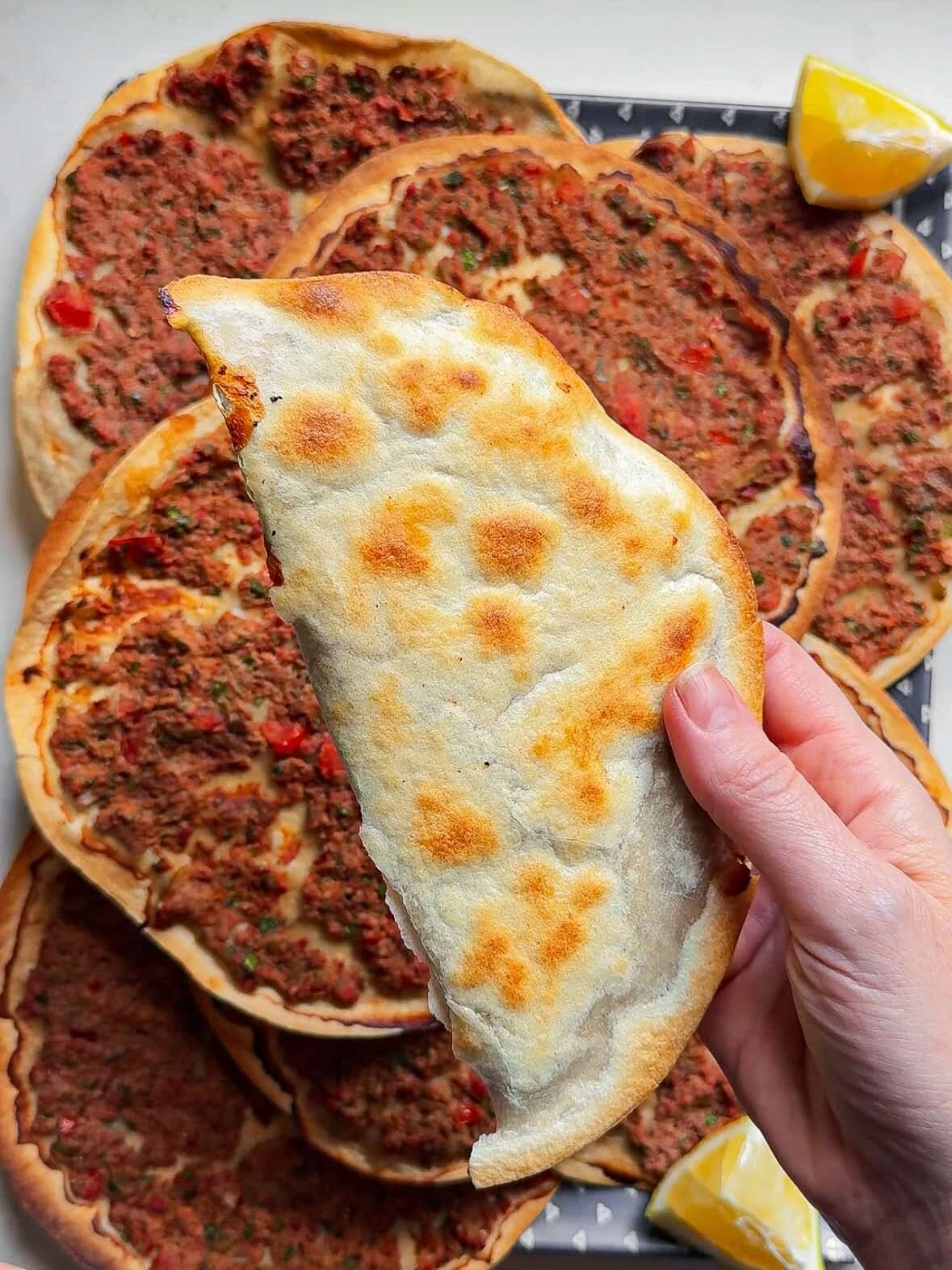
- Ground beef or ground lamb
- Onion
- Large tomatoes
- Green pepper
- Italian parsley
- Fresh mint
- Minced garlic
- Red pepper paste
- Tomato paste
- Red pepper (Aleppo pepper preferred)
- Salt
- Ground black pepper
- Uncooked flour tortillas
See recipe card for quantities.
How to Make Armenian Pizza (Lahmajoun) — 4 Simple Steps
This recipe is more straightforward than it looks. The food processor does most of the heavy lifting, and the oven does the rest. Here's what to know before you start:
Use Aleppo pepper if you can find it. Given everything you just read about Aleppo, it's a beautiful full-circle moment to use the pepper named after the very city where Armenian women kept this recipe alive. It's mild, fruity, and slightly oily. Totally different from regular chili flakes.
Spread the meat mixture thin. Almost translucent. This is the most important tip in the whole recipe. Too thick and it won't crisp up, and you'll lose that signature lahmajoun texture.
Leave your jacket on the porch. Trust me.
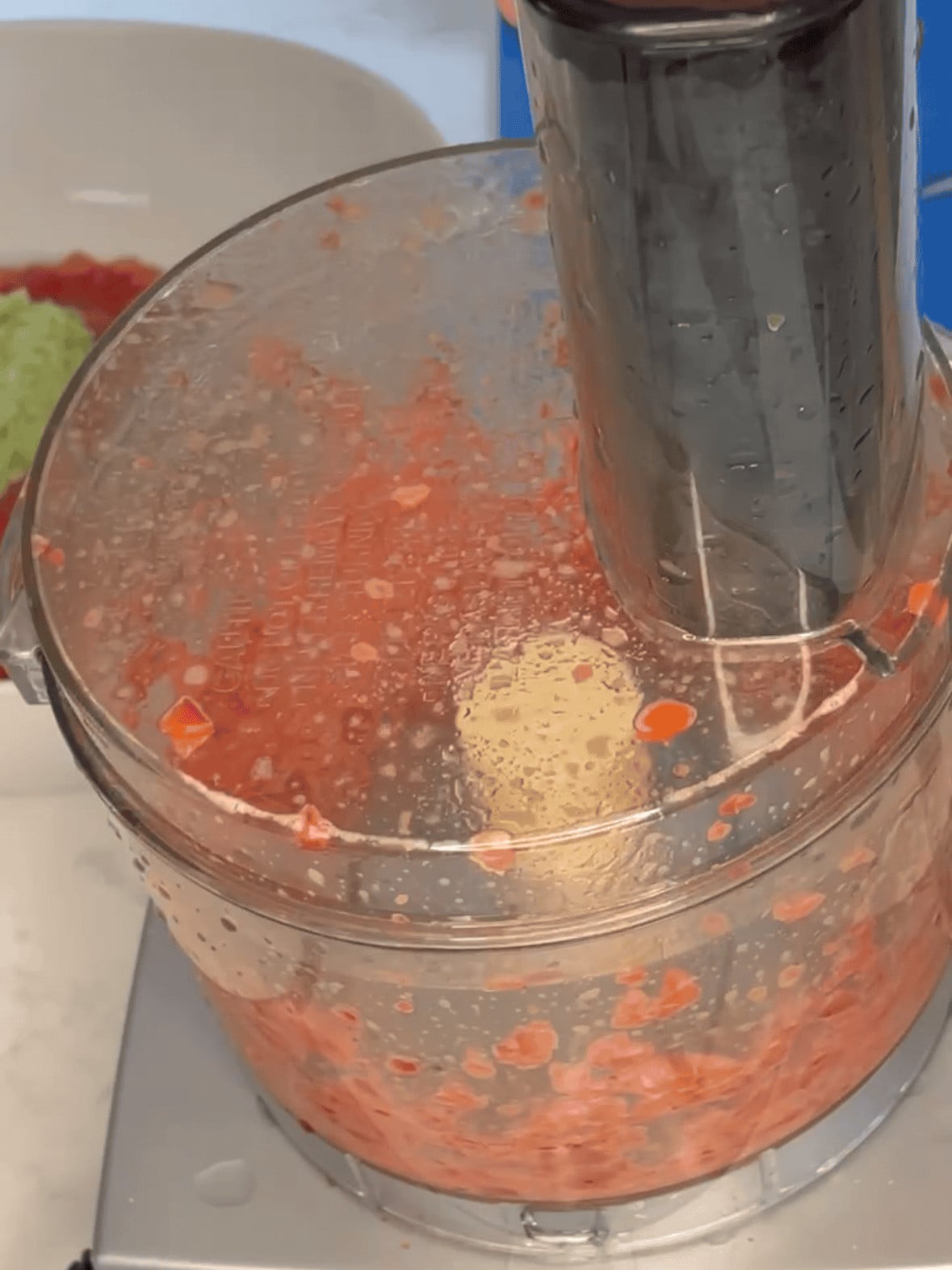
- Step 1: Process the vegetables. Add the onion, tomatoes, green pepper, parsley, and mint to a food processor and pulse until very finely chopped, almost a paste.
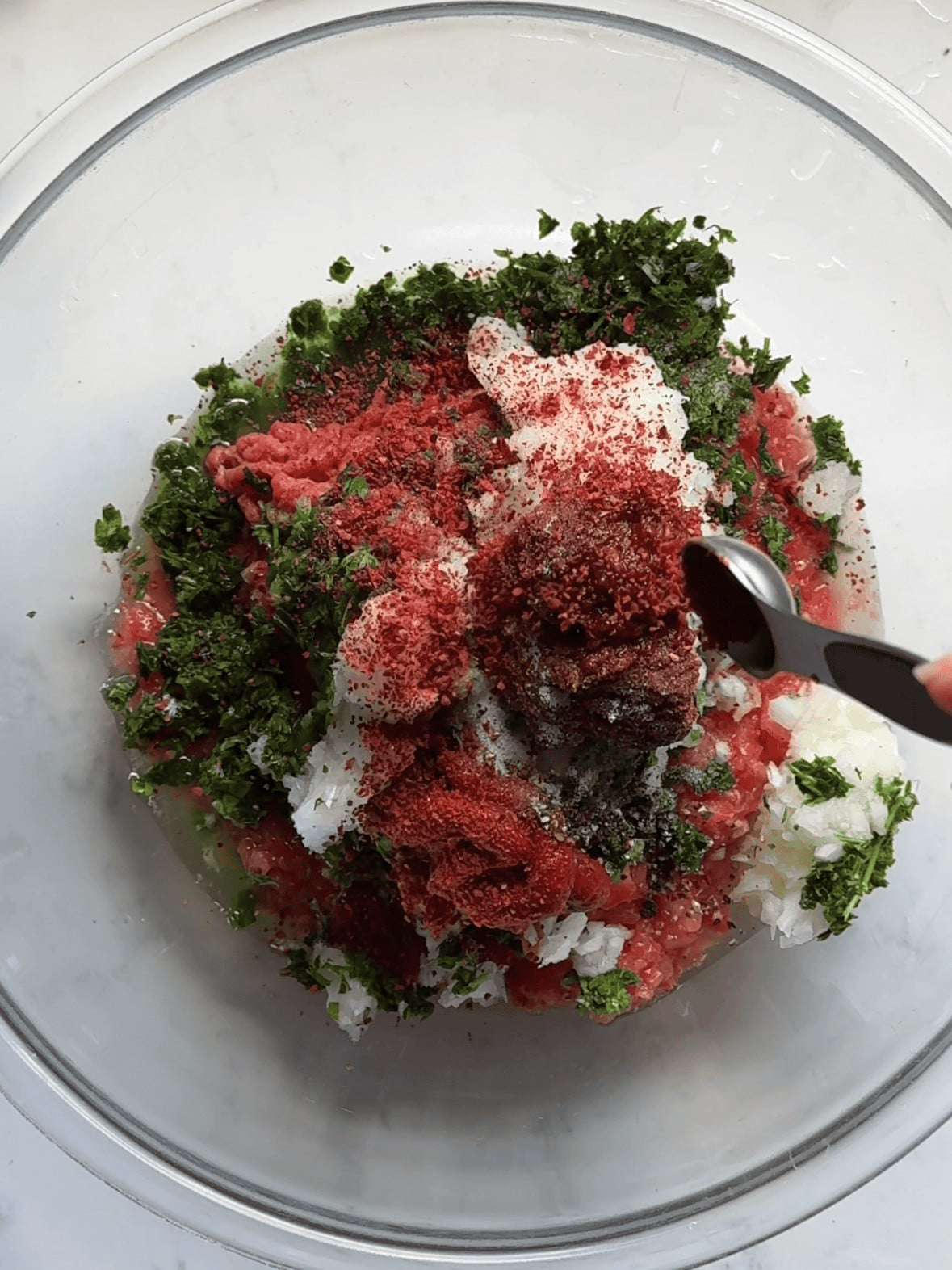
- Step 2: Mix the meat filling. In a large bowl, combine the ground beef or lamb with the chopped vegetable mixture.
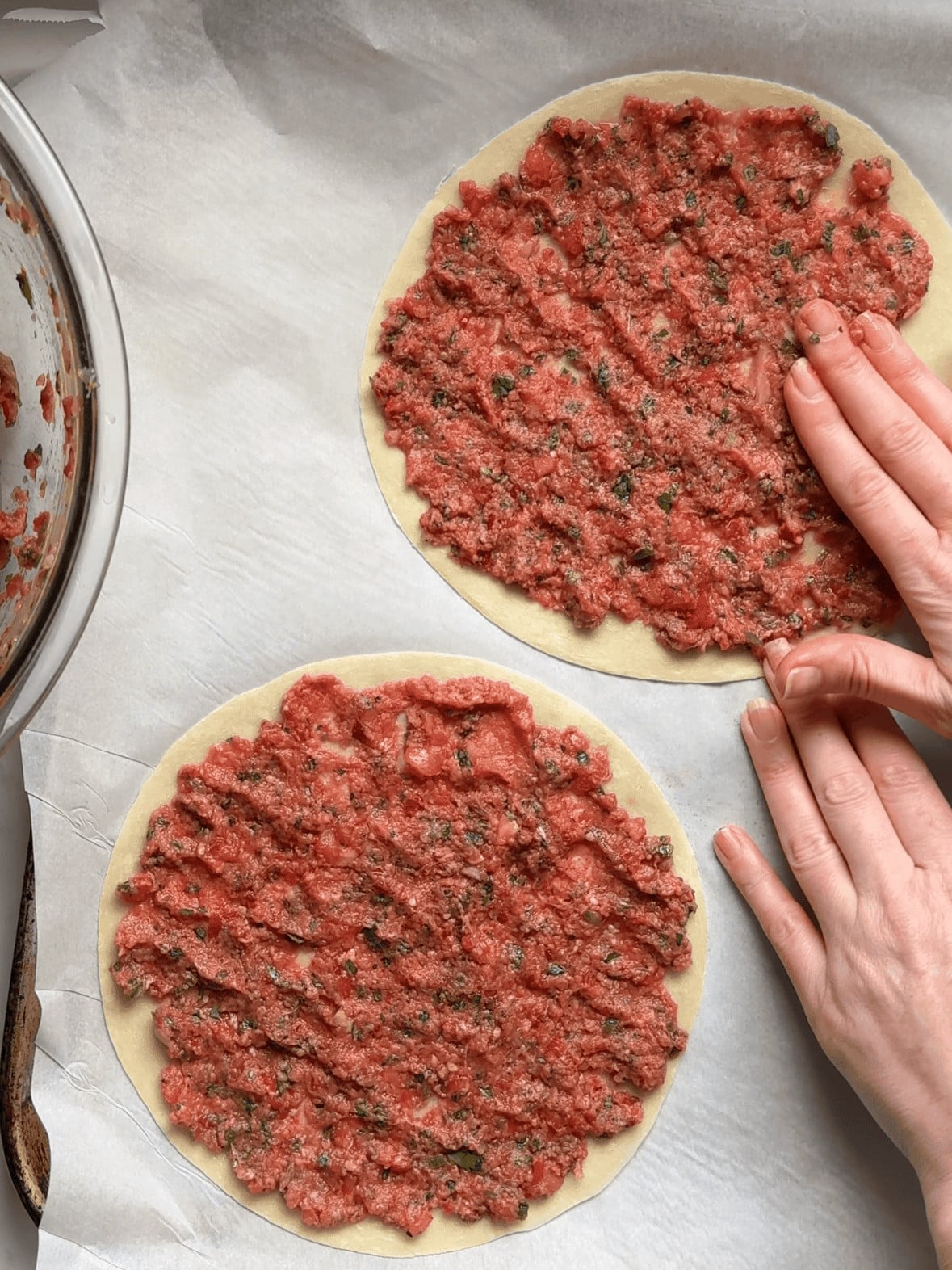
- Step 3: Top the tortillas. Preheat your oven to 425°F and line your baking sheets with parchment paper. Lay the uncooked tortillas flat and spread the meat mixture very thin across each one, all the way to the edges.
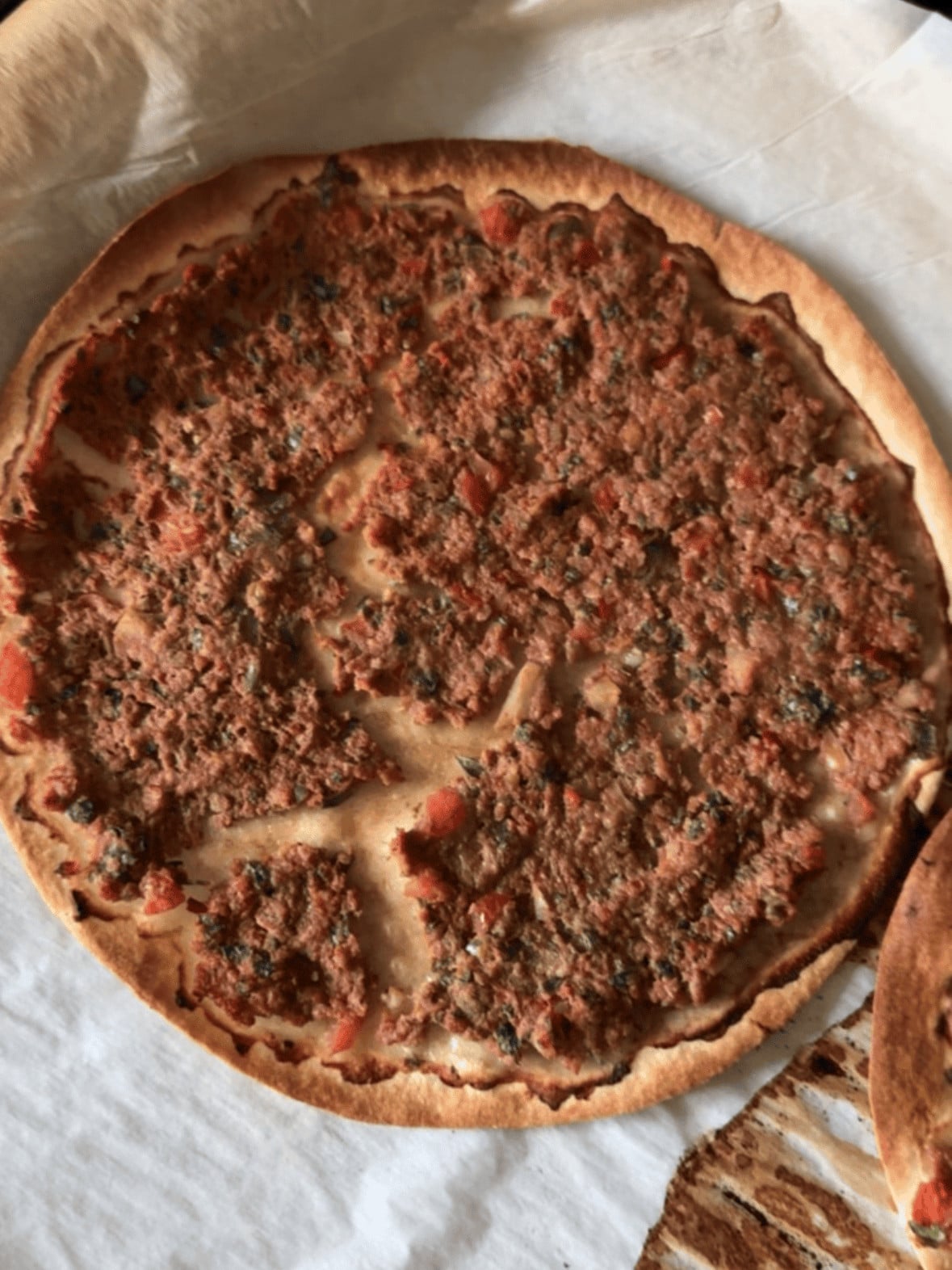
- Step 4: Bake and serve. Bake at 425°F for 15 to 17 minutes, until the edges are golden and slightly crispy and the meat is fully cooked through.
Tips for the Best Armenian Lahmajoun
A few things I've learned from making this more times than I can count:
- Don't skip the food processor. The finer your vegetable mixture, the better the meat paste spreads and the crispier your lahmajoun will be.
- Thin is everything. If your topping is too thick, the tortilla steams instead of crisps. Less is more here.
- Go edge to edge. Spread the mixture all the way to the rim of the tortilla so every bite is covered.
- Bake multiple sheets at once. This recipe makes 10 to 12 Armenian pizzas. Use two racks and rotate halfway through if needed.
- Let them cool just slightly before rolling. They crisp up even more in the first 2 minutes out of the oven.
Hint: leave a useful hint here, like let the grill run for 4-5 minutes to burn off any remnants, then clean it. I like to use this bristle-free barbecue brush (affiliate link) for cleaning the grill.
Substitutions for Armenian Pizza (Lahmajoun)
Need to make a swap? Here's what works:
- Ground beef or lamb — either works. Lamb is more traditional; beef is more budget-friendly and easier to find. A 50/50 mix is also a great middle ground.
- Red pepper paste — if you can't find it at a Middle Eastern grocery store, sub with an extra tablespoon of tomato paste plus a pinch of cayenne.
- Aleppo pepper — regular crushed red pepper flakes work, just use a little less as they're spicier. Smoked paprika is a milder option.
- Fresh mint — dried mint works in a pinch. Use about 1 teaspoon dried in place of 1 tablespoon fresh.
- Uncooked flour tortillas — store-bought pizza dough rolled very thin is the closest traditional substitute. Lavash bread also works for a crispier result.
- Plain yogurt (for serving) — a dairy-free coconut yogurt works well for a dairy-free version.
Variations on Armenian Lahmajoun
Once you've made the original, here are some ways to make it your own:
- Spicy lahmajoun — double the red pepper paste and add a pinch of cayenne to the meat mixture for serious heat.
- Cheesy Armenian pizza — add crumbled Armenian string cheese or feta on top in the last 3 minutes of baking. This is how a lot of Armenian families do it, and it's incredible.
- Veggie lahmajoun — swap the meat for finely chopped mushrooms and walnuts. Process them just like the vegetables and season the same way. It holds together better than you'd expect.
- Lahmajoun wrap — the traditional way to serve it is rolled up around a simple salad of parsley, sliced onion, tomato, and a squeeze of lemon. It becomes a full meal this way.
- Mini lahmajoun appetizers — use street taco-sized uncooked tortillas instead of standard size. Perfect for parties and Armenian appetizer spreads.
- Lamb and pine nut version — add a handful of toasted pine nuts to the lamb mixture before spreading. A nod to the Syrian-Armenian version from Aleppo.
Equipment Used for This Armenian Pizza Recipe
Nothing fancy required. Here's what I use:
- Food processor — makes the vegetable prep fast and gets everything fine enough to spread properly. A blender works in a pinch.
- Large mixing bowl — for combining the meat and vegetable mixture by hand.
- Baking sheets (two) — to bake multiple lahmajoun at once. Rimmed baking sheets work best.
- Parchment paper — non-negotiable. Keeps the tortillas from sticking and makes cleanup effortless.
- Offset spatula or butter knife — for spreading the meat mixture thin and even across the tortillas.
Storage Instructions for Leftover Armenian Lahmajoun
Good news: this recipe stores beautifully.
Refrigerator — store cooled lahmajoun stacked face to face with a sheet of parchment between each one in an airtight container. They keep well for up to 4 days.
Freezer — lahmajoun freezes perfectly. Stack them face to face with parchment between each one, wrap tightly, and freeze for up to 3 months. This is exactly how Armenian bakeries sell them.
To reheat — pop them back in a 400°F oven for 5 to 7 minutes until warmed through and crispy again. The microwave works but they'll lose their crispiness.
Make ahead tip — you can make the meat mixture up to 24 hours ahead and store it covered in the refrigerator. Just spread and bake when you're ready.
One Last Thing
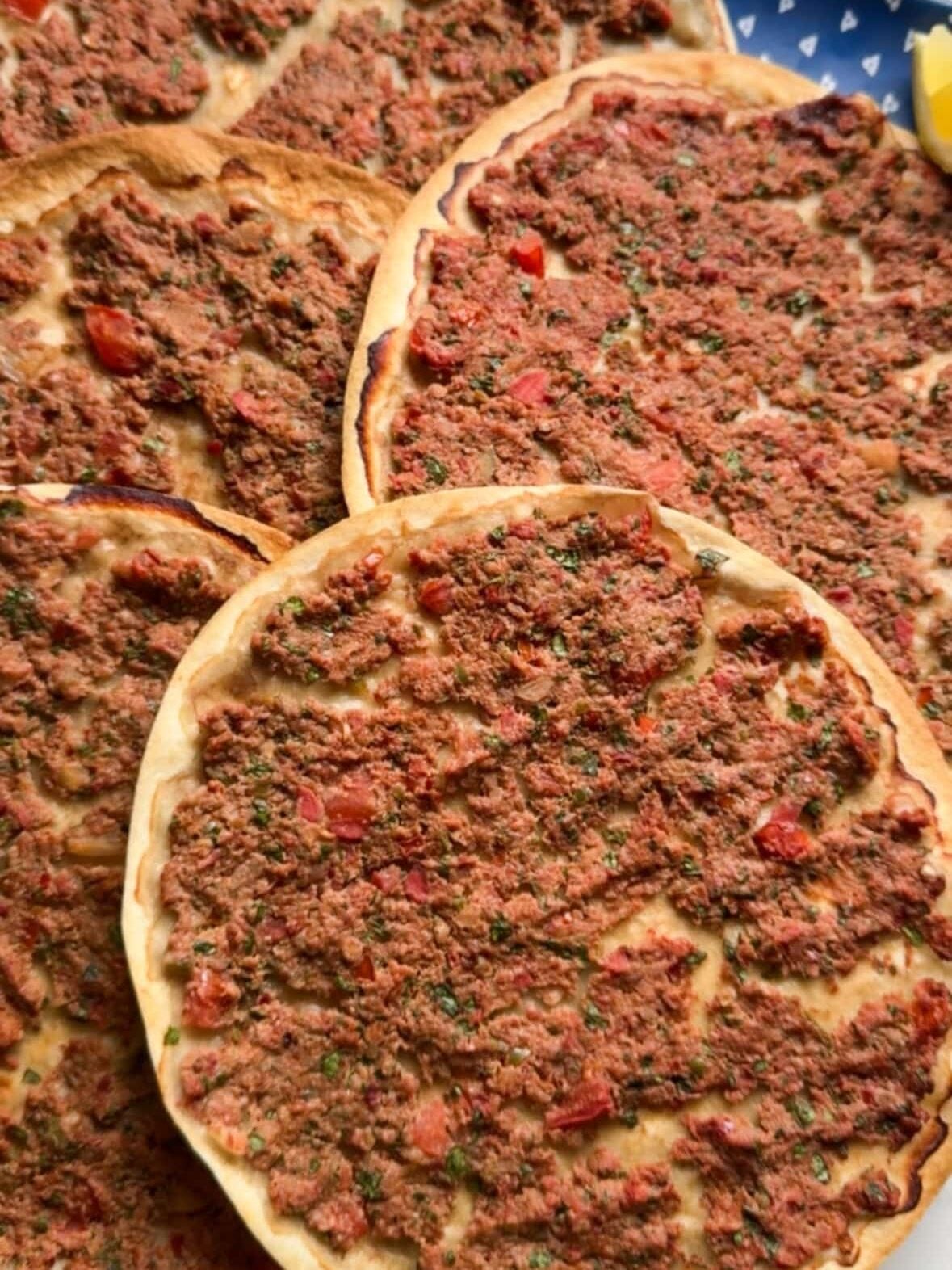
When I pulled these out of the oven today, the whole house smelled like my grandmother's kitchen. I went to my daughter's dentist appointment and still had it in my hair by the time we got there.
I didn't wash it out early.
Some smells are worth keeping a little longer.
Looking for more Armenian recipes and budget-friendly family meals? You're in the right place. Welcome to Mom's Dinner Bell.
Armenian Lahmajoun FAQ
The name comes from the Arabic lahm bi ajeen, meaning "meat with dough." It entered English through both Turkish (lahmacun) and Armenian (lahmajo). The word itself is a linguistic fingerprint of all the cultures this dish has traveled through over centuries.
They are the same dish. Lahmajoun is the Armenian and English spelling. Lahmacun is the Turkish spelling. The pronunciation is essentially the same: lah-mah-JOON.
Not exactly. Lahmajoun has a much thinner crust, no cheese (traditionally), no tomato sauce, and a spiced meat topping. It predates Italian pizza by centuries. Some food historians actually argue that pizza is better understood as "Italian lahmajoun."
Yes. The meat mixture can be made up to 24 hours ahead. Baked lahmajoun can be frozen for up to 3 months and reheated directly from frozen in a hot oven.
Traditionally: fresh parsley, sliced raw onion, lemon wedges, and plain yogurt. Many families roll them up around a simple salad of those same ingredients. Armenian string cheese on the side is also a classic pairing.
Uncooked flour tortillas are strongly preferred here. They absorb the meat mixture slightly as they bake, which gives you a crispier, more authentic result. Pre-cooked tortillas tend to get tough rather than crispy.
Aleppo pepper is a mildly spicy, fruity, slightly oily dried pepper named after Aleppo, Syria, the very city where Armenian genocide survivors rebuilt their communities and kept this recipe alive. You can find it at Middle Eastern grocery stores, specialty spice shops, or online. It's worth seeking out.
Other Armenian Family Recipes
Looking for other recipes like this? Try these:


Side Dishes
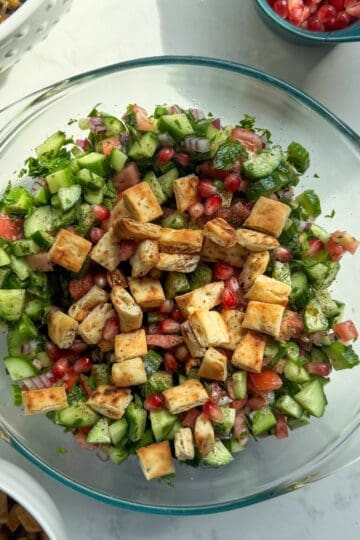
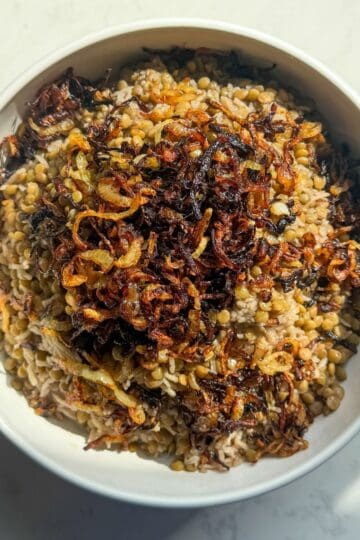
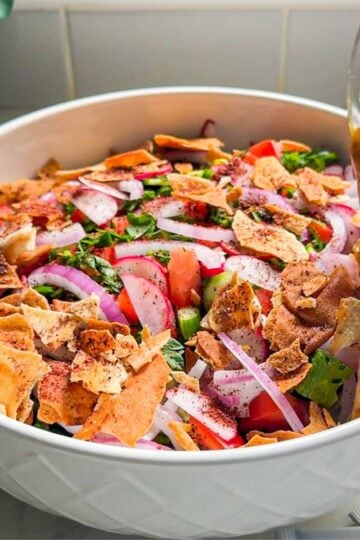
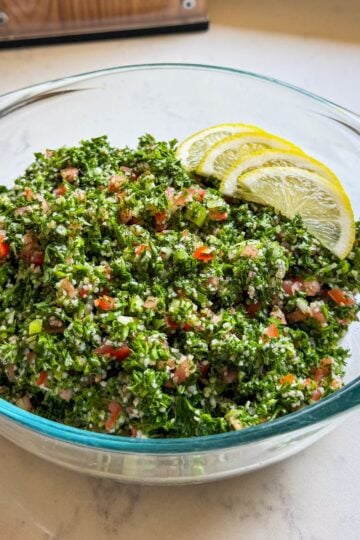
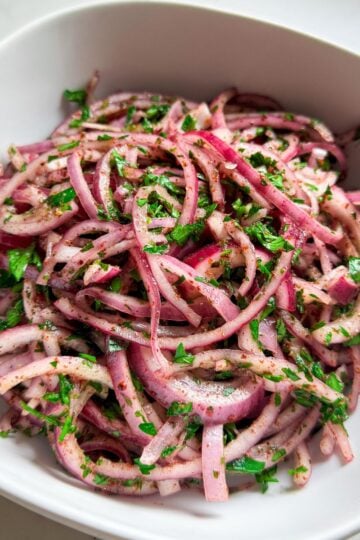
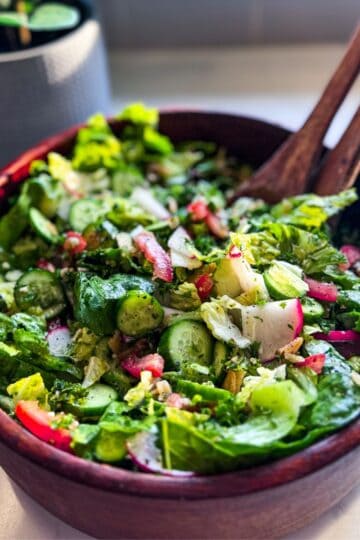
These are my favorite dishes to serve with this Lahmajoun:
Grandma's Armenian Lahmajoun
Equipment
- Food processor Makes the vegetable prep fast and gets everything fine enough to spread properly. A blender works in a pinch.
- Large mixing bowl For combining the meat and vegetable mixture by hand.
- Baking sheets (two) To bake multiple lahmajoun at once. Rimmed baking sheets work best.
- Parchment paper — non-negotiable. Keeps the tortillas from sticking and makes cleanup effortless. Non-negotiable. Keeps the tortillas from sticking and makes cleanup effortless.
- Offset spatula or butter knife For spreading the meat mixture thin and even across the tortillas.
Ingredients
- 1 lb ground beef or ground lamb
- 1 onion roughly chopped
- 2 large tomatoes roughly chopped
- 1 green pepper roughly chopped
- ½ to 1 bunch Italian parsley
- 1 tablespoon fresh mint
- 2 tablespoon minced garlic
- 2 tablespoon red pepper paste
- 2 tablespoon tomato paste
- 1 teaspoon red pepper Aleppo pepper preferred
- 1 teaspoon salt
- ½ teaspoon ground black pepper
- 10-12 uncooked flour tortillas
Instructions
- Chop the vegetables. Add the onion, tomatoes, green pepper, parsley, and mint to a food processor and pulse until very finely chopped, almost a paste. You can also chop by hand, just get it as fine as possible.
- Make the meat mixture. In a large bowl, combine the ground beef or lamb with the chopped vegetable mixture. Add the garlic, red pepper paste, tomato paste, red pepper, salt, and black pepper. Mix very well with your hands until fully combined and spreadable.
- Prep your pans. Preheat your oven to 425°F. Line one or more cookie sheets with parchment paper.
- Top the tortillas. Lay the uncooked tortillas flat on the baking sheets. Spread the meat mixture very thin across each tortilla, all the way to the edges, like frosting a cake. Don't overload it. Thin is everything.
- Bake. Bake at 425°F for 15 to 17 minutes, until edges are golden and slightly crispy and the meat is fully cooked. You want a little char. That's not a mistake — that's the flavor.
- Serve. Serve warm. Roll them up with fresh parsley, sliced raw onion, and a squeeze of lemon, or eat flat. A dollop of plain yogurt on the side is traditional and absolutely worth it.
Laura Kollaian says
My grandparents were Armenian so I love this recipe, thank you for sharing it
Lot of Armenian restaurants in my country Argentina were they migrated in 1915
For me is new about tortillas I will try we were making it with homemade pizza dough making individual balls
Lindsay Lehrer says
This comment made my heart so happy. The Armenian community in Argentina is so significant and so beautiful, and I love that you're carrying those recipes forward. The 1915 migration brought Armenians all over the world, and it's incredible to think about how the food traveled with them, from kitchens in the old country to Buenos Aires and beyond.
And I love that your family made it with homemade pizza dough! Honestly that's the spirit of this cooking entirely. You use what you have, you feed the people you love, and it tastes like home regardless. The tortilla shortcut is just my grandmother's version of that same thinking.
Jill says
Will your Olga flatbread recipe work for this?
Lindsay Lehrer says
I honestly have not tried it. That's a really great question. The Olga bread recipe is fairly sweet bread so I'm not sure if the flavors will contradict each other. The next time we make homemade pizza dough I'm going to try it on that dough to see how it comes out. I feel like a pizza dough recipe would do better.
Terri says
How do you get your lahmajun soft and foldable. When it comes out of the oven, it is always crisp and not bendable.
Lindsay Lehrer says
Great question! Since you're using uncooked tortillas as the base, a few adjustments should help:
Watch your bake time closely. Uncooked tortillas can crisp up fast since they're thinner than traditional lahmajun dough. Start checking a minute or two early, you want the tortilla just cooked through and the topping set, not browned or crackery at the edges.
Cover them as soon as they come out. Stack the lahmajun on a plate and cover with a clean kitchen towel or foil right away. The steam they trap as they cool softens the tortilla back up.
Since tortillas behave differently than traditional dough, it might take one or two tries to find your sweet spot, but these adjustments should get you much closer to that soft, foldable texture.
Warmly,
Lindsay