
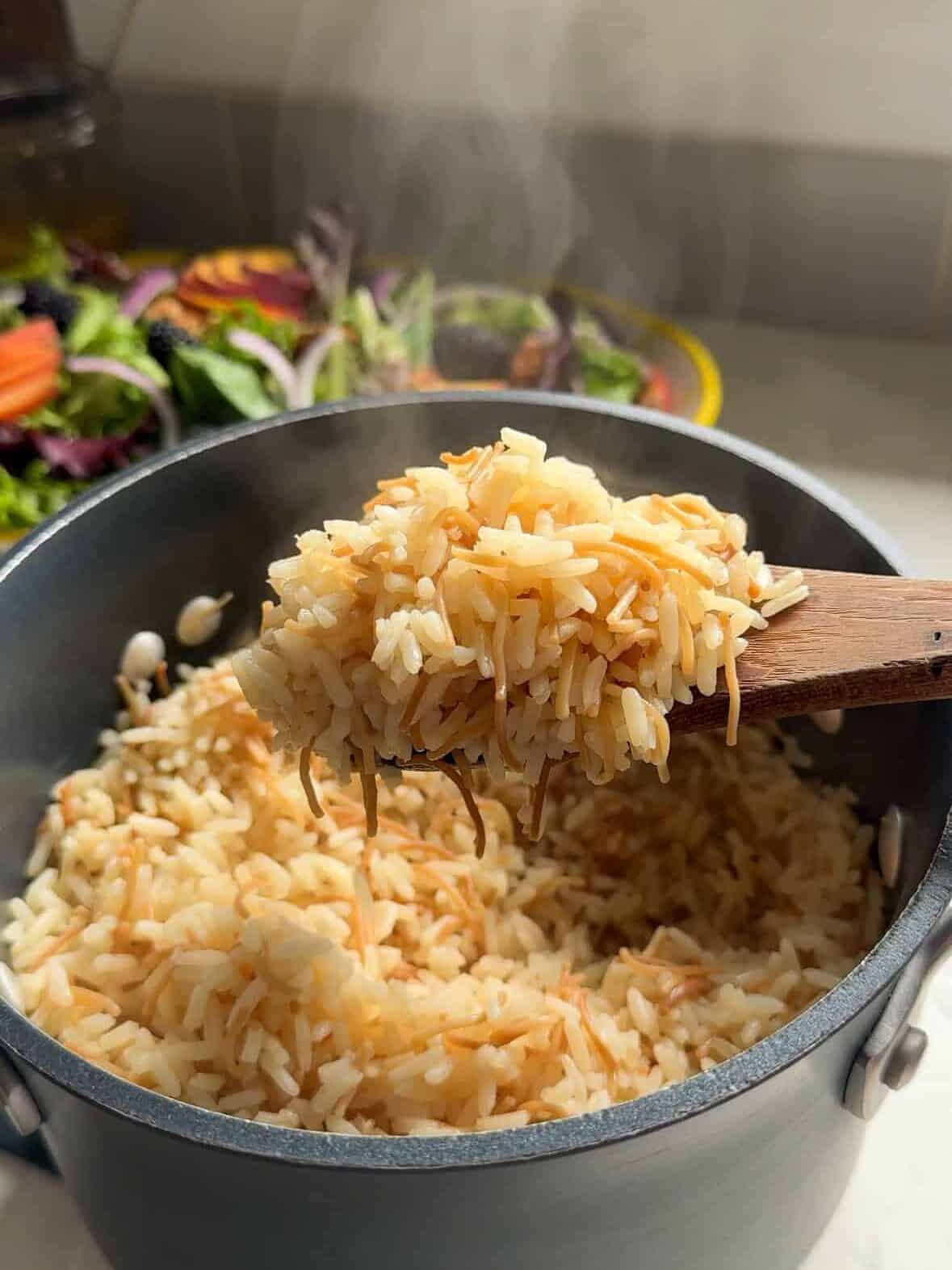
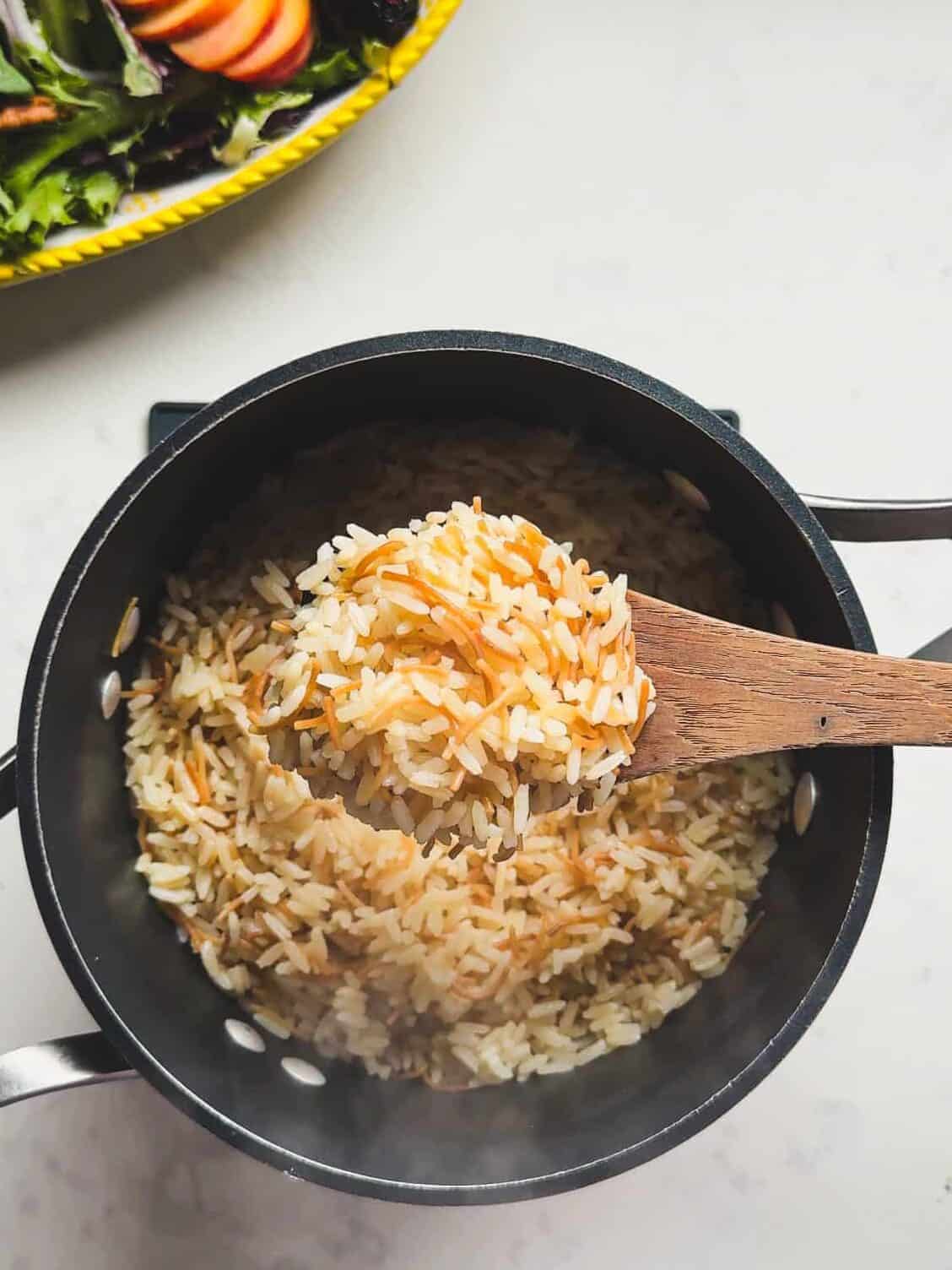
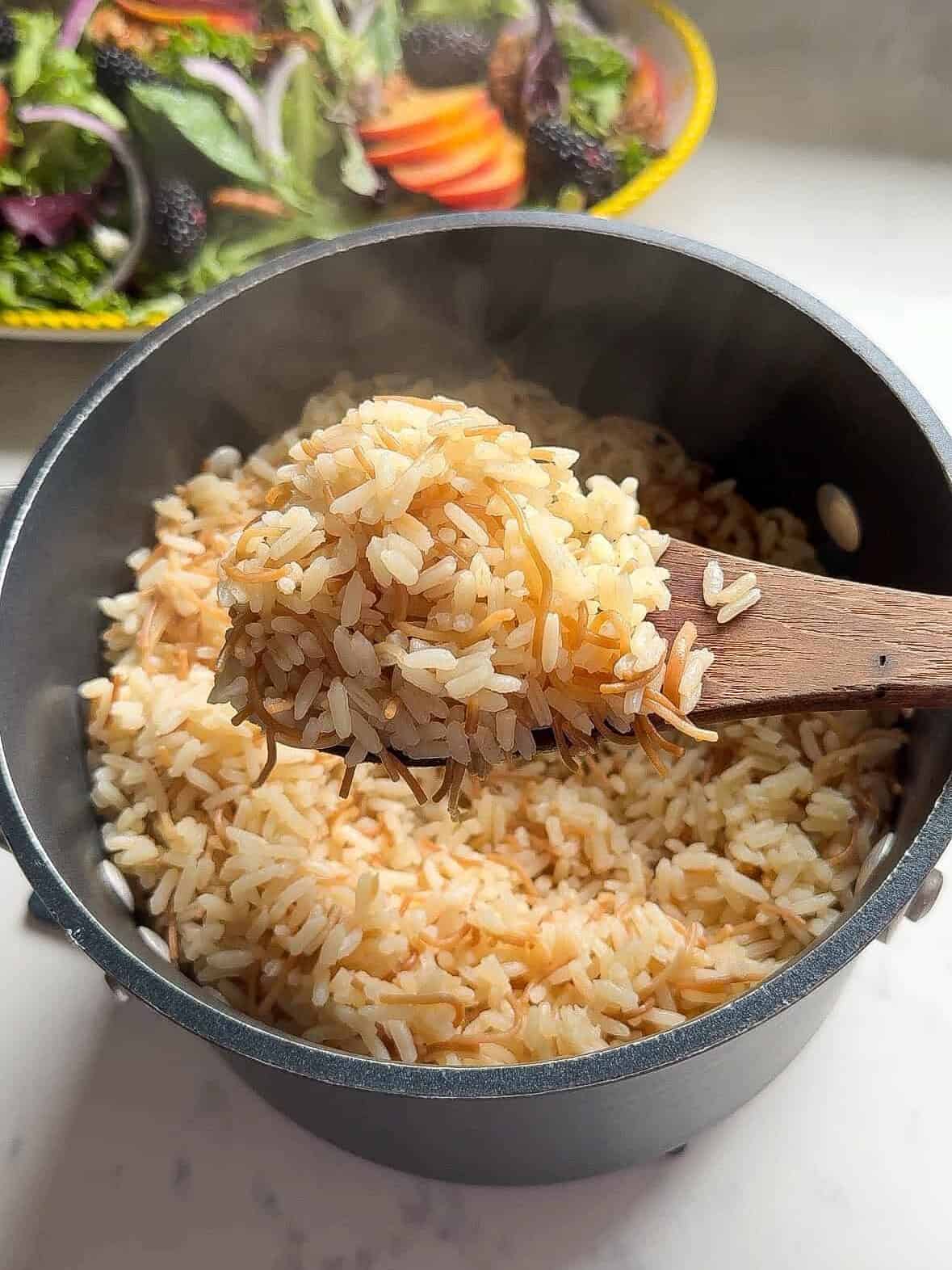
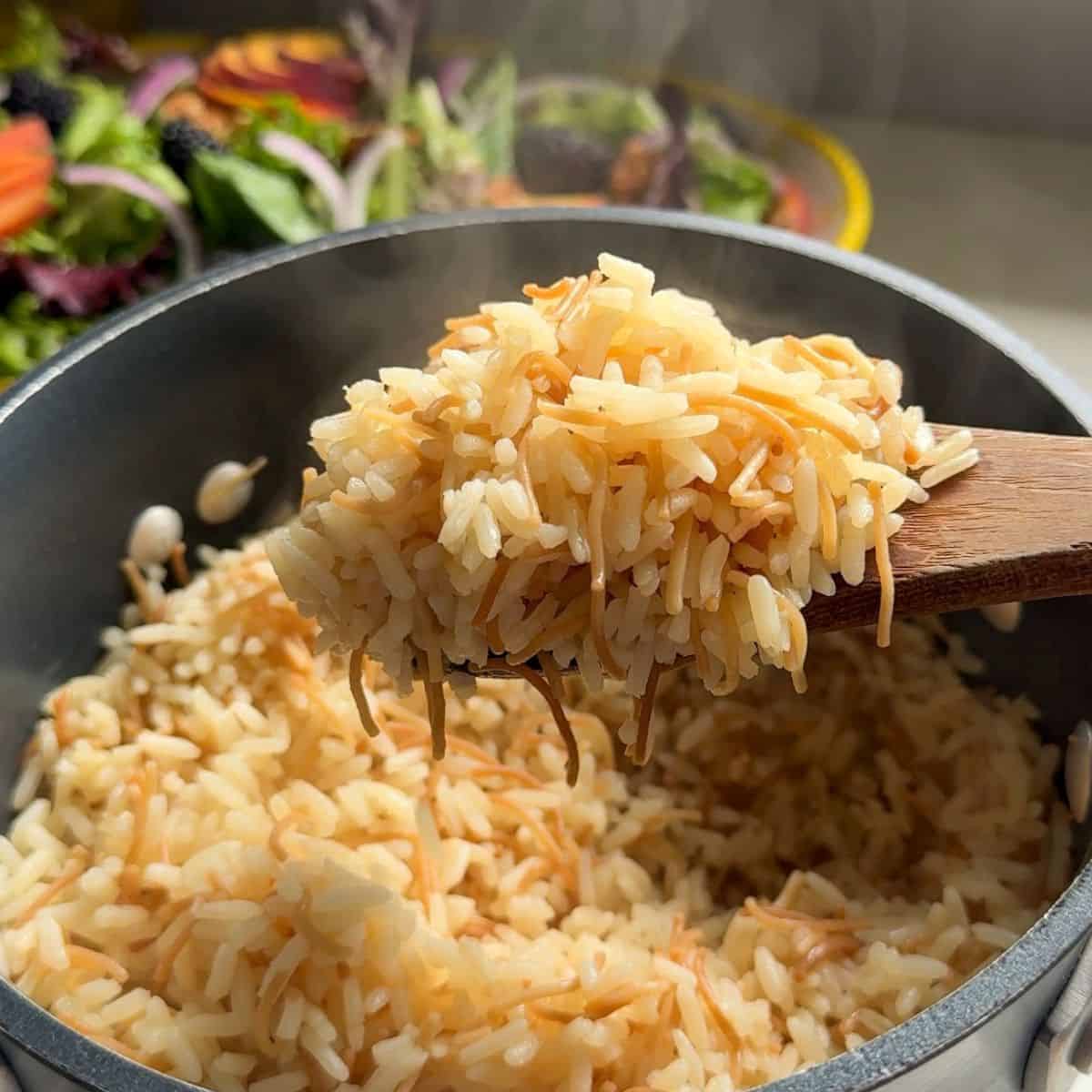
There are a handful of dishes that show up at every Armenian table, and rice pilaf might be the most reliable one of all. It was the side at Tuesday night dinners, the side at every holiday, and the side at every big family gathering I can remember. Fluffy, buttery, with those little toasted vermicelli running all the way through it, this Armenian rice pilaf is one of the simplest things in the world to make, and somehow it goes with absolutely everything.
Here is something a lot of you don't know about us. My husband is Armenian too. We grew up in different homes eating dishes from different regions, so a lot of our childhood meals did not overlap. But pilaf did. It was the one recipe we both knew by heart, made almost exactly the same way, with just the smallest differences from one family to the next.
Try these recipes next:
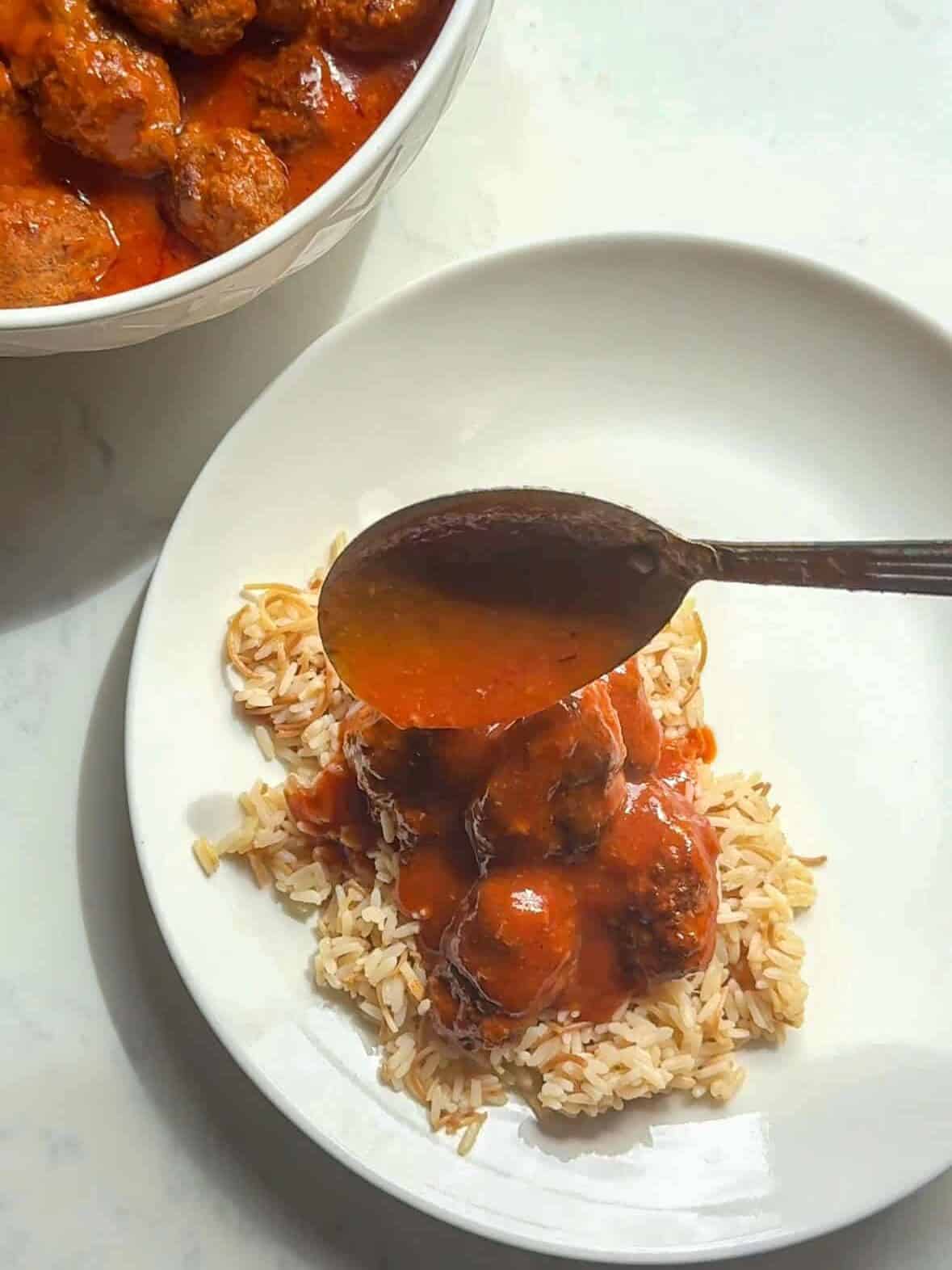
- Sujakaki: Our Family's Armenian Take on Soutzoukakia Smyrna Meatballs (spooned over this pilaf, it is unbeatable)
- Grandma's Red Tabouli: An Armenian Eech Recipe
- My Armenian Fattoush Salad
Jump to:
- The Story Behind Armenian Rice Pilaf
- Why You'll Love This Easy Armenian Rice Pilaf
- Ingredients for Armenian Rice Pilaf
- How to Make Armenian Rice Pilaf
- Tips for the Fluffiest Rice Pilaf
- Rice Pilaf Substitutions
- Easy Rice Pilaf Variations (Including Gluten-Free)
- Equipment
- How to Store and Reheat Rice Pilaf
- What to Serve with Rice Pilaf
- Armenian Rice Pilaf FAQs
The Story Behind Armenian Rice Pilaf
Pilaf is old. Food historians trace it all the way back to ancient Persia, where rice was simmered slowly in seasoned broth until every grain came out tender and perfectly separate. From there it traveled the old trade roads in every direction, picking up a new name and a new personality in each place it landed. Plov, polow, pilau, pilafi. Armenians made it their own centuries ago, and it has been a staple on our tables ever since.
If you grew up in America, there is a good chance your very first taste of it came from a blue box. Here is the part that always makes me smile. That famous Near East rice pilaf, the one sitting in grocery stores everywhere, was created by an Armenian woman named Hannah Kalajian. She survived the genocide and walked a hundred miles to safety as a young girl, carrying the memory of her mother's pilaf the whole way. Years later, from a little market in Worcester, Massachusetts, she packaged up her family's Armenian rice pilaf recipe and it became a New England staple. So when people go looking for Near East rice pilaf, what they are really looking for is a homemade Armenian recipe, exactly like this one.
That is the beautiful thing about pilaf. It is humble, it is made from pantry staples, and it carried whole families through hard times and across oceans. It is the kind of food that feeds a crowd, stretches a budget, and tastes like home no matter where home turned out to be.
Why You'll Love This Easy Armenian Rice Pilaf
- It uses four simple ingredients you almost always have on hand.
- It comes together in about 35 minutes, mostly hands off.
- It is the perfect side for any protein, and it stretches a meal beautifully.
- It is endlessly adaptable, from a plain weeknight side to a holiday dish with seeds and dried fruit.
Ingredients for Armenian Rice Pilaf
Here is what goes into this Armenian rice pilaf. You'll find the full measurements in the recipe card below.
- Long-grain white rice. The classic choice. The grains stay separate and fluffy.
- Vermicelli. Broken into small pieces and toasted in butter. This is what gives pilaf its signature flavor and color. Broken vermicelli works too.
- Butter. For toasting the vermicelli and giving the whole dish that rich, nutty base.
- Chicken broth. Cooking the rice in broth instead of water is what makes pilaf taste like pilaf.
- Salt. To taste, depending on how salty your broth is.
Optional add-ins: finely diced onion and a clove or two of garlic, softened with the vermicelli. This is not our everyday version, but it is lovely when you want a little more depth.
How to Make Armenian Rice Pilaf
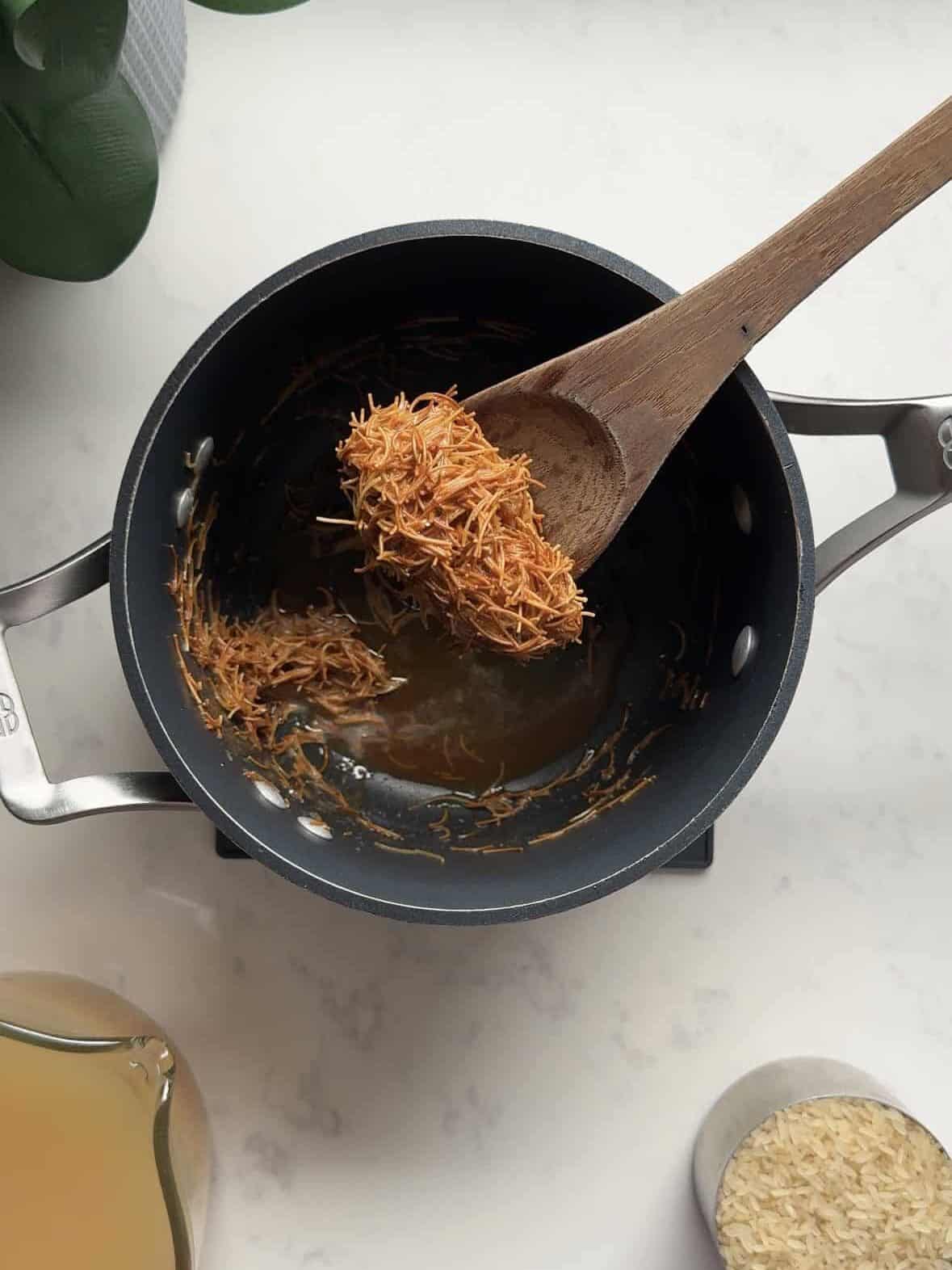
Toast the vermicelli. Melt the butter in a pot over medium heat, then add the broken egg vermicelli. Stir constantly until they turn a deep golden brown, about 3 to 5 minutes. This step is the heart of the dish, so do not rush it.
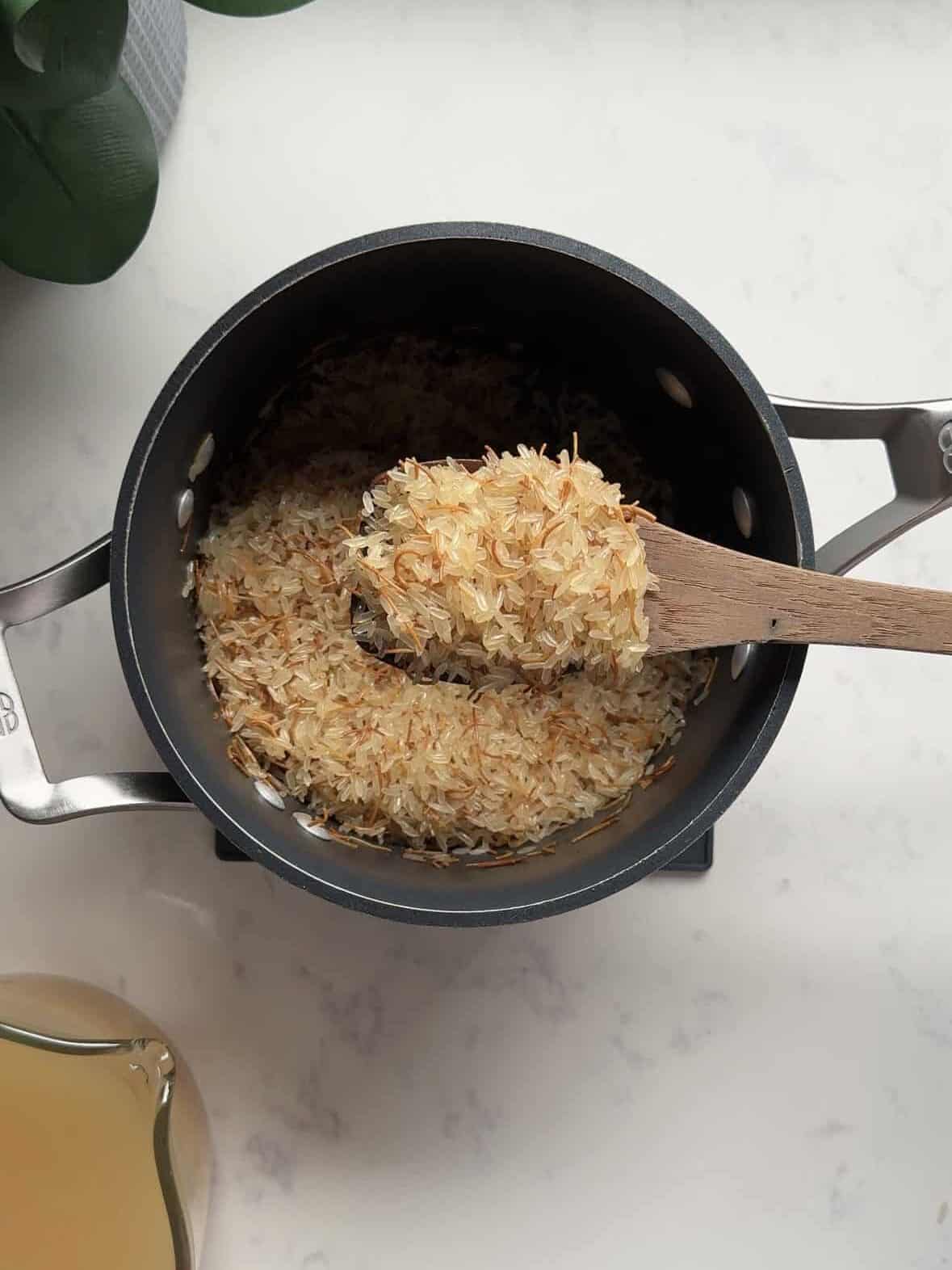
Toast the rice. Add the rice and stir for about a minute, just until it is glossy and coated in the butter. This helps every grain stay separate.
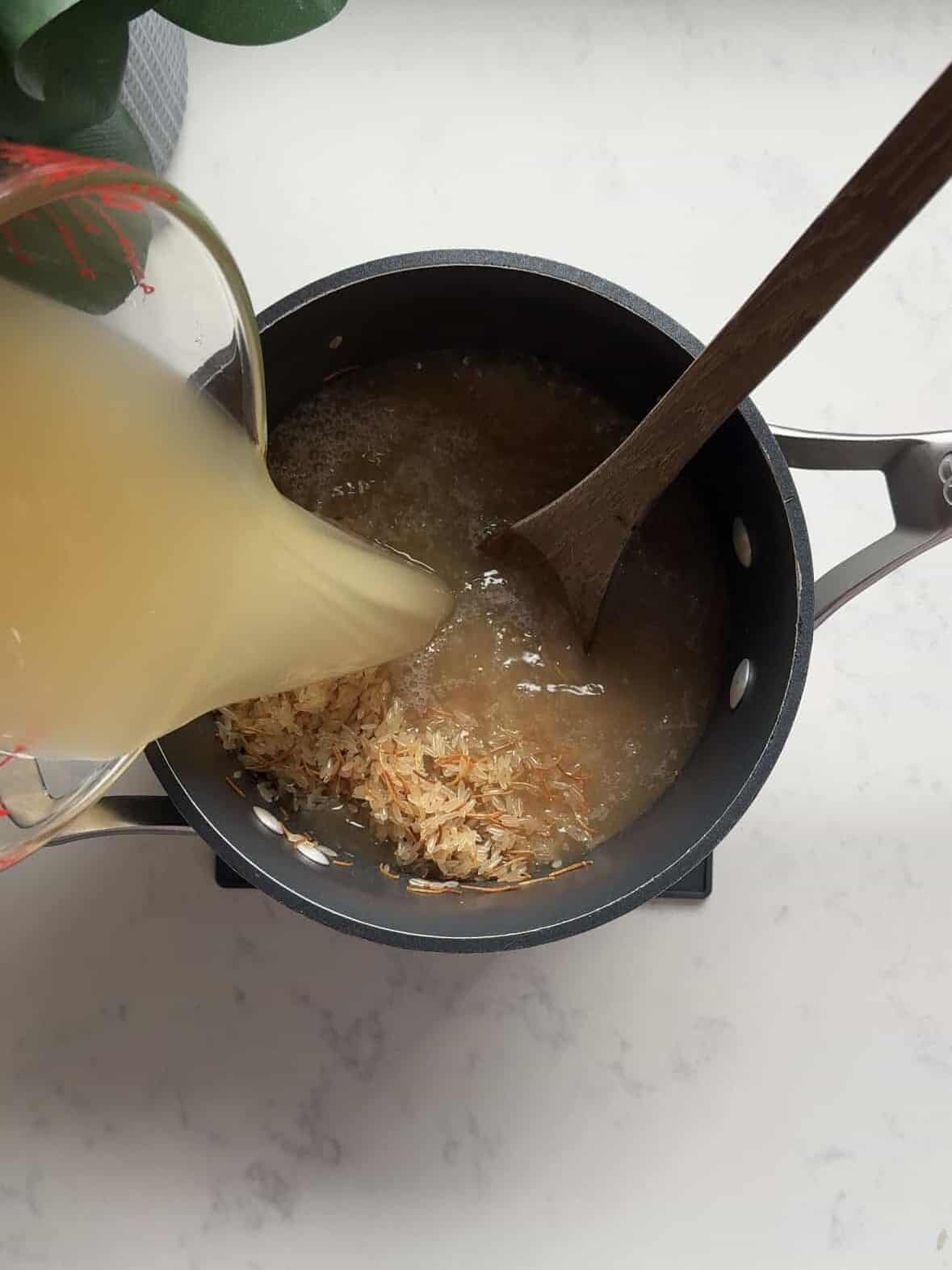
Simmer. Pour in the broth, add a little salt, and bring everything to a boil. Cover, drop the heat to low, and let it cook undisturbed for about 20 minutes, until the liquid is fully absorbed.
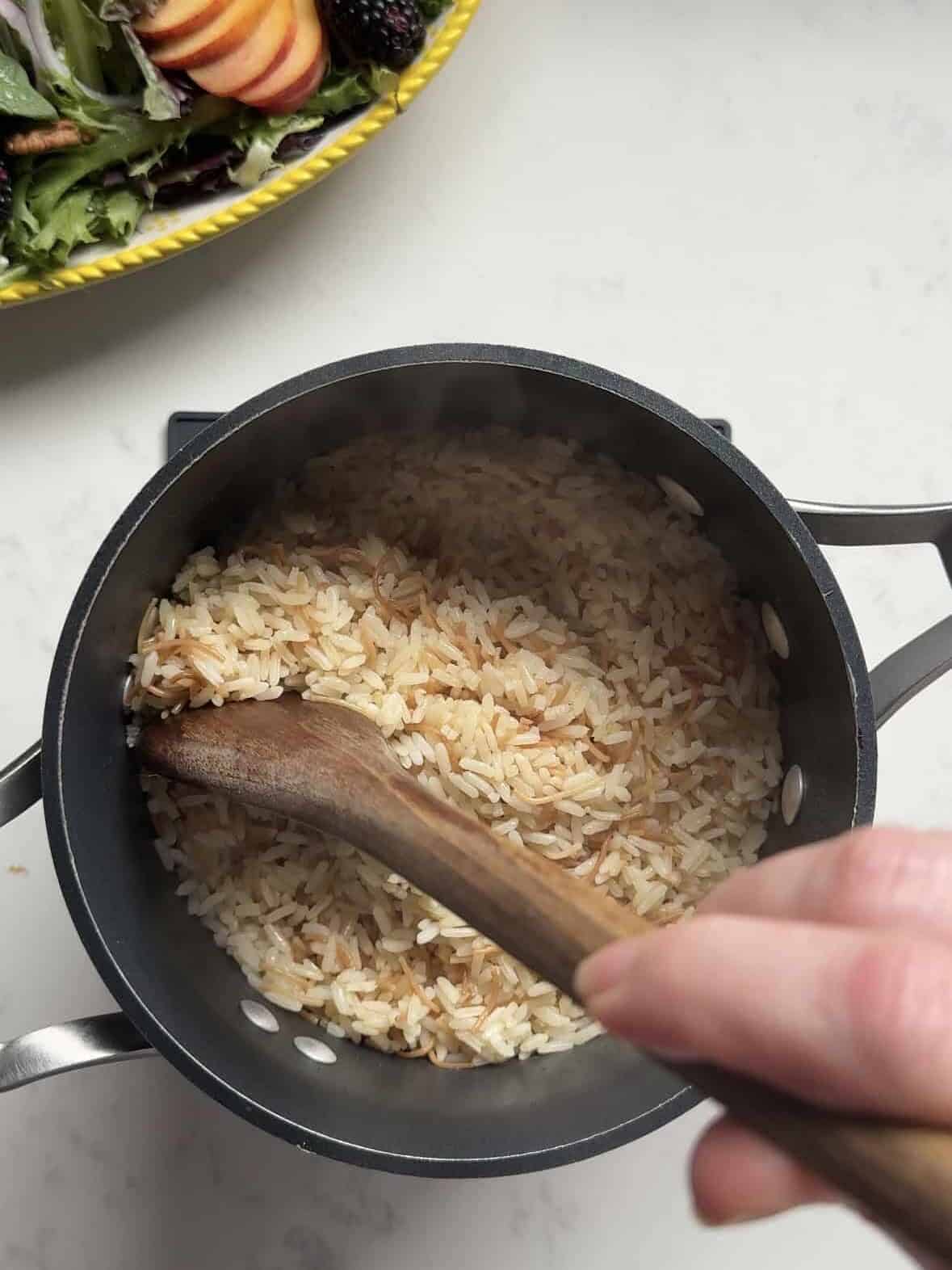
Rest and fluff. Take the pot off the heat and leave the lid on for 10 minutes. This is the secret to fluffy pilaf. Then fluff gently and serve.
Tips for the Fluffiest Rice Pilaf
- Rinse your rice under cool water until it runs clear. Washing off the surface starch is the difference between fluffy and gummy.
- Toast the vermicelli patiently. Deep golden, not pale and not burnt. That color is where the flavor lives.
- Do not lift the lid while it simmers. Every peek lets out the steam that is doing the cooking.
- Let it rest before fluffing. Ten minutes off the heat lets the grains firm up so they separate instead of clumping.
Rice Pilaf Substitutions
- Broth: chicken broth is traditional, but vegetable broth makes this fully vegetarian. Water works in a pinch, though you will lose some flavor.
- Butter: olive oil works beautifully if you prefer it, and it is what many families use.
- vermicelli: broken vermicelli or thin spaghetti snapped into small pieces both stand in for the vermicelli.
Easy Rice Pilaf Variations (Including Gluten-Free)
- Onion and garlic pilaf: soften a little diced onion and minced garlic in the butter before the vermicelli for a deeper, savory version.
- Grandma's holiday pilaf: my grandma used to fold in toasted sunflower seeds and dried cranberries at the very end. It is festive, a little sweet, and it makes the simplest side feel special.
- Gluten-free rice pilaf: swap the vermicelli for gluten-free orzo, or simply skip the vermicelli and toast the rice on its own in the butter. You lose the toasted vermicelli texture, but you keep all the flavor, and the dish is naturally gluten free from there.
Equipment
- A medium pot or saucepan with a tight-fitting lid
- A wooden spoon
- A fork for fluffing
How to Store and Reheat Rice Pilaf
Store leftover pilaf in an airtight container in the fridge for up to 4 days. To reheat, add a small splash of broth or water and warm it gently on the stove or in the microwave so it steams back to fluffy instead of drying out. Cooked pilaf also freezes well for up to 2 months.
What to Serve with Rice Pilaf
Pilaf is the ultimate team player. We serve it next to almost any protein, spoon Sujakaki meatballs right over the top, or set it beside crispy baked chicken skewers. It is also wonderful next to a big bright salad like Armenian fattoush. Honestly, pile it next to a salad and a little protein and you have dinner.
This is the dish that taught my husband how to cook, at least in theory. His family would not let him move out until he learned to make pilaf. We have been married almost 18 years now, and I am still waiting on that first batch. So if you make this before he does, you are already one step ahead of him.
Armenian Rice Pilaf FAQs
The classic version is not, because it is made with vermicelli, which contain wheat. To make a gluten-free rice pilaf, swap the vermicelli for gluten-free orzo or leave the vermicelli out and toast the rice on its own. From there the dish is naturally gluten free.
Plain rice is simply boiled in water. Rice pilaf is toasted in fat first, then simmered in seasoned broth, which gives it a richer flavor and those fluffy, separate grains.
Essentially, yes. The well-known Near East boxed pilaf was created by an Armenian immigrant, Hannah Kalajian, from her family's recipe. This homemade Armenian rice pilaf is the original idea behind that box.
Armenian cooking sits at the crossroads of the Middle East, the Mediterranean, and the Caucasus, so yes, this falls right into the middle eastern rice pilaf family, with its own Armenian character.
Long-grain white rice is the classic choice because the grains stay light and separate. Basmati works well too.
Usually it is unrinsed rice, too much liquid, or lifting the lid while it cooks. Rinse the rice, stick to the broth ratio in the card, keep the lid on, and let it rest before fluffing.
Yes. Make it up to a day ahead and reheat with a small splash of broth so it steams back to fluffy. It is a great make-ahead side for holidays and busy weeknights.
You can, but broth is what gives pilaf its signature savory flavor. If you use water, add a little extra salt and a pat of butter.
Armenian Rice Pilaf
Equipment
- Medium pot or saucepan with a tight-fitting lid
- Wooden Spoon
- Fork
Ingredients
- 2 tablespoon butter
- ½ cup fine vermicelli
- 2 cups white rice
- 32 ounces Chicken Broth
- ½ teaspoon salt optional
- ¼ cup finely diced onion optional
- 1 clove garlic minced optional
Instructions
- Melt the butter in a medium pot over medium heat. Add the vermicelli and stir constantly until deep golden brown, about 3 to 5 minutes. (If using onion and garlic, add them with the vermicelli and soften.)
- Add the rinsed rice and stir for about 1 minute, until coated and glossy.
- Pour in the chicken broth and salt. Bring to a boil.
- Cover, reduce the heat to low, and cook undisturbed until all the liquid is absorbed, about 20 minutes.
- Remove from the heat and let it sit, covered, for 10 minutes. Fluff with a fork and serve.
Notes
- Rinse the rice until the water runs clear for the fluffiest result.
- Gluten-free: use gluten-free orzo in place of the vermicelli, or toast the rice alone with no vermicelli.
- Grandma's variation: fold in toasted sunflower seeds and dried cranberries at the end for a festive holiday pilaf.
- Make ahead: prepare up to a day in advance and reheat with a splash of broth.
- Vegetarian: use vegetable broth in place of chicken broth.

Comments
No Comments