

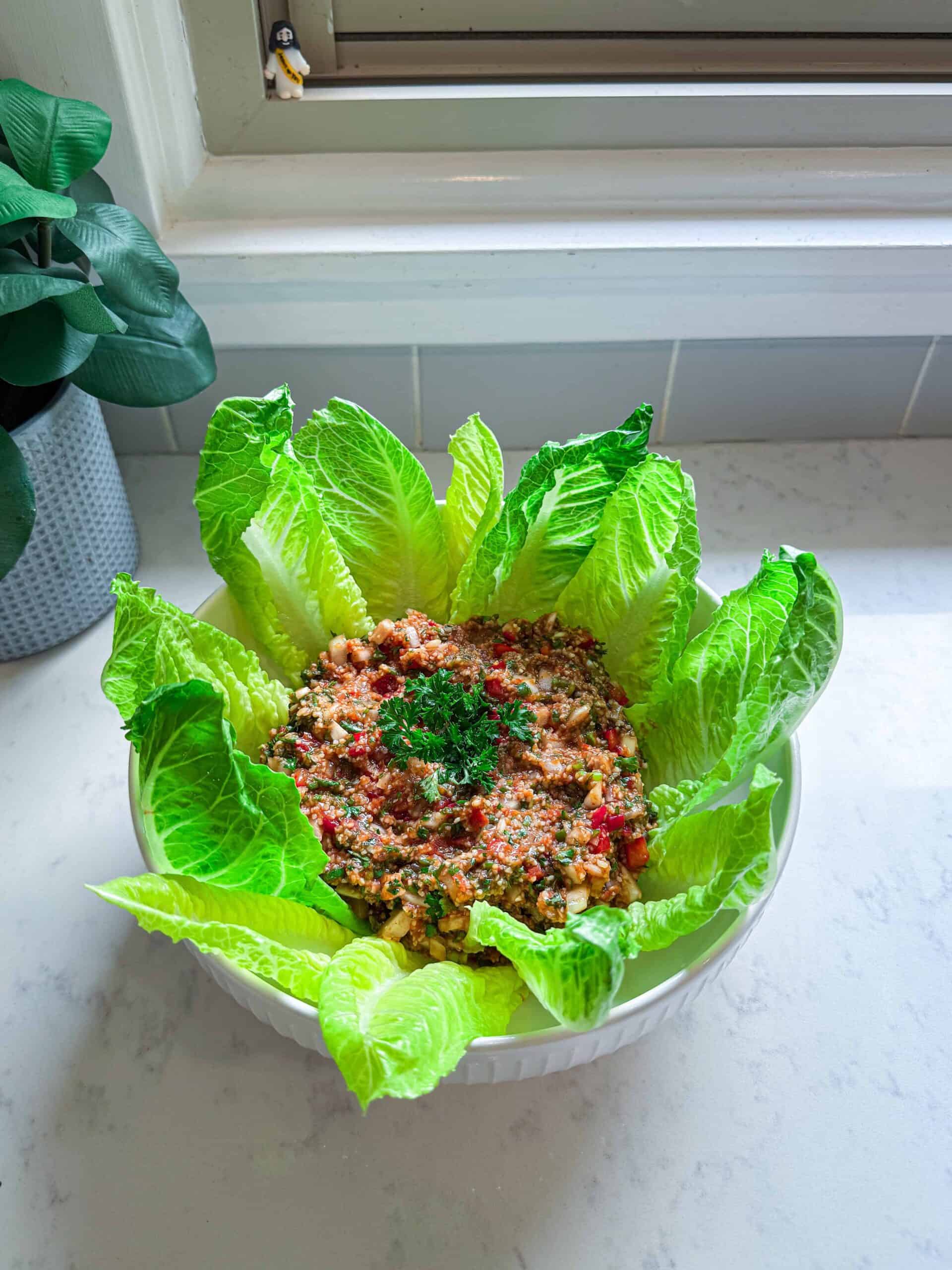
Some recipes are simple on the surface and layered underneath. This is one of them. Armenian eech, red tabouli, is one of those dishes that looks familiar the moment you set it on the table, and then surprises everyone the moment they take a bite. Our family calls it Grandma's Red Tabouli, and it came to us through my grandmother Mary, who made it every single week without fail. This is part of my Armenian heritage series, and this one is close to my heart. Pull up a chair.
The Story Behind This Armenian Eech Recipe
Her name was Mary. And she was never not cooking.
Breakfast finished, she was already thinking about lunch. Lunch cleared, dinner was already on her mind. Not because she had to. Because feeding people was her joy, her purpose, her love language before anyone called it that. She was a working mother who was a genius in the kitchen, and her shortcuts never once sacrificed flavor. They elevated it.
Every week, Mary set a table. Every week, people came. Family, friends, neighbors, it did not matter. There was always room and there was always food. Her weekly lunches became something people counted on, the kind of gathering that holds a family together without anyone ever saying that out loud.
She made eech. Armenian red tabouli. And she made it her own.
She called it Garbagé. We never questioned it as kids. Our best guess is that it was her way of describing what she did, took everything, threw it together, mixed it up, and somehow made it extraordinary. That was Mary. The name stuck.
Mary's mother was Kessabtsi, from Kessab, a small Armenian enclave on the Syrian Mediterranean coast, ancient and enduring, the kind of place that survives things it should not have. The recipes that came from that region were preservation cooking. Feed-the-community food. The food of people who rebuilt everything, including their tables. Eech was part of that lineage, passed down through hands that understood what it meant to feed people well.
Mary received that recipe and did what the best cooks do. She made it work for her life. For her kitchen. For the working mothers she was feeding every week who needed something beautiful and unfussy. She had the instincts of someone who had watched great cooking her whole life and the ingenuity of someone who never had time to waste.
This is her recipe. And I promise you, once you make it, you will understand exactly why nobody ever left her table hungry.
More From the Mom's Dinner Bell Armenian Heritage Series
- Lahmajoun (Armenian Pizza) — A thin flatbread topped with a boldly spiced ground meat mixture, baked until the edges are crispy and the topping is deeply fragrant.
- Manti with Wonton Wrappers — Seasoned meat tucked inside small pieces of dough, shaped into little open-faced boats, baked until golden, and served in warm chicken broth with plain yogurt.
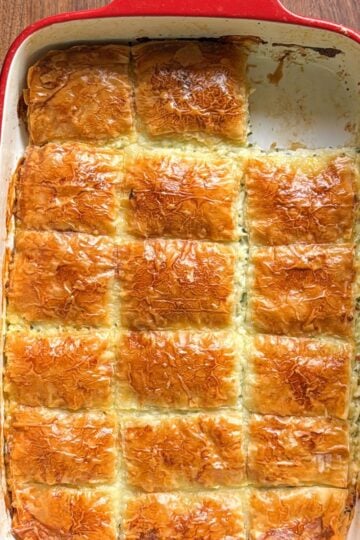
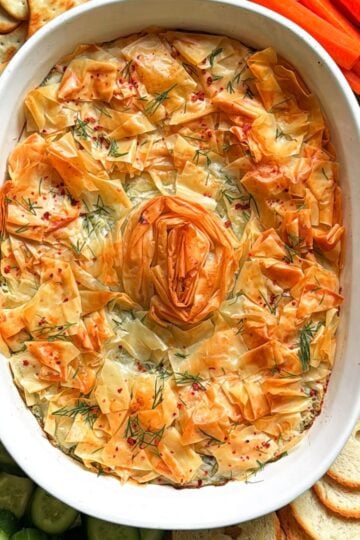
- Phyllo Dough Spinach Pie — Layers of buttery phyllo dough and a savory spinach filling. The ultimate make-ahead side dish.
- Sujakaki — Armenian Smyrna Meatballs — An Armenian great-grandmother's tribute to her Greek neighbors, rebuilt in America from memory.
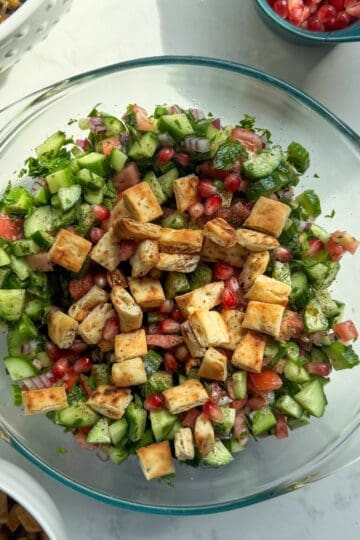
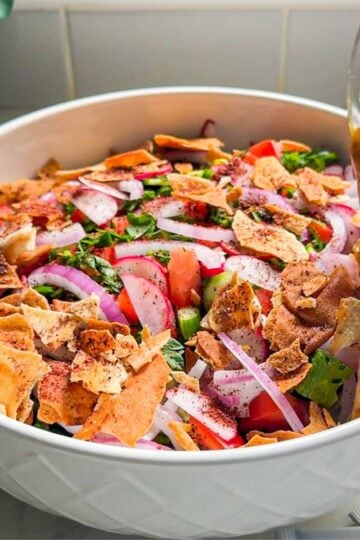
- Fattoush Salad — A perfect fresh side salad to serve alongside this eech recipe.
Jump to:
- The Story Behind This Armenian Eech Recipe
- More From the Mom's Dinner Bell Armenian Heritage Series
- What Is Eech? The Armenian Red Tabouli You Have Never Had
- Why Your Eech Probably Looks Different From Mine
- Ingredients for Grandma's Armenian Eech Red Tabouli
- How to Make Armenian Eech — Grandma's Red Tabouli
- Tips and Notes
- Is Tabouli Healthy? What You Should Know About Armenian Eech
- Ingredient Substitutions for This Eech Recipe Armenian Salad
- Recipe Variations for Armenian Red Tabouli
- How to Store Leftover Eech
- How to Serve Armenian Eech
- Frequently Asked Questions About Armenian Eech Red Tabouli
- Other Family Recipes
- Side Dishes
What Is Eech? The Armenian Red Tabouli You Have Never Had
If you think you already know this dish, you might want to keep reading.
Eech, also spelled eetch, itch, or metch, is an Armenian bulgur salad often called Armenian red tabouli. And while it shares a family tree with the tabbouleh you may already know and love, eech and tabbouleh are neighbors, not twins.
Lebanese tabbouleh is heavy on the parsley and light on the bulgur. Armenian eech flips that ratio completely. It is bulgur-forward, deeply flavored with tomato, warm spices, and a generous amount of fresh herbs. Where Lebanese tabbouleh is bright and herby, Armenian eech is hearty, spiced, and deeply satisfying. The addition of puréed or cooked tomato is another defining difference, eech gets its characteristic red color and richness from tomato worked directly into the bulgur. And depending on how you prefer it, eech can be served warm or cold.
They are related. They are not the same. And once you have made this Armenian eech recipe, you will never confuse the two again.
Why Your Eech Probably Looks Different From Mine
This is one of the things I love most about this dish. Armenian eech is deeply regional. The Kessabtsi version that came through my family reflects the Syrian coastal influence of that community, the spices, the tomato, the texture, the way it is served. An Armenian family from Yerevan might make eech that looks and tastes quite different. A family from the diaspora in Beirut might make another version entirely.
Regional differences are not mistakes. They are the whole story. Every family carried this recipe differently across borders and generations, adapting it to what was available, what was familiar, and what worked in their kitchen. If your family's eech recipe looks different from this one, that is not a coincidence. It is history.
This is our version. Mary's version. And it is one of the most flavorful, foolproof dishes I know.
Ingredients for Grandma's Armenian Eech Red Tabouli
These are simple, pantry-friendly ingredients, exactly the kind Mary would have reached for in her kitchen. A full substitution guide follows below.
The Base
- Fine bulgur (#1), rinsed
- Boiling water
The Flavor
- Tomato paste
- Chunky mild salsa
- Dry taco seasoning
- Olive oil
The Freshness
- Green onion, chopped
- White or yellow onion, chopped
- Green or red bell pepper, chopped
- Fresh parsley, chopped
Optional
- Fresh lemon juice
- Celery, chopped
See recipe card for quantities.
How to Make Armenian Eech — Grandma's Red Tabouli
Making this Armenian eech recipe is straightforward and forgiving. Mary made it every week, often alongside other dishes, and it never required her full attention. That is the beauty of it. Three simple stages and it is done.
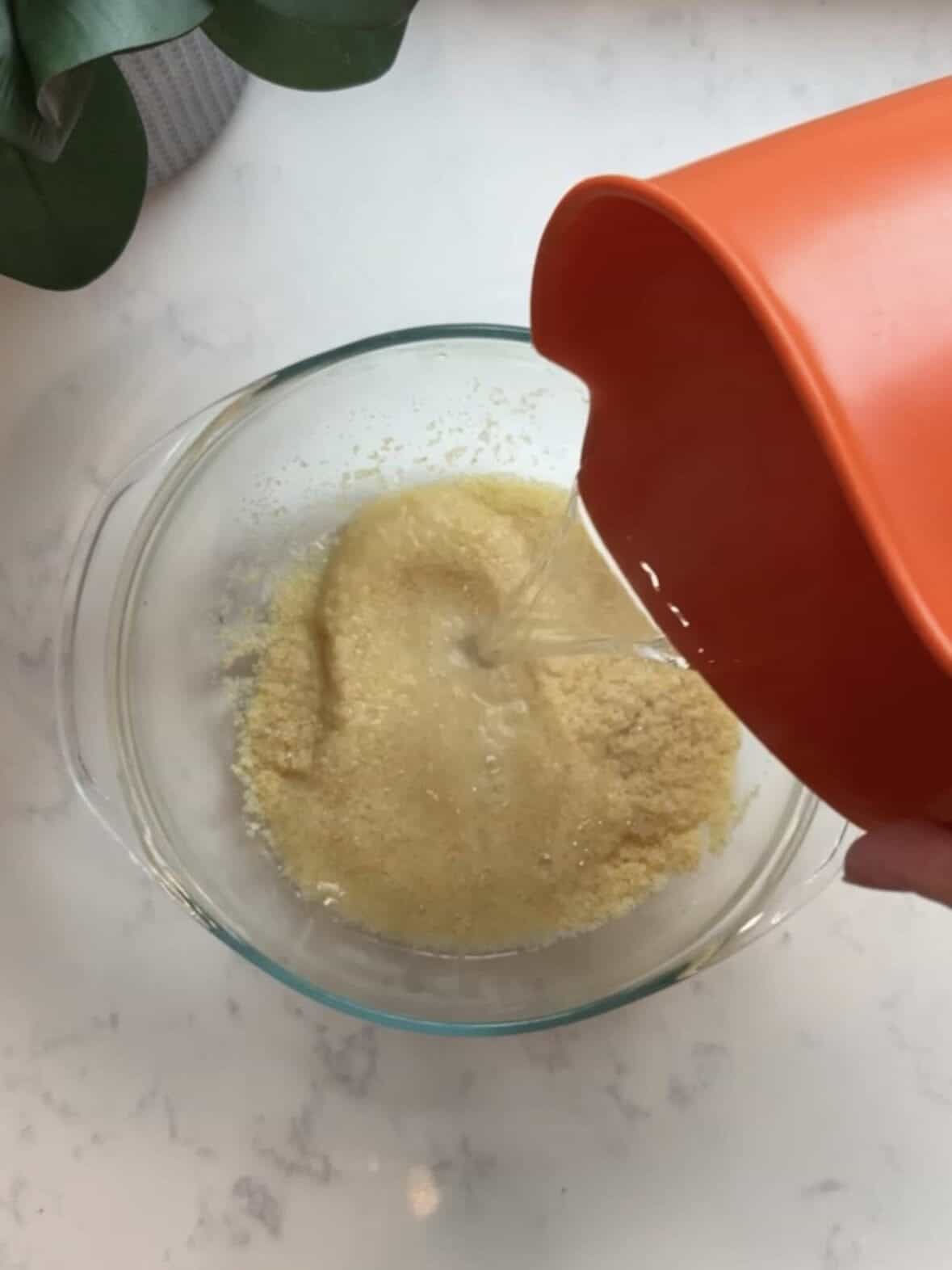
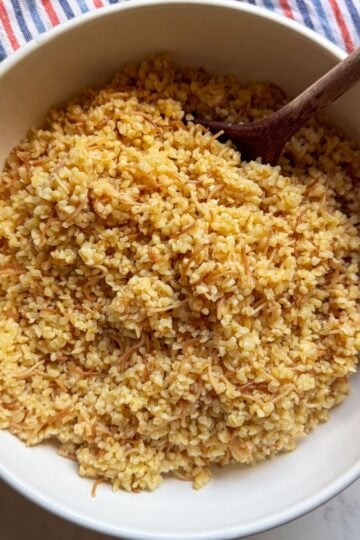
- Step 1: Bloom the Bulgur - Rinse your fine bulgur under cold water, then place it in a large bowl. Pour boiling water over the bulgur, stir once, and cover. Let it sit for 20 minutes until the water is fully absorbed and the bulgur is soft and fluffy. The water should evaporate completely, leaving you with a soft, workable base. Do not rush this step.
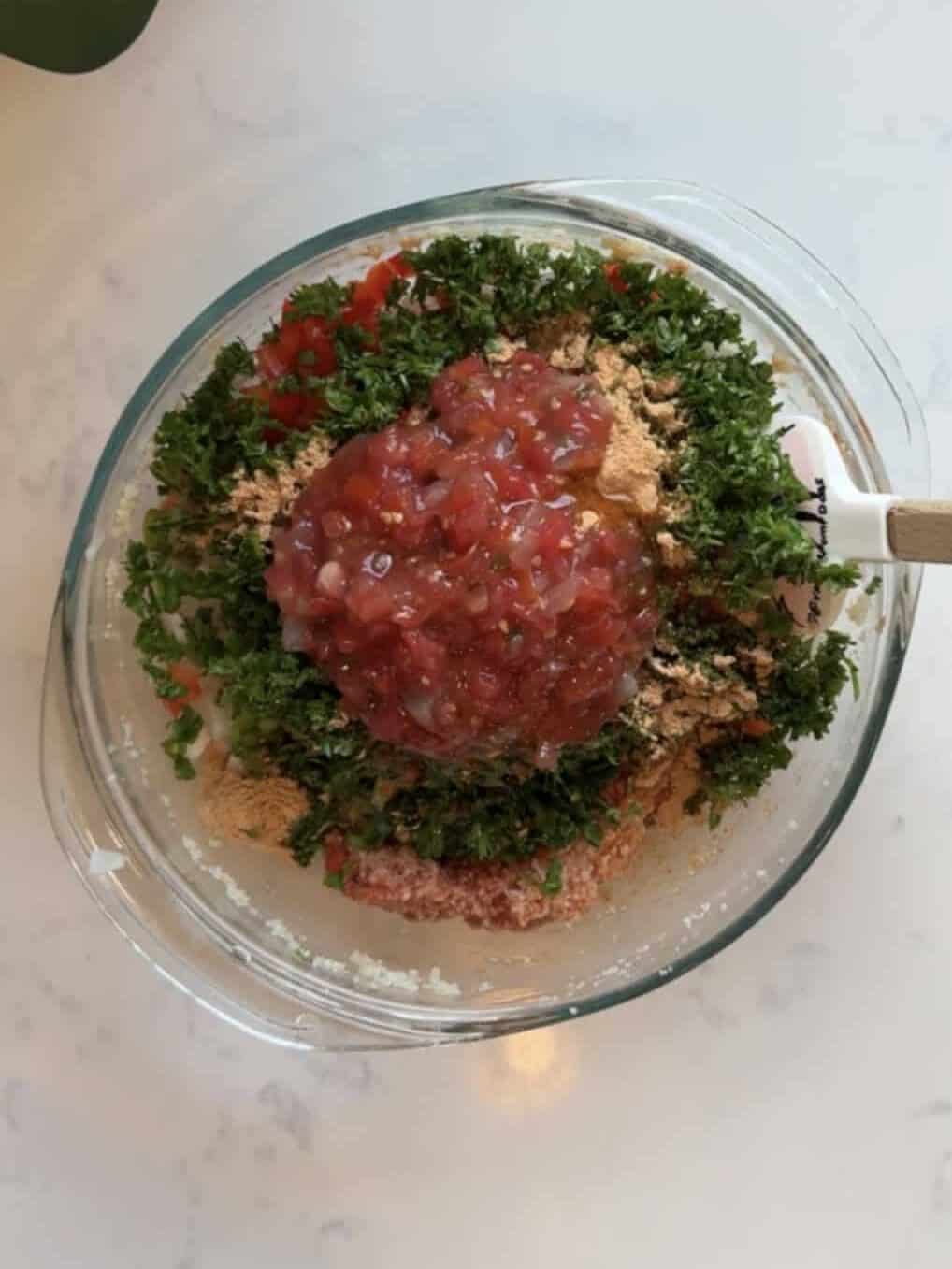
- Step 2: Mix Everything Together - Once the bulgur has fully bloomed, add the tomato paste, salsa, taco seasoning, olive oil, green onion, white onion, bell pepper, and parsley. If using, add celery and a squeeze of fresh lemon juice. Mix well until every ingredient is fully combined and the bulgur is evenly coated in the tomato and spice.

- Step 3: Taste and Adjust - Give it a taste. If it needs brightness, add a squeeze of lemon. If it needs more depth, a little more taco seasoning goes a long way. This is a recipe that welcomes your instincts, just like Mary's did.
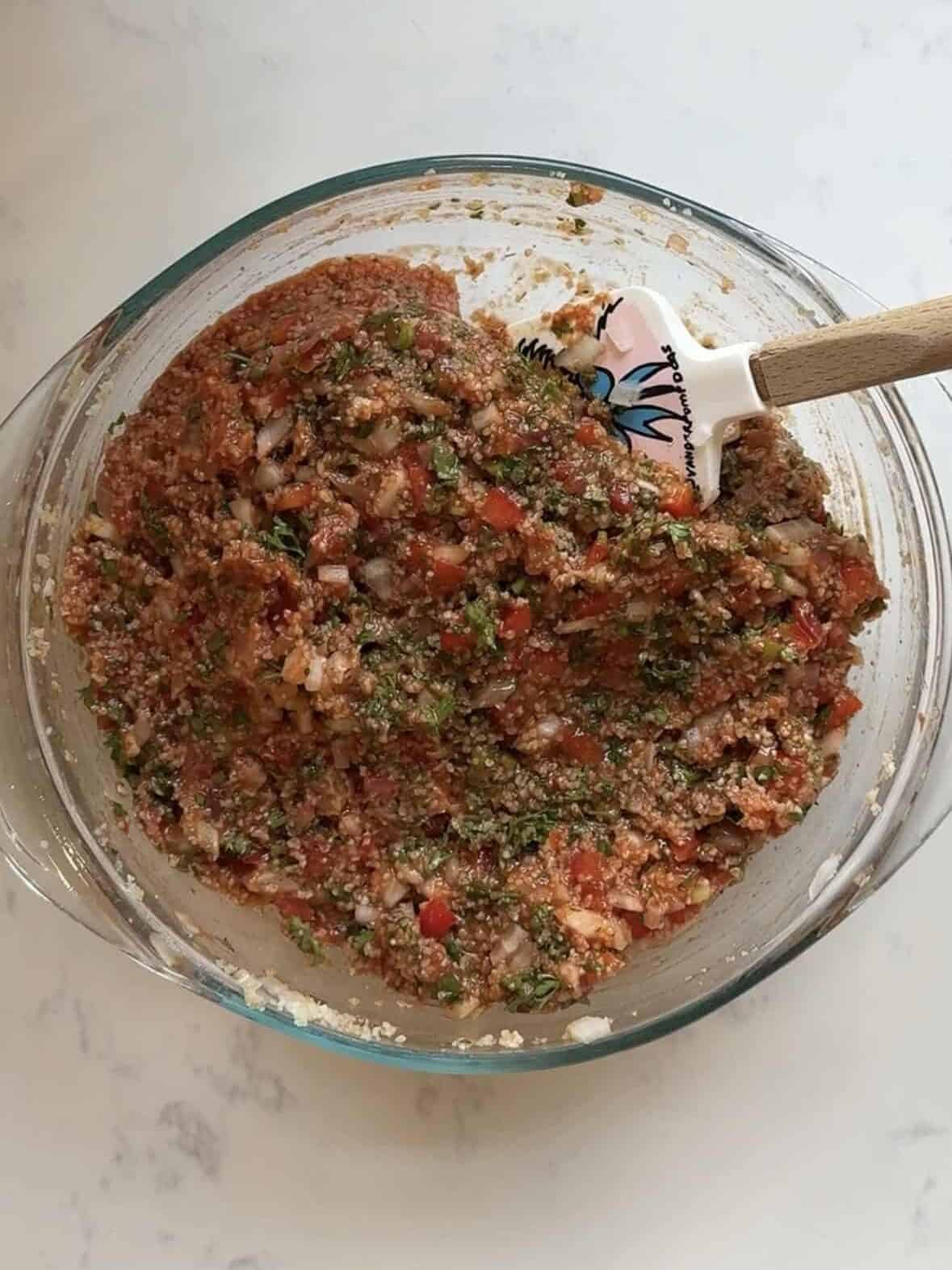
- Step 4: Serve or Rest - Serve immediately at room temperature, or cover and refrigerate for a few hours before serving. The flavor deepens considerably as it rests, and this Armenian red tabouli is arguably best made the morning before you plan to serve it.
Tips and Notes
Make it ahead: This eech recipe was made for working mothers and working mothers make things ahead. Prepare it the morning of or even the night before and refrigerate. The bulgur absorbs the tomato and spice as it rests and the flavor gets better with every hour.
Use fine bulgur: Fine bulgur (#1) is essential here. Coarser varieties will not absorb the water properly with this cold-soak method and the texture will be off. Look for it in Middle Eastern grocery stores or online.
Rinse the bulgur: Do not skip rinsing. It removes excess starch and gives you a cleaner, fluffier result.
Boiling water matters: Warm water is not enough to properly bloom fine bulgur. Use water that is fully boiling for the best texture.
Salsa style: Mary used chunky mild salsa. Chunky gives the eech more texture and body. Mild keeps it family-friendly. If you prefer heat, a medium salsa works beautifully.
The lemon: It is optional but highly recommended. A squeeze of fresh lemon at the end brightens the whole dish and adds a layer of acidity that plays beautifully against the tomato and spice.
Celery: The original recipe card includes celery, but it is not traditional to eech and Mary herself did not always add it. Consider it fully optional.
Is Tabouli Healthy? What You Should Know About Armenian Eech
One of the most common questions about this dish is a good one, is tabouli healthy? The short answer is yes, and Armenian eech is no exception.
Fine bulgur wheat is a whole grain that is high in fiber and protein and has a lower glycemic index than many other grains. It is filling without being heavy, which is part of why this dish works so well as a side, a light lunch, or a make-ahead dish that keeps well in the refrigerator.
The rest of the ingredients in this Armenian eech recipe — fresh parsley, green onion, bell pepper, olive oil — are all nutrient-dense, anti-inflammatory whole foods. The tomato paste adds lycopene. The salsa brings vegetables and flavor with minimal added effort.
This is the kind of food Mary was feeding working mothers every week, and it is the kind of food that holds up. Satisfying, flavorful, and genuinely good for you.
Ingredient Substitutions for This Eech Recipe Armenian Salad
One of the most beautiful things about this Armenian eech recipe is how adaptable it is. Mary proved that. Here are substitutions that work well.
Fine bulgur can be replaced with couscous in a pinch, though the texture will be lighter and less hearty. For a gluten-free version, some cooks use cauliflower rice, though the dish will taste quite different.
Tomato paste can be replaced with a couple of tablespoons of sun-dried tomato paste for a deeper, more concentrated flavor.
Salsa can be replaced with a combination of diced fresh tomato and a splash of tomato juice if you prefer to build the flavor yourself. Add a pinch of garlic powder and onion powder to compensate.
Taco seasoning can be replaced with a homemade blend. Combine cumin, paprika, garlic powder, onion powder, chili powder, and a pinch of oregano. This actually brings the flavor profile closer to a more traditional Armenian eech spice blend, a full circle moment Mary would have appreciated.
Olive oil can be swapped for avocado oil with very similar results.
Recipe Variations for Armenian Red Tabouli
Make it spicy: Use medium or hot salsa and add a pinch of cayenne or Aleppo pepper to the mix. Aleppo pepper in particular is a beautiful nod to the Syrian Armenian roots of this dish.
Add more herbs: Traditional eech sometimes includes dried mint or fresh basil alongside the parsley. Either addition works beautifully here.
Serve it warm: Eech can be eaten warm or cold. If you want to serve it warm, simply mix everything together right after the bulgur blooms and serve immediately. The warm version has a slightly different character, heartier, more comfort-food adjacent.
Scale it up: This eech recipe scales effortlessly. Double or triple it for a crowd. The ratios hold perfectly and it makes a stunning addition to any mezza spread or family gathering.
How to Store Leftover Eech
Good news — this Armenian red tabouli stores beautifully and tastes even better the next day.
Refrigerator: Store covered in an airtight container for up to 4 days. The flavors continue to develop as it sits.
Freezer: This dish does not freeze well. The bulgur texture changes significantly after freezing and thawing. Make it fresh and enjoy it within a few days.
Meal prep tip: Because this recipe is so easy and quick to assemble, it is ideal for weekly meal prep. Make a batch on Sunday and serve it throughout the week as a side, a light lunch, or a snack with pita.
Equipment
- Large mixing bowl — for blooming the bulgur and combining all ingredients
- Measuring cups and spoons
- Cutting board and knife
- Mixing spoon or spatula
How to Serve Armenian Eech
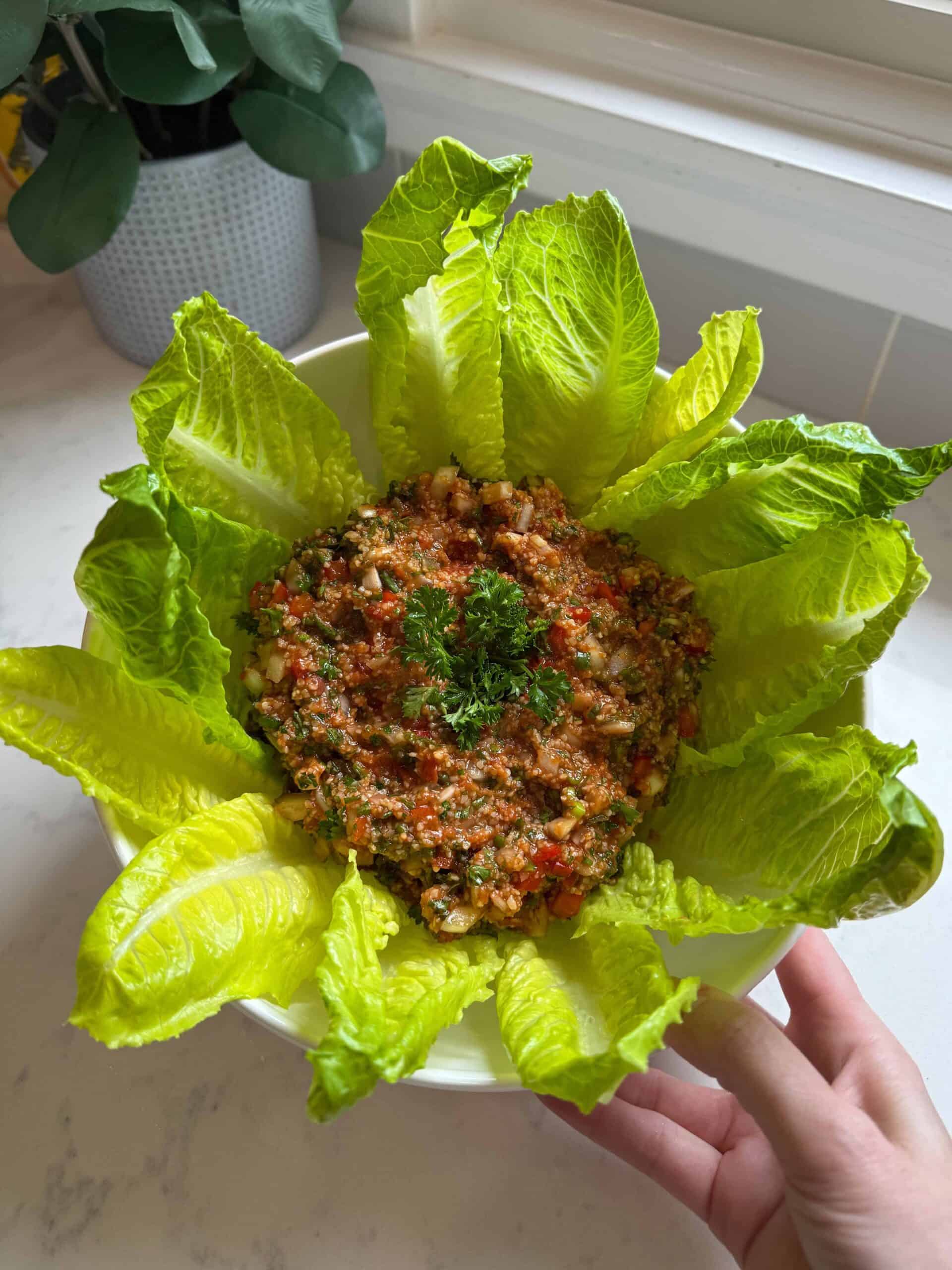
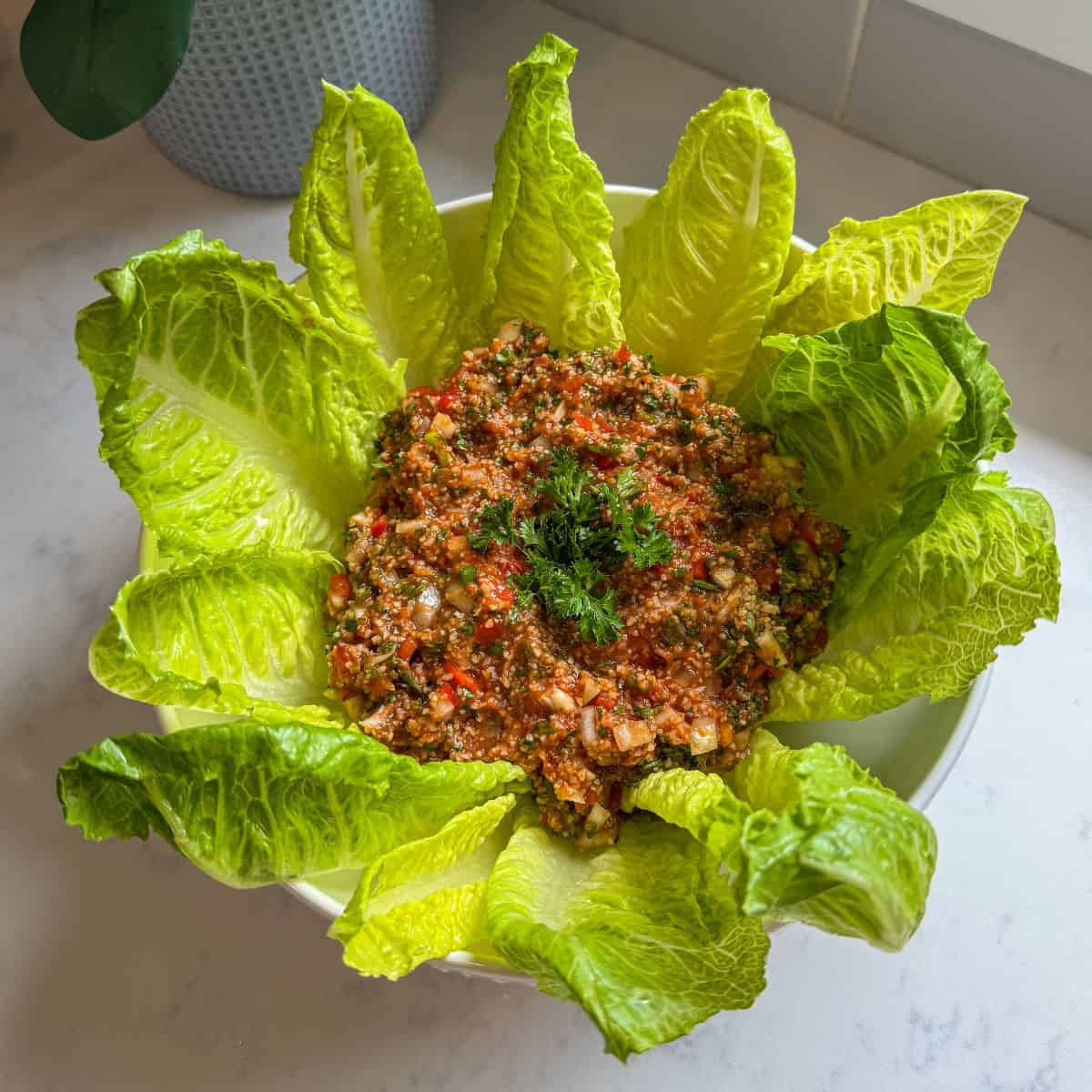
Mary had her way using lettuce boats or very flat pita. Both are still the best options.
Lettuce boats give each serving a fresh, crisp contrast to the warm-spiced bulgur. Butter lettuce or romaine hearts work best.
Flat pita is the most traditional pairing. The thinner the better. You want the eech to be the star.
As a side dish: Armenian eech red tabouli is a natural alongside grilled meats, kebabs, or any mezze spread. It works particularly well next to our Sujakaki Smyrna Meatballs or alongside a Fattoush Salad for a full Armenian-inspired spread.
As a light lunch: Serve a generous scoop on its own with a wedge of lemon and warm pita on the side.
Frequently Asked Questions About Armenian Eech Red Tabouli
Armenian eech, also spelled eetch, itch, or metch, is a traditional Armenian bulgur salad, similar to but distinct from Lebanese tabbouleh. It is bulgur-forward rather than parsley-forward, flavored with tomato, warm spices, and fresh herbs. It is sometimes called Armenian red tabouli because of its characteristic red color from cooked tomato.
Lebanese tabbouleh uses mostly parsley with a small amount of bulgur. Armenian eech flips that ratio, it is mostly bulgur with a moderate amount of herbs. Eech also gets its red color from puréed or cooked tomato worked into the bulgur, which Lebanese tabbouleh does not typically include. They share Levantine roots but are distinctly different dishes.
Yes. Red tabouli is a common English name for Armenian eech, referring to the dish's color and its relationship to tabbouleh. You may also see it called Armenian red tabouli, bulgur salad, or eetch depending on the family and the region.
Yes. Armenian eech is made with fine bulgur wheat, a high-fiber whole grain, along with fresh vegetables, herbs, olive oil, and tomato. It is filling, nutrient-dense, and anti-inflammatory. It is also naturally vegan and dairy-free, making it a great option for a wide range of dietary needs.
Absolutely, and it is highly recommended. Armenian eech gets better as it sits. The bulgur absorbs the tomato and spice more deeply over time and the flavors meld beautifully. Make it the morning of or even the night before you plan to serve it.
Mary served it on lettuce boats or inside very flat pita. It also works beautifully as a side dish alongside grilled meats, kebabs, or as part of a mezze spread. Pair it with our Sujakaki Smyrna Meatballs and a Fattoush Salad for a full Armenian-inspired table.
Because Armenian eech is deeply regional. Families from different parts of Armenia and the Armenian diaspora, Kessab, Yerevan, Beirut, Istanbul, all developed their own versions of eech based on local ingredients, spice traditions, and available resources. If your eech looks different, that is not a mistake. It is your family's history in the bowl.
Fine bulgur (#1) is strongly recommended for this recipe. Coarse bulgur requires longer cooking and will not absorb the water with the simple bloom method used here. Fine bulgur is what gives this eech its signature soft, cohesive texture.
Other Family Recipes
Looking for other recipes like this? Try these:


Side Dishes
These are my favorite dishes to serve with Grandma's Red Tabouli:
Grandma's Red Tabouli — Armenian Eech Recipe
Equipment
- Large mixing bowl — for blooming the bulgur and combining all ingredients
- Measuring cups and spoons
- Cutting board and knife
- Mixing spoon or spatula
Ingredients
The Base
- ½ cup fine bulgur #1, rinsed
- 1 cup boiling water
The Flavor
- 6 tablespoons tomato paste
- ½ cup chunky mild salsa
- 2 tablespoons dry taco seasoning
- 2 tablespoons olive oil
The Freshness
- ½ cup green onion chopped
- ¼ cup white or yellow onion chopped
- ½ cup green or red bell pepper chopped
- ¾ cup fresh parsley chopped
Optional
- Squeeze of fresh lemon juice
- ¼ cup celery chopped
Instructions
Step 1 — Bloom the Bulgur
- Rinse fine bulgur under cold water using a fine mesh strainer. Place in a large bowl and pour boiling water over the bulgur. Stir once, cover, and let sit for 20 minutes until all the water is fully absorbed and the bulgur is soft and fluffy.
Step 2 — Mix Everything Together
- Add tomato paste, salsa, taco seasoning, olive oil, green onion, white onion, bell pepper, and parsley to the bloomed bulgur. If using, add celery and a squeeze of fresh lemon juice. Mix well until fully combined and the bulgur is evenly coated.
Step 3 — Taste and Adjust
- Taste your eech. Add a squeeze of lemon if it needs brightness. Add a pinch more taco seasoning if it needs more depth. Trust your instincts here — this recipe welcomes them.
Step 4 — Serve or Rest
- Serve immediately at room temperature, or cover and refrigerate for a few hours before serving. The flavor deepens considerably as it rests. This dish is best made ahead.



Comments
No Comments