

տուտմաջ ապուր - also known as Madzoon Abour & Tanabour
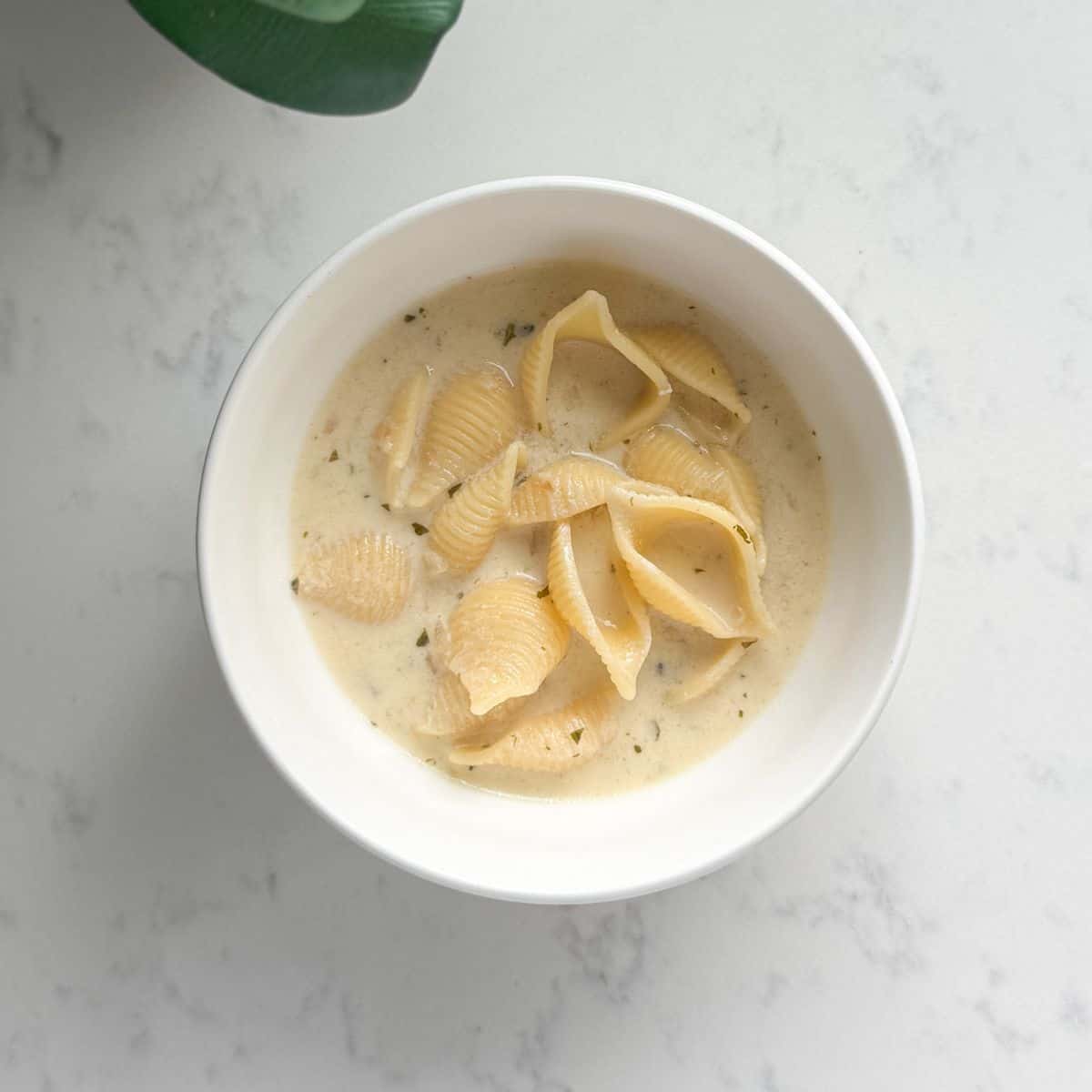
If you've been searching for an Armenian yogurt soup recipe, you've found the real one. This is Tutmaj Abour (տուտմաջ ապուր), a creamy, tangy, deeply comforting Armenian yogurt soup made with small shell pasta, sautéed onions, and mint. It is one of the oldest dishes in the Armenian culinary tradition, and it has been passed down in my family for generations.
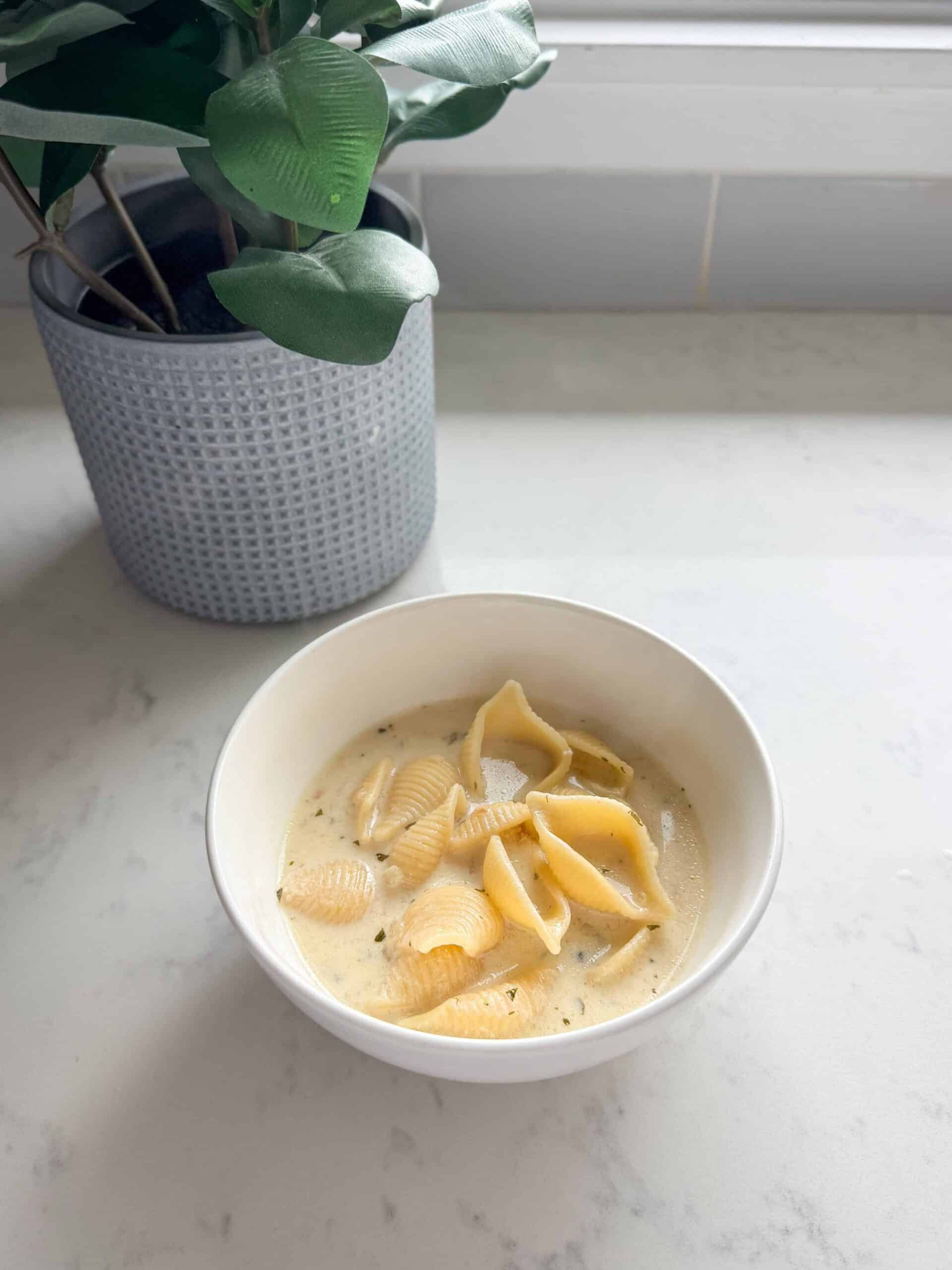
My grandmother made this soup every Tuesday. Our family would gather at my grandparents' home for an intimate luncheon; close family only, unhurried, the kind of meal where the table was already set when you walked through the door. Tutmaj Abour was always served first, as an appetizer before the main meal. She always made too much. On purpose, I'm sure.
She learned this recipe from her mother-in-law, who was Armenian and from Smyrna, the ancient port city now called Izmir, Turkey, one of the great Armenian communities of the world before the 1915 Genocide and the 1922 Great Fire. That lineage makes this more than a recipe. It is a piece of living history.
I have yet to meet a single person who doesn't ask for seconds. Let me show you how to make it.
The Tuesday Luncheons I'll Never Forget
My grandparents hosted weekly family luncheons that were everything a meal should be. Intimate, warm, unhurried. It was never a crowd, just the closest family, the people you didn't need to perform for. The people you could be completely yourself with.
My grandmother would start every meal with this Armenian yogurt soup, ladled into bowls and placed in front of you before anything else arrived. It was the thing that told your whole body: slow down. You're home. You're safe.
She never measured anything. She just knew. And she always made more than enough, because that's how love looks when it comes in a soup pot.
She learned this recipe from her mother-in-law, who brought it out of Smyrna. That means this bowl of soup has traveled further, and survived more, than most of us will ever fully understand.
Other Armenian Recipes You'll Love
- Armenian Manti Recipe with Wonton Wrappers - It is made with a seasoned meat mixture tucked inside small pieces of dough, shaped into little open-faced boats, baked until golden and crisp, and then served in warm chicken broth with plain yogurt spooned over the top.
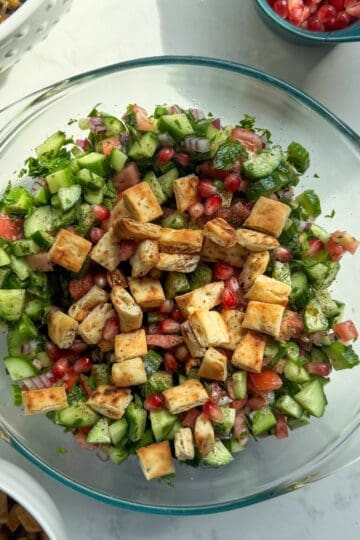
- Fattoush Salad - If there’s one dressing that has made more appearances at my family’s holiday tables than any other, it’s this fattoush salad dressing.
- Spinach Pie - This hearty and cheesy spinach pie is made with layers of buttery phyllo dough and a savory spinach filling. It's the ultimate make-ahead side dish for holidays, potlucks, or Sunday lunch.
Jump to:
- տուտմաջ ապուր - also known as Madzoon Abour & Tanabour
- The Tuesday Luncheons I'll Never Forget
- Other Armenian Recipes You'll Love
- What Does "Tutmaj Abour" Mean? A Complete Naming Guide
- Ingredients for Armenian Yogurt Soup (Tutmaj Abour)
- How to Make Armenian Yogurt Soup — Step by Step
- The Single Most Important Tip for Perfect Armenian Yogurt Soup
- Ingredient Substitutions
- Cost Breakdown — Armenian Yogurt Soup for 8
- Equipment
- How to Store Leftover Armenian Yogurt Soup
- Top Tip
- Cost Breakdown — Armenian Yogurt Soup for 8
- Equipment
- How to Store Leftover Armenian Yogurt Soup
- Frequently Asked Questions About Armenian Yogurt Soup
- More Armenian Recipes You'll Love
- Pairing Ideas
What Does "Tutmaj Abour" Mean? A Complete Naming Guide
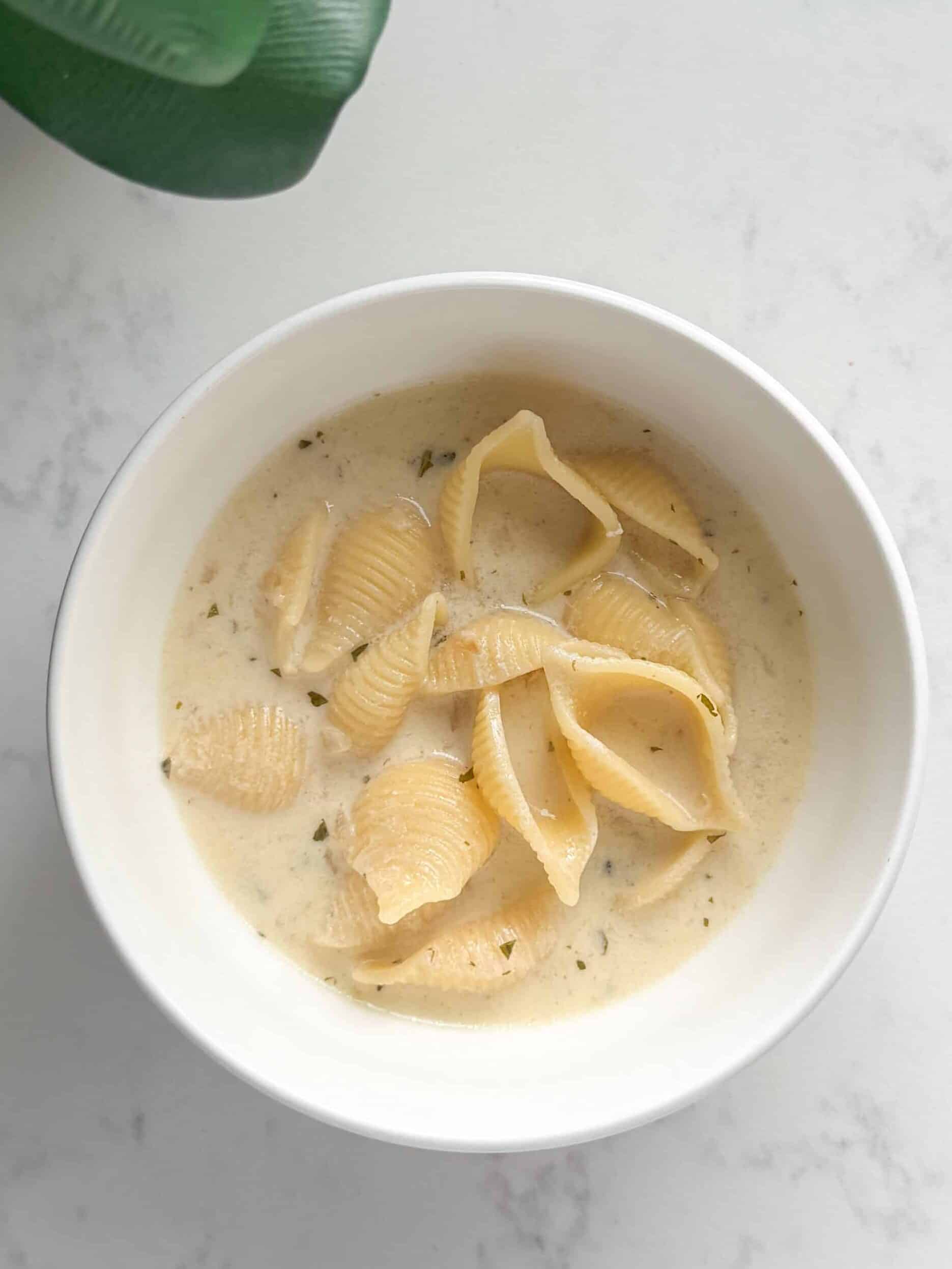
If you've searched for this Armenian yogurt soup before, you may have come across it under several different names — Madzoon Abour, Tanabour, Spas, or Tutmaj Abour. They are all rooted in the same ancient tradition, and the name your family uses tells you exactly where they came from. Here is what each one means:
Tutmaj Abour
տուտմաջ ապուր
This is the name my family used. "Tutmaj" refers specifically to the noodle or pasta element of the soup. It is a Western Armenian word rooted in the tradition of small-shaped dough cooked in liquid. "Abour" (ապուր) is simply the Armenian word for soup. So Tutmaj Abour means: noodle soup. It is the name most commonly used by Western Armenian diaspora families, those whose ancestors came from present-day Turkey, including the Smyrna region. If your family calls it this, your roots likely trace to Western Armenia.
Madzoon Abour
մածուն ապուր
"Madzoon" (մածուն) is the Armenian word for yogurt, and it is a word with extraordinary history. Rooted in the Classical Armenian verb madzanil, meaning "to glue, to join, to condense," madzoon has been documented in Armenian manuscripts since the 11th century. When Armenian immigrants arrived in America in the early 1900s, they delivered madzoon door to door by horse-drawn wagon. Eventually the Turkish word "yogurt" replaced it commercially, but inside Armenian homes, it was always madzoon. Madzoon Abour simply means yogurt soup, a broader name that doesn't specify the pasta.
Tanabour
թանաբուր
"Tan" is the Armenian word for a thin, drinkable yogurt (similar to ayran). So Tanabour literally means "yogurt drink soup" describing the base of the dish. This name is most common among Eastern Armenians and in the Republic of Armenia, where the soup is traditionally made with grain, barley or hulled wheat, rather than pasta. The two versions are close cousins from the same ancient tradition.
A Recipe Carried Out of Smyrna
My grandmother learned this Armenian yogurt soup recipe from her mother-in-law, an Armenian woman from Smyrna, the ancient port city on the Aegean Sea now known as Izmir, Turkey. For centuries, Smyrna was home to one of the largest, most educated, and most prosperous Armenian communities in the world. Its Armenians were merchants, scholars, musicians, and cooks. The food they made was refined by generations of hands.
In 1915, the Armenian Genocide began. Then, in September 1922, the Great Fire of Smyrna destroyed the Armenian and Greek quarters of the city over four days, killing thousands and forcing the remaining population to flee with virtually nothing. Survivors scattered across the world to Syria, Lebanon, France, the United States, and beyond.
Many Smyrnian Armenians resettled in Syria, where they rebuilt community life in cities like Aleppo and Damascus and in the village of Kassab, a historically Armenian enclave in northwest Syria that became a stronghold of Western Armenian culture and cooking. My grandfather was from the Armenian diaspora, and my grandmother was Syrian, raised in a world where these two communities had woven themselves together through survival, faith, and food.
The Tutmaj Abour she made almost certainly traveled that exact path: from a kitchen in Smyrna, through the devastation of 1922, to the Armenian communities of Syria, and eventually to the Sunday luncheon table where I grew up eating it.
Armenian yogurt soup itself is one of the oldest prepared foods in the Armenian tradition. Written references to madzoon appear in Armenian manuscripts from the 11th century. The yogurt soup tradition spans from the Caucasus Mountains all the way to the Aegean coast. The specific version made with pasta, Tutmaj Abour, is characteristic of Western Armenian cooking, the cooking of Armenians who lived in Anatolia, rather than the grain-based versions more common in the Republic of Armenia today.
So when you make this recipe, you are not just making soup. You are making something that survived.
Ingredients for Armenian Yogurt Soup (Tutmaj Abour)
One of the most striking things about this recipe is how few ingredients it requires. This is peasant food in the most beautiful sense, humble, nourishing, made from things you already have. Here's everything you need:

- Plain yogurt - full-fat or low-fat, your choice. I've made this with both and they both work beautifully. The brand doesn't matter.This is the madzoon — the heart of the soup. In Armenian, madzoon (մածուն) literally means "that which condenses." It is what makes this soup Armenian.
- Onion, finely chopped - You can use a food processor to get it even finer. Finer onion melts into the soup and gives a sweeter base.
- Dried or fresh mint - My family always used dried mint, it's more traditional in the Western Armenian and Syrian diaspora style. Fresh mint is beautiful too. Use what you love.
- Shell pasta - Shell pasta is what I grew up with and it's perfect, the yogurt soup pools inside each shell. My grandmother sometimes used macaroni. Any small pasta works.
- Water
- Eggs - blended with the yogurt to stabilize it and prevent curdling
- Salt
- Olive oil— for sautéing the onions
See recipe card for quantities.
How to Make Armenian Yogurt Soup — Step by Step
Making Tutmaj Soup is simple, but the key is slowly incorporating the yogurt mixture to keep the texture smooth and creamy.
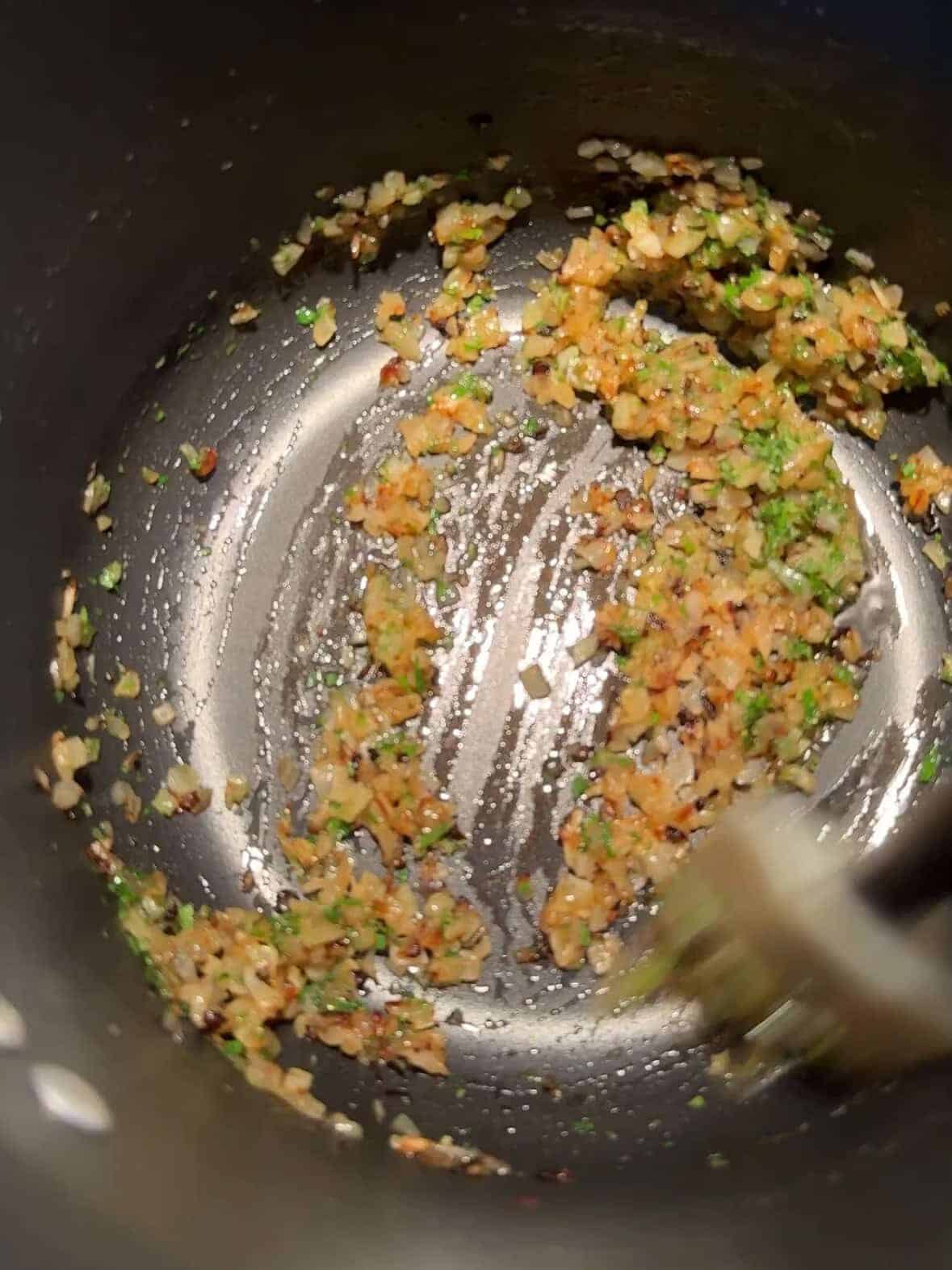
- Step 1: Sauté the aromatics – Cook the onion and mint in oil.
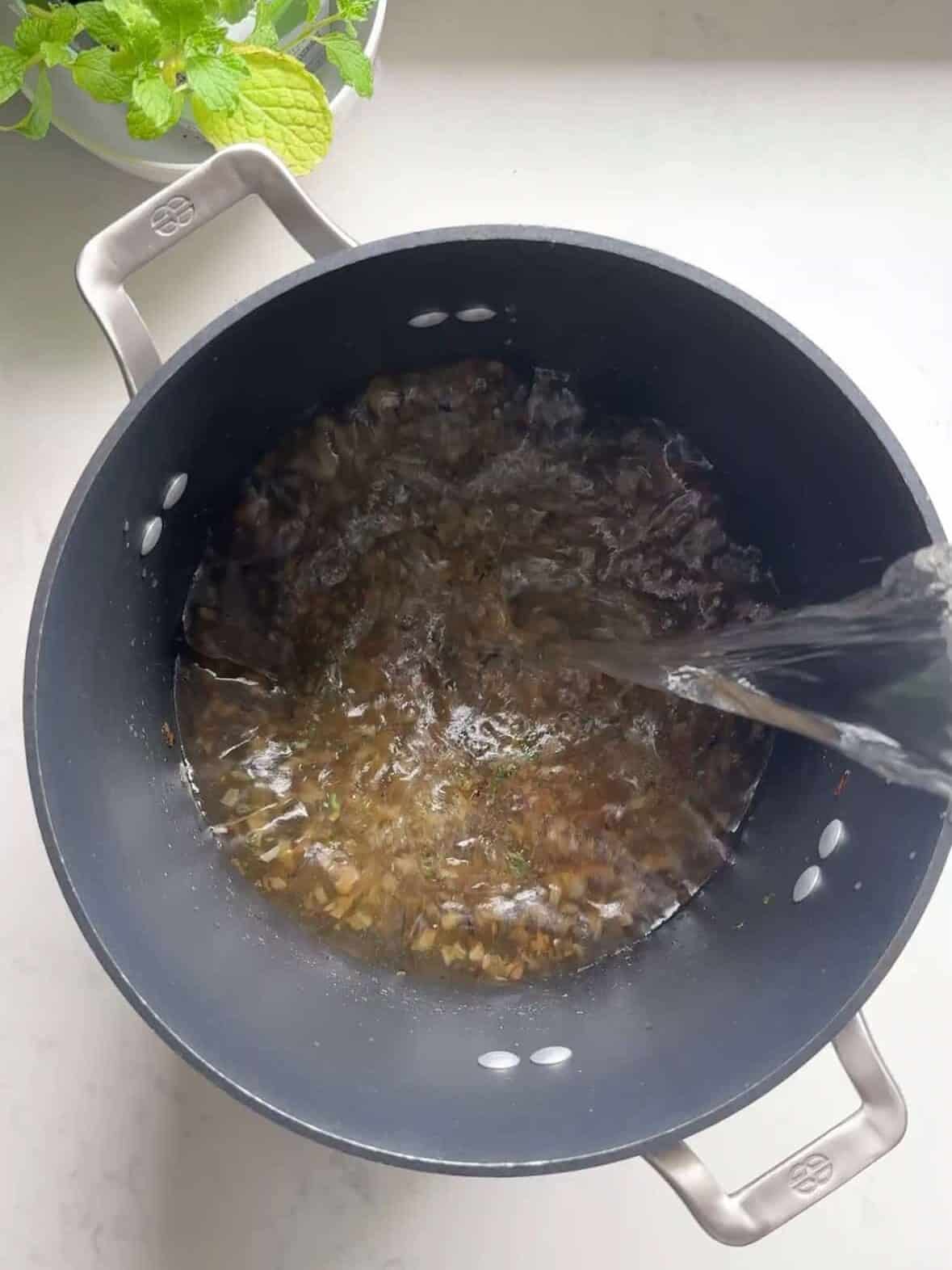
- Step 2: Boil the broth – Add water and salt, then bring to a rolling boil.
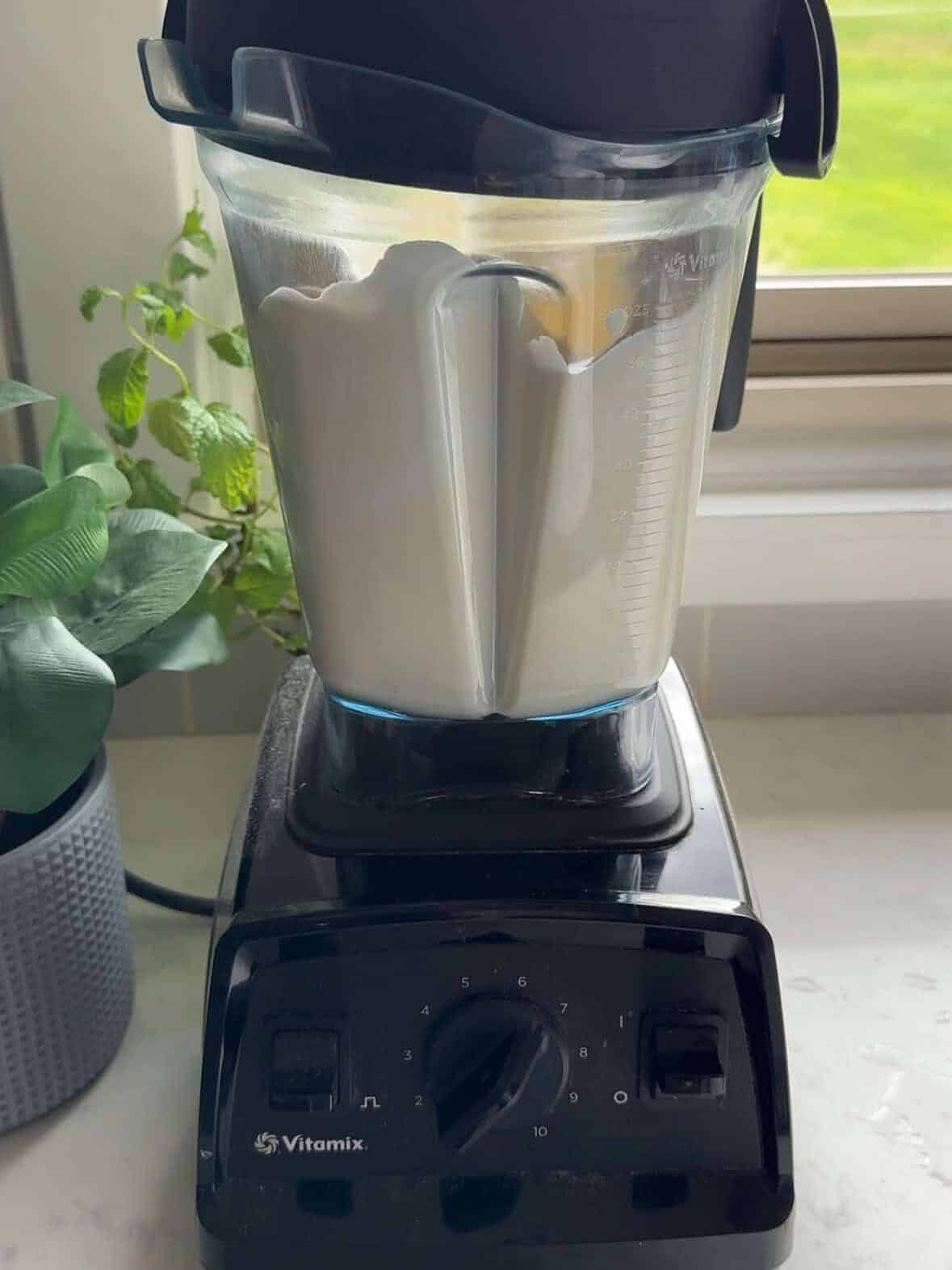
- Step 3: The yogurt-egg mixture for Tutmaj Abour — blended completely smooth before being slowly added to the soup to prevent curdling.
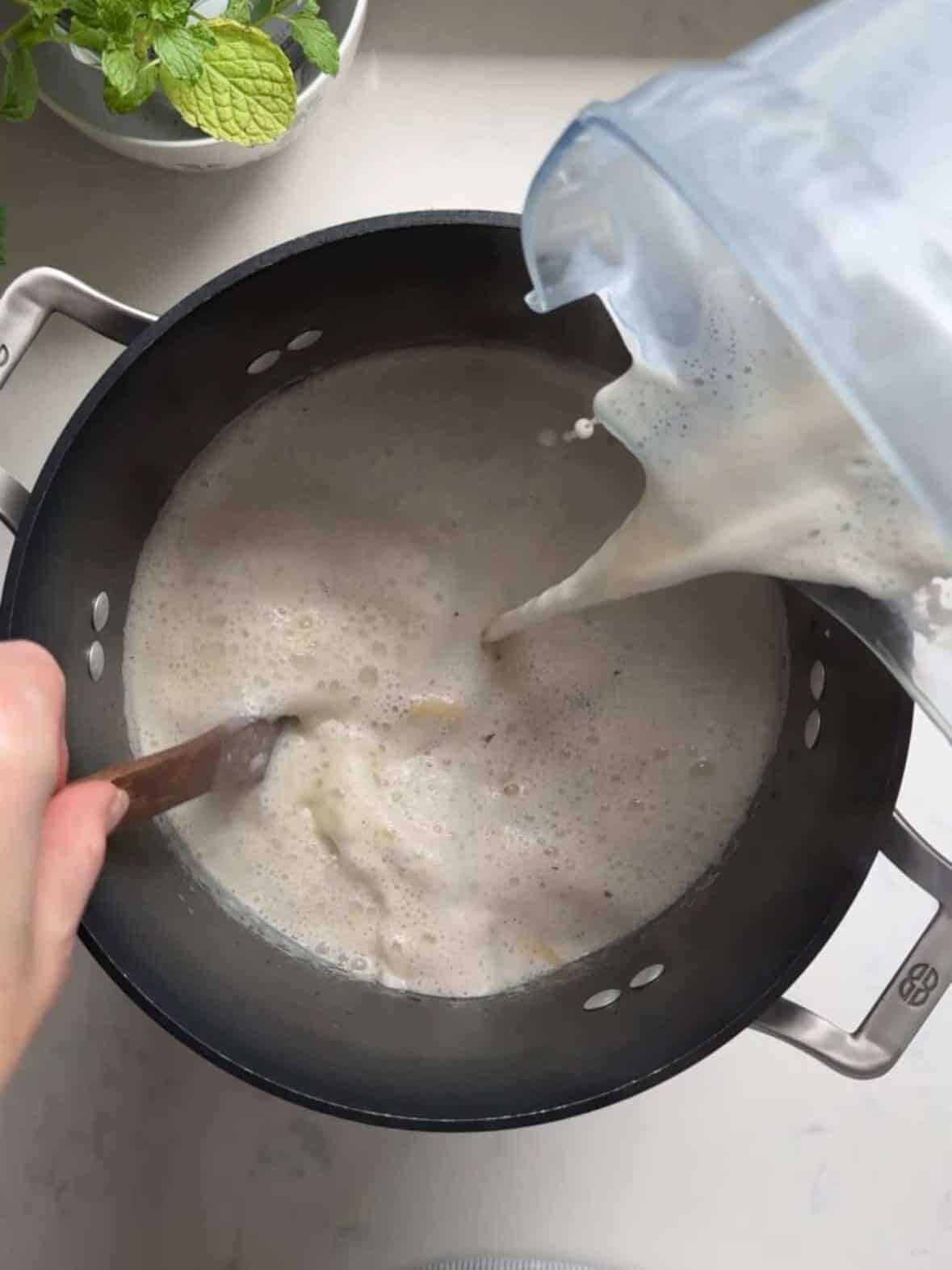
- Step 4: The critical step in making Armenian Yogurt Soup — the blended yogurt mixture is added slowly while stirring constantly to prevent separation.
The soup should never come to a full boil after the yogurt is added. That first bubble is your signal that it's hot enough and fully cooked. Pull it off the heat right there.
The Single Most Important Tip for Perfect Armenian Yogurt Soup
Every person who has ever curdled a yogurt soup learned this lesson the hard way, so let me save you the heartbreak. The secret to silky, creamy, never-curdled Armenian yogurt soup comes down to two things:
1. Blend the eggs into the yogurt before adding it to the soup. The egg proteins act as a stabilizer that prevents the yogurt from breaking when it hits the heat. Do not skip this step, and do not just crack the eggs directly into the pot.
2. Stir constantly and never stop. From the moment the yogurt mixture touches the soup until the moment you turn off the heat, your spoon or whisk should never stop moving. This distributes the heat evenly and keeps the yogurt emulsified. It requires patience, and it is completely worth it.
My grandmother stirred this soup standing at the stove with a wooden spoon, never looking away. Now I know why.
Ingredient Substitutions
If you know how to make the recipe fit a certain diet, let the reader know here. Don't fake it - only provide guidance on topics you have actual experience with.
- Shell pasta - Any small pasta works, macaroni (what my grandmother's generation used), orzo, ditalini, or small bowties. The shells are traditional for this family's version because the yogurt soup pools beautifully inside them.
- Dried mint - Fresh mint works beautifully, just add it at the very end after you've turned off the heat, rather than blooming it with the onions. For fresh mint use about 2 tablespoons.
- Plain yogurt - Full-fat gives the richest, creamiest result. Low-fat works just as well, this recipe has been tested with both. Greek yogurt can work but will produce a thicker, tangier soup; thin it slightly with an extra cup of water.
- Water - Some families use chicken broth in place of water for a richer base. My grandmother always used water, it lets the yogurt and mint be the stars. Either is traditional.
- Olive oil - Butter can be used in place of olive oil for sautéing the onions and gives a slightly richer flavor. Both are used in different regional versions of this soup.
Cost Breakdown — Armenian Yogurt Soup for 8
This is one of the most affordable recipes on this site. It feeds a crowd for very little.
| Ingredient | Estimated Cost |
| 32 oz plain yogurt | $3.50 – $5.00 |
| 1 large onion | $0.75 |
| 2 cups shell pasta | $1.00 |
| 2 eggs | $0.60 |
| Dried mint + olive oil + salt | ~$0.50 |
| Total for 8 servings | ~$6.35 – $7.85 |
| Per bowl | ~$0.80 – $1.00 |
Equipment
For Tutmaj Abour (Armenian Yogurt Soup) the equipment list is simple — this is a one-pot recipe, which is part of its beauty:
- Large soup pot or Dutch oven — you need a big one, at least 6-8 quarts. This makes a generous batch.
- Blender — for the yogurt and egg mixture. This step is non-negotiable for a smooth, non-curdled result.
- Wooden spoon or whisk — for stirring constantly during the yogurt step. Traditionally a wooden spoon.
- Chef's knife + cutting board — for the onion
- Measuring cups and spoons
- Food processor (optional)— for getting the onion extra fine, which my grandmother always preferred
- Ladle — for serving
How to Store Leftover Armenian Yogurt Soup
Refrigerator
Store in an airtight container for up to 3 days. The pasta will absorb liquid as it sits, add a splash of water when reheating and stir gently over low heat.
Freezer
Not recommended. Yogurt-based soups do not freeze well, the yogurt will separate upon thawing and the texture will be grainy. Make fresh and enjoy within a few days.
Reheating
Reheat by microwave or over low to medium-low heat only, stirring frequently. Never boil after the yogurt has been added — it will curdle. Low and slow is the only way.
Serving
Serve hot as a first course or a light meal on its own. A drizzle of olive oil and a pinch of dried mint on top
Top Tip
Not just a Top Tip, this is the MOST IMPORTANT tip. To prevent the yogurt from curdling, make sure to stir constantly while adding it to the soup. Keeping the heat low and adding the mixture slowly makes all the difference!
Cost Breakdown — Armenian Yogurt Soup for 8
This is one of the most affordable recipes on this site. It feeds a crowd for very little.
| Ingredient | Estimated Cost |
| 32 oz plain yogurt | $3.50 – $5.00 |
| 1 large onion | $0.75 |
| 2 cups shell pasta | $1.00 |
| 2 eggs | $0.60 |
| Dried mint + olive oil + salt | ~$0.50 |
| Total for 8 servings | ~$6.35 – $7.85 |
| Per bowl | ~$0.80 – $1.00 |
Equipment
For Tutmaj Abour (Armenian Yogurt Soup) the equipment list is simple — this is a one-pot recipe, which is part of its beauty:
- Large soup pot or Dutch oven — you need a big one, at least 6-8 quarts. This makes a generous batch.
- Blender — for the yogurt and egg mixture. This step is non-negotiable for a smooth, non-curdled result.
- Wooden spoon or whisk — for stirring constantly during the yogurt step. Traditionally a wooden spoon.
- Chef's knife + cutting board — for the onion
- Measuring cups and spoons
- Food processor (optional)— for getting the onion extra fine, which my grandmother always preferred
- Ladle — for serving
How to Store Leftover Armenian Yogurt Soup
Refrigerator
Store in an airtight container for up to 3 days. The pasta will absorb liquid as it sits, add a splash of water when reheating and stir gently over low heat.
Store the wet ingredients (lettuce, tomato, onion) separately from the dry ingredients (buns) in the fridge, and recombine when ready. Good for 2-3 days.
Freezer
Not recommended. Yogurt-based soups do not freeze well, the yogurt will separate upon thawing and the texture will be grainy. Make fresh and enjoy within a few days.
Reheating
Reheat by microwave or over low to medium-low heat only, stirring frequently. Never boil after the yogurt has been added — it will curdle. Low and slow is the only way.
Serving
Serve hot as a first course or a light meal on its own. A drizzle of olive oil and a pinch of dried mint on top.
Frequently Asked Questions About Armenian Yogurt Soup
What is Armenian yogurt soup made of?
Armenian yogurt soup — known as Tutmaj Abour or Madzoon Abour — is made with plain yogurt, eggs, small pasta (traditionally shell pasta), onion, mint, water, salt, and olive oil. The yogurt and eggs are blended together and slowly stirred into the soup to create a creamy, tangy base.
Why does my yogurt soup curdle?
Yogurt soup curdles when the yogurt is added too quickly, when the heat is too high, or when stirring stops. The solution is to always blend eggs into the yogurt before adding it (the egg stabilizes the protein), pour the yogurt mixture in slowly, keep the heat at medium, and stir constantly from start to finish. Remove from heat at the very first bubble.
"Tutmaj Abour" specifies the pasta element, tutmaj means noodle or pasta in Western Armenian. "Madzoon Abour" simply means yogurt soup. They are variations of the same dish; Tutmaj Abour is the noodle version specifically.
Tanabour (also called Spas) is the Eastern Armenian version, traditionally made with grain, barley or hulled wheat, and is common in the Republic of Armenia. Tutmaj Abour is the Western Armenian diaspora version, made with pasta, and is typical of families whose roots trace to Anatolia (present-day Turkey), including regions like Smyrna.
Very closely related, yes. The Armenian diaspora communities that settled in Syria, particularly in Aleppo, Damascus, and Kassab, brought their yogurt soup tradition with them, and it became part of the Syrian Armenian culinary identity. This recipe comes directly from that tradition: my grandmother was Syrian, and she learned it from her Armenian mother-in-law who was from Smyrna.
You can make it a few hours ahead and reheat gently. It is best served fresh. The pasta absorbs liquid as it sits, so the soup will thicken, simply add water and stir over low heat when reheating. Do not freeze.
Traditionally it is served as a first course or appetizer before a larger meal, with warm lavash or pita bread alongside. It is also wonderful as a light meal on its own. In my family it was always the opening course of our Sunday luncheon, a signal that something good was about to follow.

More Armenian Recipes You'll Love
Looking for other recipes like this? Try these:


Pairing Ideas
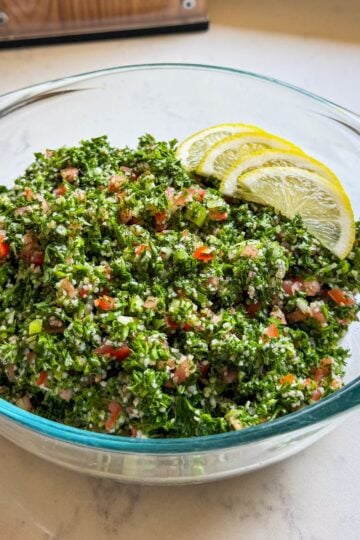
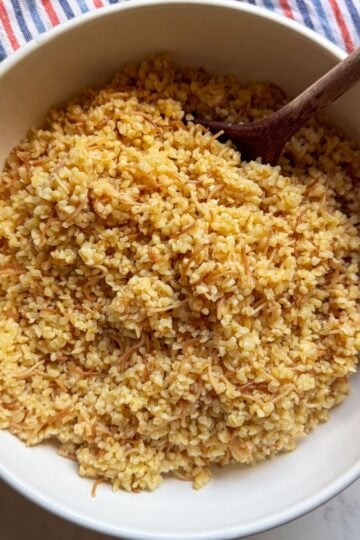
These are my favorite dishes to serve with Tutmaj Soup:


Armenian Yogurt Soup (Tutmaj Abour)
Equipment
- Large Soup Pot
- blender
- Food Processor (for finely chopping the onion - Optional)
- Wooden Spoon
- Ladle
- cutting board
- Measuring Cups & Spoons
Ingredients
- Olive oil for sautéing
- 1 medium to large onion finely chopped
- 1 tablespoon dried mint or fresh
- 10 cups water
- 2 tablespoons salt
- 2 cups small shell pasta
- 1 large container 32 oz plain yogurt, full-fat or low-fat
- 2 eggs
Instructions
- Heat olive oil in a large soup pot over medium heat. Add finely chopped onion and cook, stirring often, until completely soft and translucent — about 8 to 10 minutes.
- Add the mint to the softened onions and stir for 1 minute until fragrant.
- Pour in 10 cups of water and 2 tablespoons of salt. Bring to a rolling boil over high heat.
- While water heats, add the full container of yogurt and both eggs to a blender. Blend until completely smooth. Set aside.
- Once boiling, add 2 cups of shell pasta. Cook 10 to 12 minutes until fully tender.
- Reduce heat to medium. Slowly pour the yogurt-egg mixture into the soup in a thin, steady stream while stirring rapidly and constantly. Never stop stirring.
- The moment you see the very first bubble rise, turn off the burner. Keep stirring 1 to 2 more minutes. Serve hot immediately.

Levon says
Great recipe! I made it and it was better than I thought it to be. Thank you!
Lindsay Lehrer says
This comment just made my day. Thank you so much for taking time out of your day to leave these kind words. Appreciate you!
Robert Bakerian says
As an Armenian, this dish evokes the rich culinary heritage of our ancestors, showcasing the unmistakable flavors that define Armenian cuisine. Despite its remarkably simple preparation, it delivers extraordinary depth, warmth, and complexity. Comforting, deeply satisfying, and wonderfully hearty, it’s a timeless meal that brings family together around the table.
Lindsay Lehrer says
I'm always a little nervous to open my comments first thing in the morning. You just never know. But this.... this warmed my heart. Wow. Thank you so much for your kind words and for taking the time out of your day to say these things. I appreciate it so much. Bless you.
Annamaria Whitaker says
I'm making this now! So glad I found you- an American Armenian girl who's making all the family recipes. Best part is that you talk about the history of the dish where it all came from and how you enjoyed it in your own family. It may not be exactly the same in all of our homes or exactly how our own moms made them, but it's been really comforting for me because one of the things I miss the most is just being home together with my sister and my mom and dad later with our kids enjoying mom's cooking laughing and sharing. This one is so easy but just takes you back. My mom usually put kufteh in this base and added pearl barley, even if the base was just a little different- no onions I think. I love this version with just noonook. Can't wait to dig in! 😘❤️