
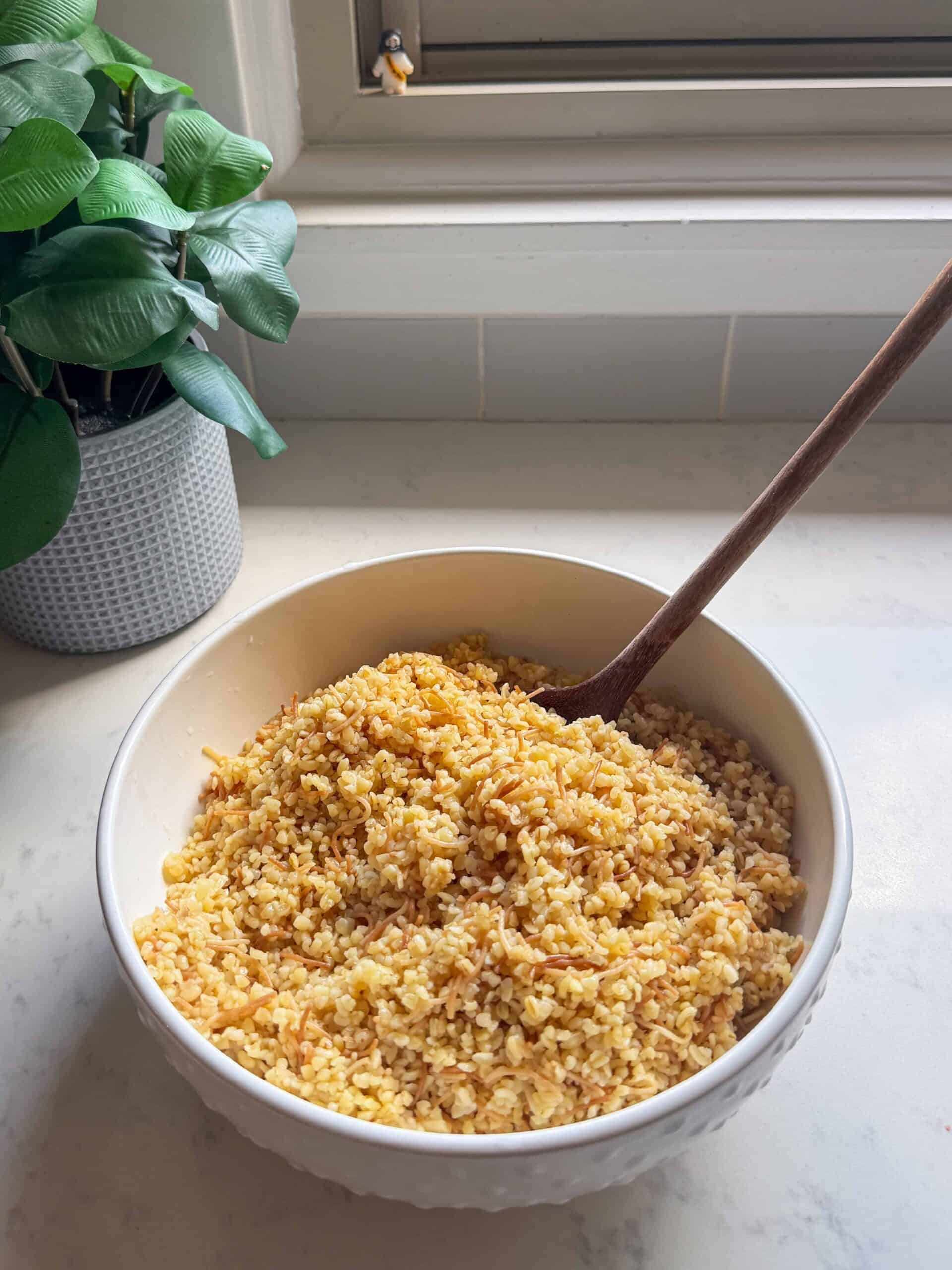
A simple, budget-friendly Armenian bulgur pilaf recipe with toasted vermicelli, passed down through generations. Naturally lighter than rice and ready in 30 minutes.
Ask any Armenian what's on the table on a regular Tuesday night, and there's a good chance it's pilaf. Not the fancy dish. Not the special-occasion dish. The one that's just always there, because someone in the family always knows how to make it right. In my house, that someone was my grandmother, and sometimes she'd choose bulgur, sometimes rice. I have both recipes tucked away, but this is her bulgur version, the one I make most. Whether you spell it bulgur pilaf or bulgar pilaf, it's the same humble, comforting dish.
Background: How This Bulgur Pilaf Became a Family Staple
Bulgur is wheat that's been boiled, dried, and cracked into small pieces, a process that dates back roughly 4,000 years to ancient Mesopotamia. It's a staple across Armenian, Middle Eastern, and Mediterranean cooking, feeding families through winters, celebrations, and everyday nights at home for longer than most modern countries have existed.
My grandmother would alternate between rice and bulgur depending on the day, but the bulgur version was the one that showed up most on ordinary weeknights. It was never treated as anything special. It was just dinner, made the way it had always been made, one pot, no measuring cups in sight, just her hands knowing exactly how much of everything to use.
Other Recipes You May Enjoy
- Pico de Gallo - That bowl would disappear faster than anything else on the table and now it’s a tradition I carry on in my own kitchen.
- Grandma's Red Tabouli - A Armenian bulgur salad flavored with tomato, warm spices, and fresh herbs.
- Phyllo Dough Spinach Pie — Layers of buttery phyllo dough and a savory spinach filling. The ultimate make-ahead side dish.
- Levantine Tabbouleh - Started as a mezze dish, part of a spread of small plates meant to be shared, scooped up with lettuce leaves or torn pieces of flatbread instead of a fork.
- Lahmajoun (Armenian Pizza) — A thin flatbread topped with a boldly spiced ground meat mixture, baked until the edges are crispy and the topping is deeply fragrant.
Jump to:
- Background: How This Bulgur Pilaf Became a Family Staple
- Other Recipes You May Enjoy
- Ingredients for Bulgur Pilaf
- 5 Summarized Steps for Bulgur Pilaf
- What Is Bulgur Wheat Pilaf? (Origin + Ingredients)
- Substitutions (Simple Ingredient Swaps)
- Variations (Bulgur Pilaf with Add-Ins & More)
- Equipment Needed for Bulgur Pilaf
- Storage Tips for Bulgur Pilaf
- FAQs: Bulgur Pilaf, Rice Comparison, Substitutions + More
- Other Recipes to Try
- Main Dish Ideas
Ingredients for Bulgur Pilaf
This pilaf comes together with a short list of pantry staples. You'll toast vermicelli in butter until deep golden brown, that's the whole secret, then simmer it with coarse bulgur and broth until every grain is tender and fluffy.
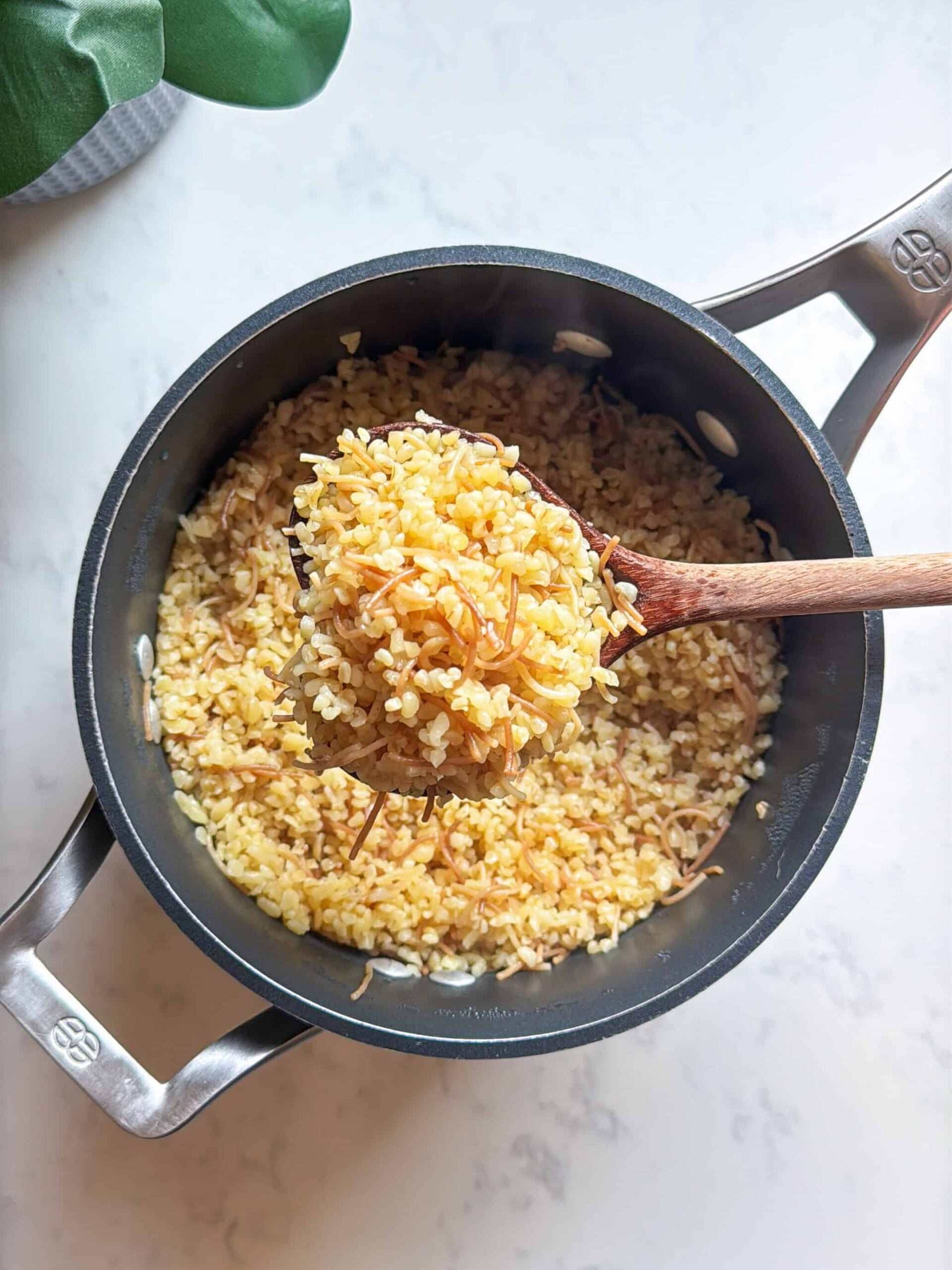
- Vermicelli noodles, broken into small pieces
- Butter
- Coarse bulgur wheat (#3)
- Chicken broth
- Salt
See recipe card for quantities.
5 Summarized Steps for Bulgur Pilaf
You'll start by toasting the vermicelli in butter until golden, then stir in the bulgur to coat every grain. From there, add the broth and salt, cover, and let it simmer low and undisturbed until the liquid is fully absorbed.
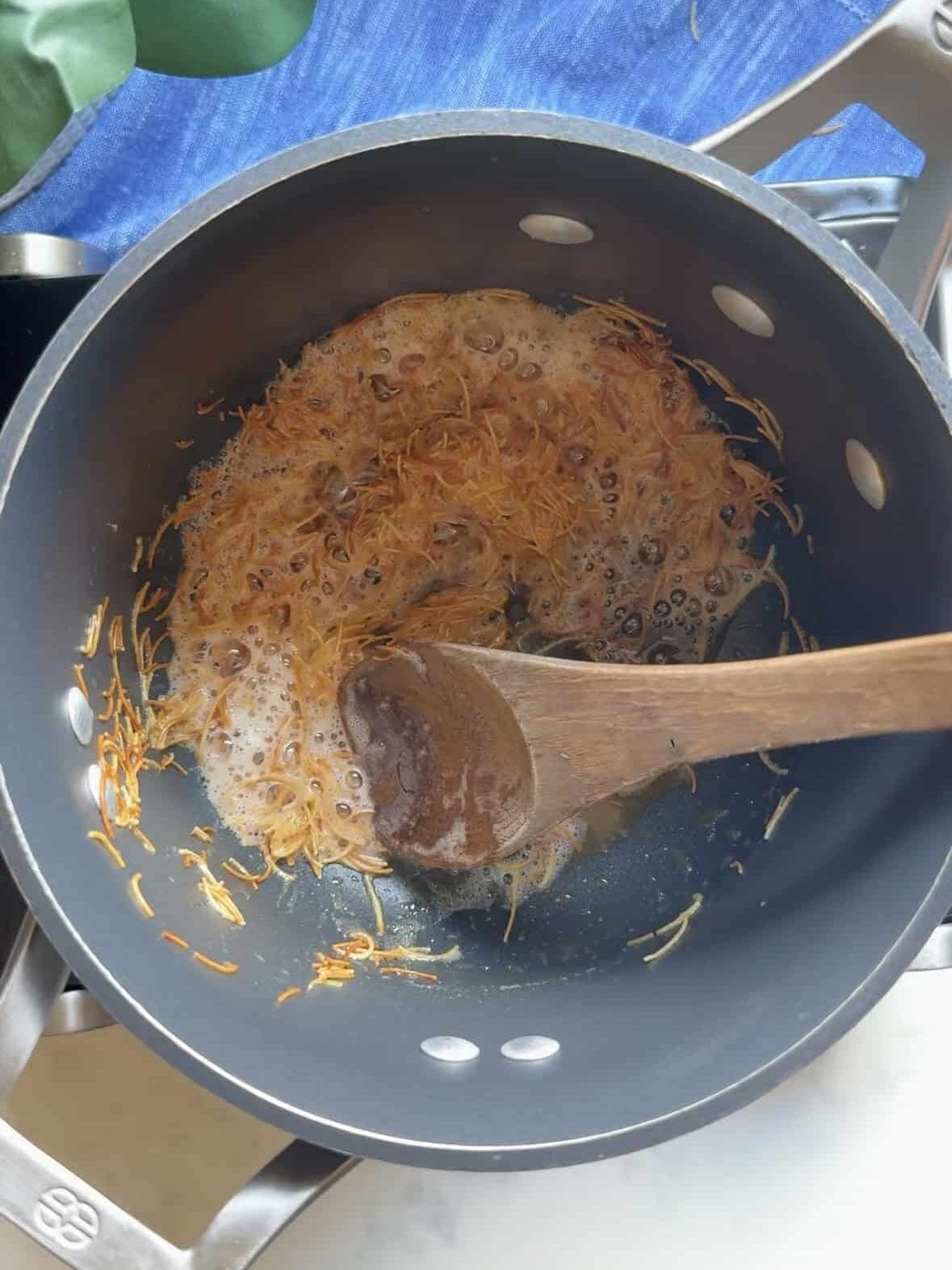
- Step 1: Toast the vermicelli in butter until deep golden brown, stirring constantly. This is the step that gives the dish its signature smell and flavor.
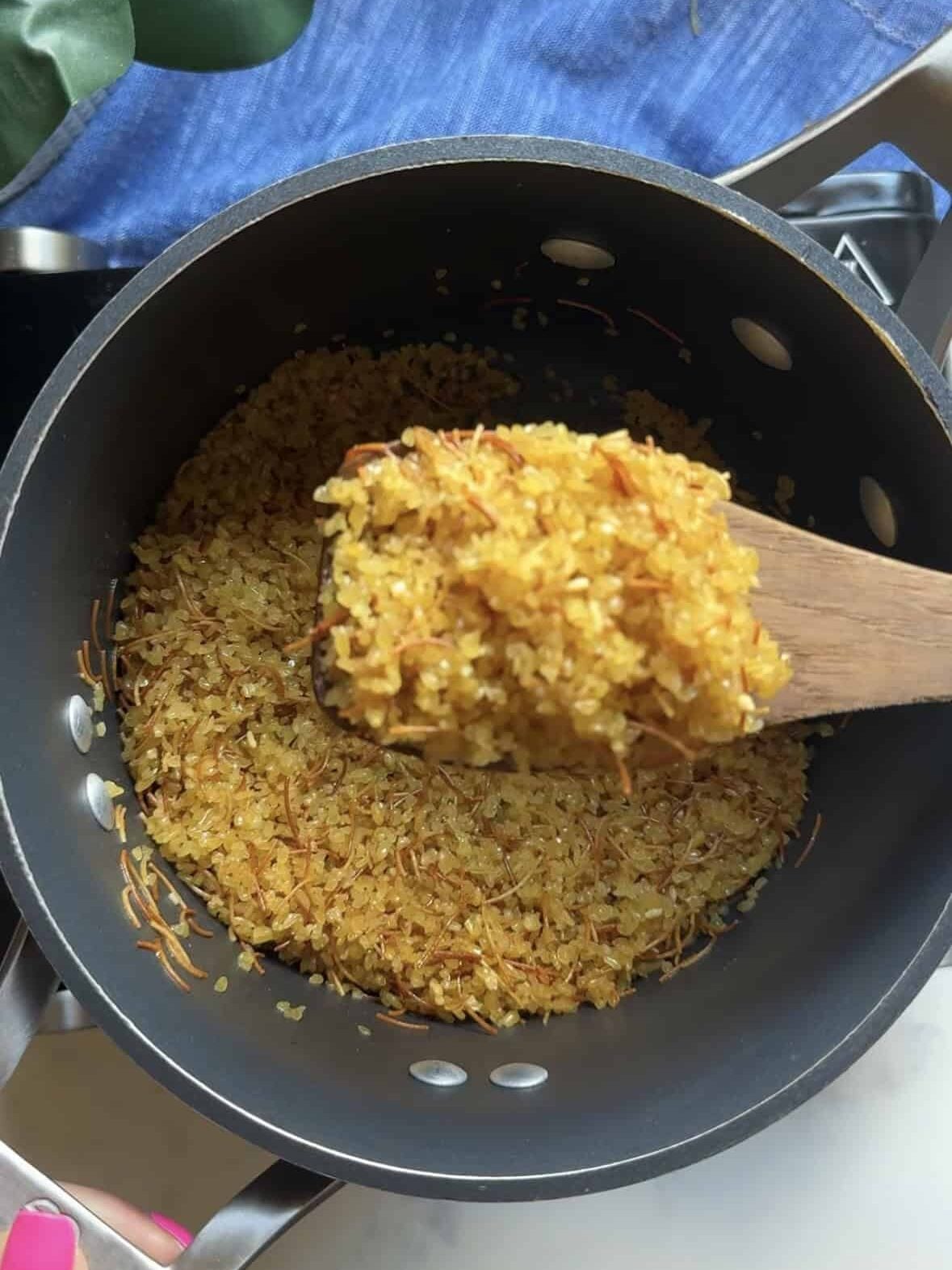
- Step 2: Stir in the bulgur wheat until every grain is coated. Add the chicken broth and salt, then stir to combine.
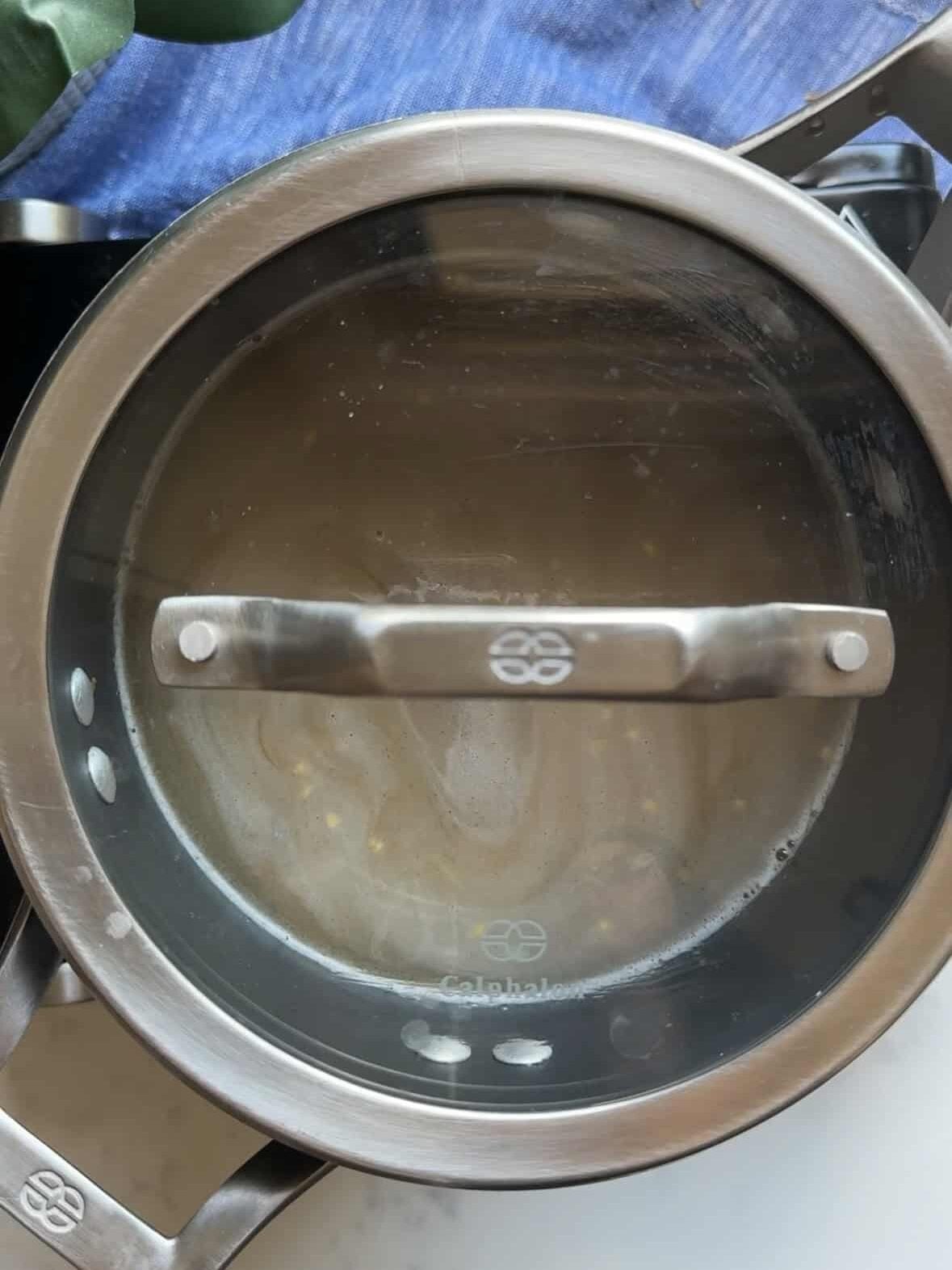
- Step 3: Cover and simmer on low until all the liquid is absorbed. Resist the urge to stir while it cooks.
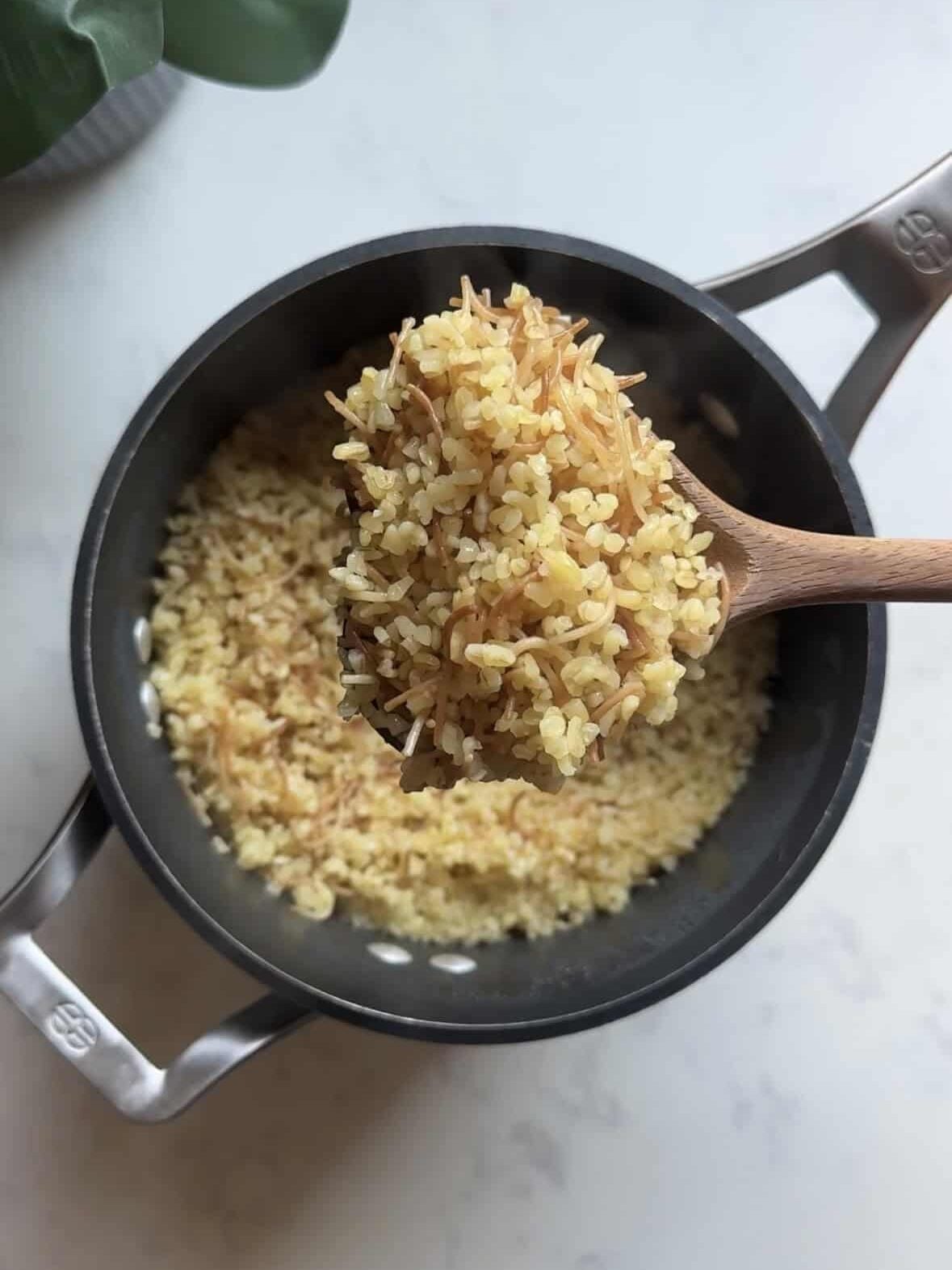
- Step 4: Remove from heat, fluff with a fork, and serve.
Hint: Once the vermicelli hits the pan and starts to brown, that smell is the smell of every Armenian kitchen I've ever walked into. Trust your nose as much as your eyes here.
What Is Bulgur Wheat Pilaf? (Origin + Ingredients)
Bulgur pilaf is a classic Armenian and Middle Eastern side dish made from coarse bulgur wheat, toasted vermicelli, and broth. You may also see this spelled bulgar pilaf, both refer to the same cracked wheat dish. While many Armenian families make pilaf with rice, bulgur is just as traditional, and in my family, it was simply a matter of what my grandmother felt like making that day.
This recipe honors that everyday, no-fuss spirit of Armenian home cooking: humble ingredients, one pot, and a technique passed down by hand rather than written recipe.
Bulgur Pilaf with Chicken, Kebabs, or Stew (Serving Ideas + Meal Prep)
Pilaf is traditionally served alongside protein in Armenian homes, rarely on its own.
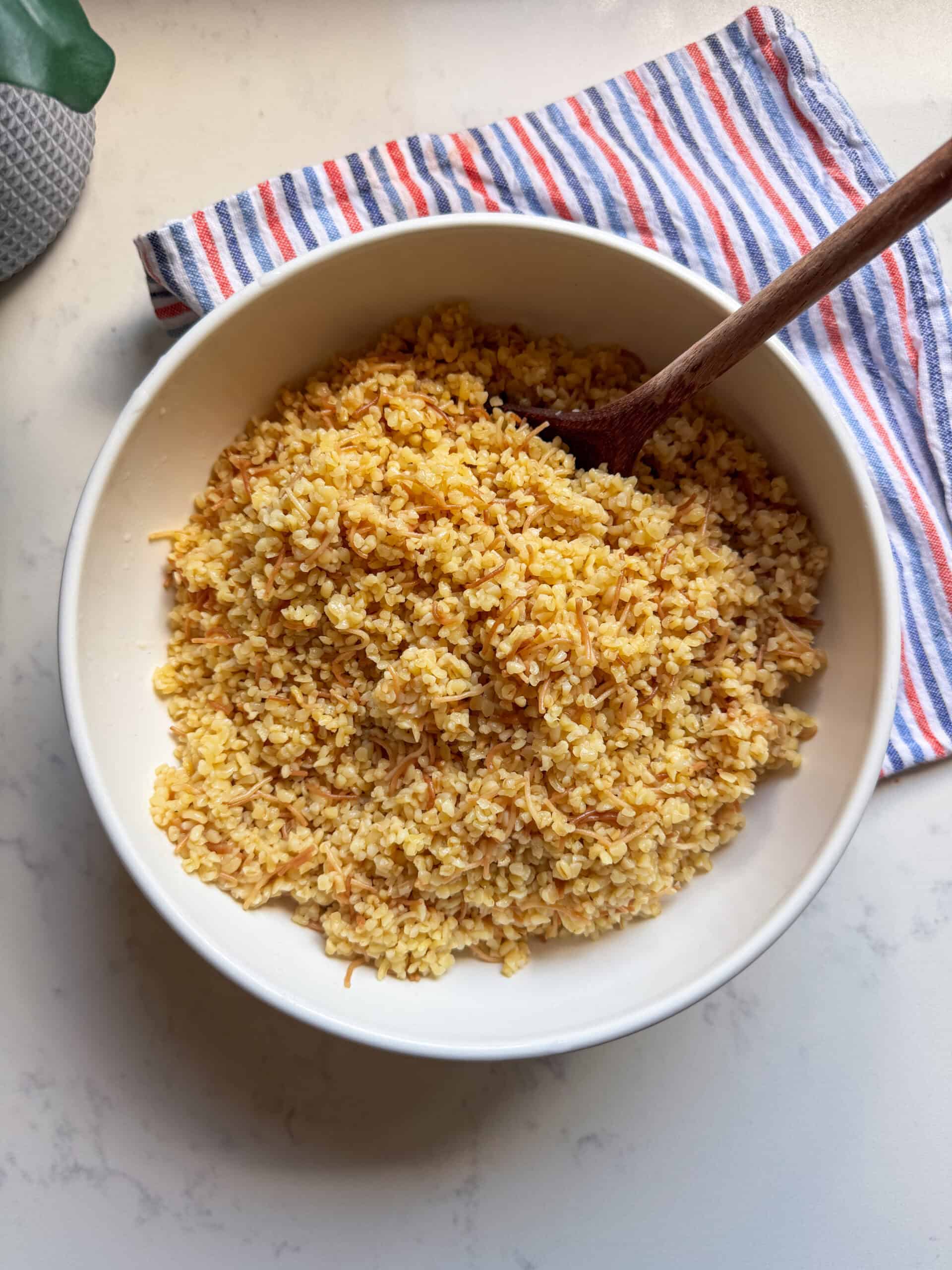
Try pairing this with:
- Chicken Shawarma
- Grilled or roasted chicken
- Shish kebab or kofta
- A hearty stew
- Lamb
This turns your bowl into a full dinner and helps naturally incorporate keywords like bulgur pilaf with chicken or bulgur pilaf side dish.
Substitutions (Simple Ingredient Swaps)
- Water for chicken broth (though broth gives more flavor)
- Orzo or angel hair pasta, broken small, for vermicelli
- Olive oil for butter
- Vegetable broth for a vegetarian version
Variations (Bulgur Pilaf with Add-Ins & More)
- Sauté onion and garlic before adding the vermicelli
- Stir in sunflower seeds, dried cherries, raisins, or dried cranberries at the end
- Add a pinch of allspice or cinnamon for warmth
- Fold in fresh herbs like parsley just before serving
Equipment Needed for Bulgur Pilaf
- Medium pot with a tight-fitting lid
- Measuring cups and spoons
- Wooden spoon
- Fork for fluffing
Storage Tips for Bulgur Pilaf
- Store leftovers in an airtight container in the fridge for up to 4 days
- Reheat gently on the stovetop with a splash of broth or water to loosen it back up
- Freezes well for up to 2 months
Top Tip
Do not stir the pilaf while it cooks. My grandmother was firm on this. Leaving the lid on and walking away is what gives you that light, fluffy texture instead of a mushy one.
FAQs: Bulgur Pilaf, Rice Comparison, Substitutions + More
Both spellings refer to the same dish. Bulgur is the more standard spelling used in cookbooks and grocery store packaging, but bulgar is a common variant you'll see used interchangeably.
You can, but broth gives you noticeably more flavor. In my family, broth was never optional.
They use the same toasted-vermicelli technique, but bulgur has a nuttier, chewier texture and roughly half the calories of rice, cup for cup. My grandmother made both, depending on the day.
Stirring releases steam and breaks up the grain, leading to a mushy, uneven texture. Leaving the lid on and walking away is what gives you that light, fluffy result.
Coarse bulgur, sometimes labeled bulgur #3, is standard for pilaf. Fine bulgur is better suited for dishes like tabbouleh.
Yes. It reheats well and actually holds its texture nicely the next day.
Other Recipes to Try
Looking for other recipes like this? Try these:

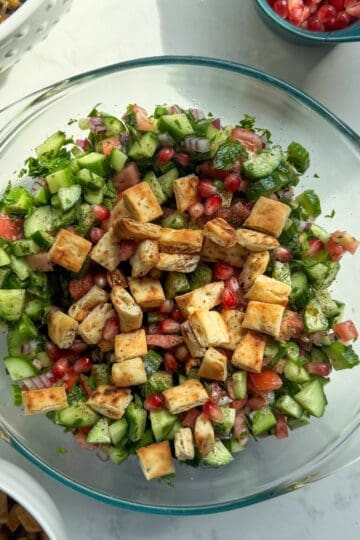
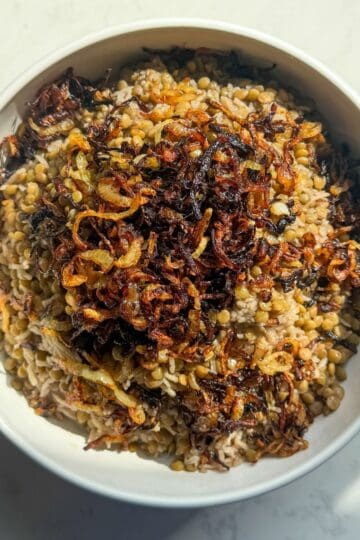

Main Dish Ideas
These are my favorite dishes to serve with Bulgur Pilar:
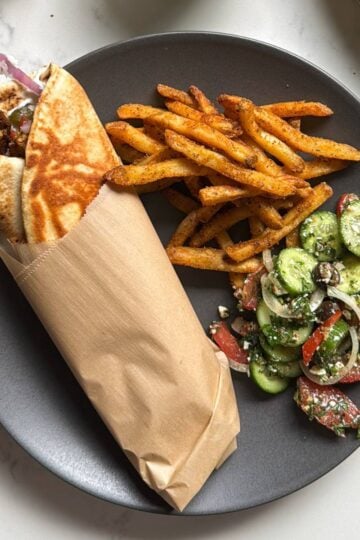
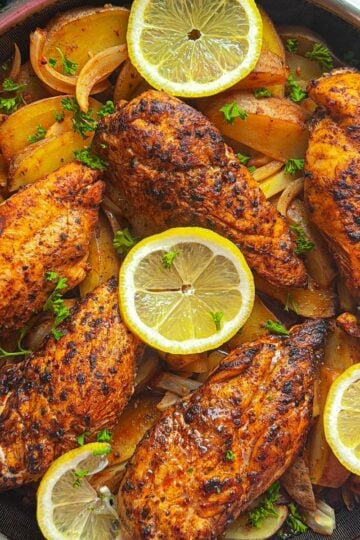


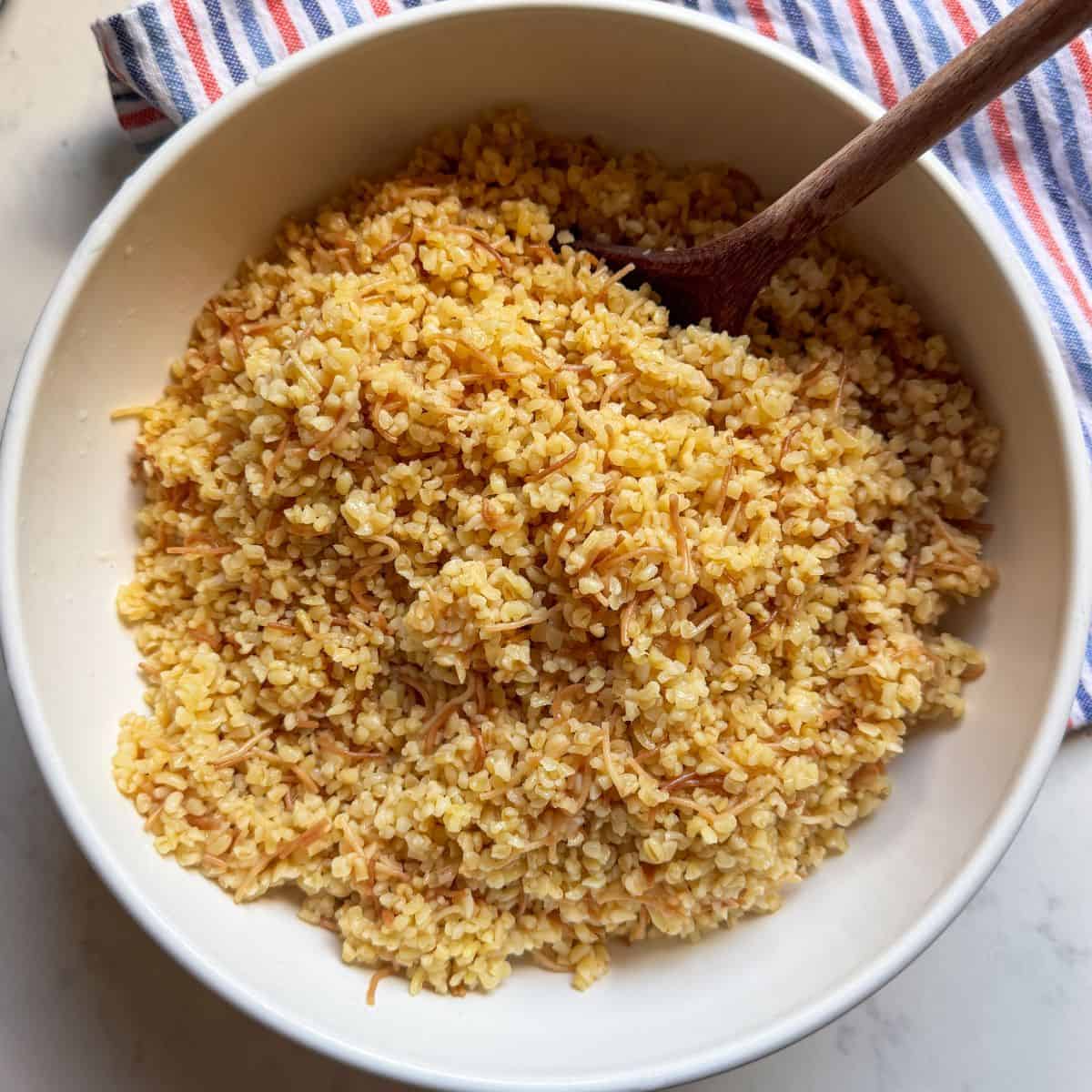
Armenian Bulgur Pilaf
Equipment
- Medium pot with a tight-fitting lid
- Measuring cups and spoons
- Wooden Spoon
- Fork for fluffing
Ingredients
- 0.5 cups vermicelli noodles broken into small pieces if not already
- 2.5 tablespoons butter
- 2 cups coarse bulgur wheat
- 4 cups chicken broth
- 1 teaspoons salt
Instructions
- Toast the vermicelli: Melt 2.5 tablespoons butter in a medium pot over medium heat. Add 0.5 cups vermicelli noodles, broken into small pieces and stir constantly until deep golden brown, about 4 minutes. Watch closely, it goes from perfect to burnt fast.
- Add the bulgur: Stir in 2 cups coarse bulgur wheat and mix thoroughly so every grain is coated in butter.
- Add broth and salt: Pour in 4 cups chicken broth and stir in 1 teaspoon of salt.
- Cover and simmer: Put the lid on and cook on low for 20 minutes, until all the liquid is absorbed. Keep an eye on it near the end so it doesn't stick, but do not stir while it cooks.
- Rest and fluff: Remove from heat. Stir in a little extra butter or oil if desired. Fluff with a fork and serve.

Carole Dabaghian MacDonald says
Thank you.
Could you give me the recipe for rice pilaf please.
Thank you
Lindsay Lehrer says
Thank you so much for asking! I actually have a rice pilaf recipe up on the blog, here's the link: https://momsdinnerbell.com/fluffy-rice-pilaf-recipe/
It's a simple one, but it's the version I grew up eating and make for pretty much every family dinner. Let me know if you give it a try, I'd love to hear how it turns out!
Warmly,
Lindsay