

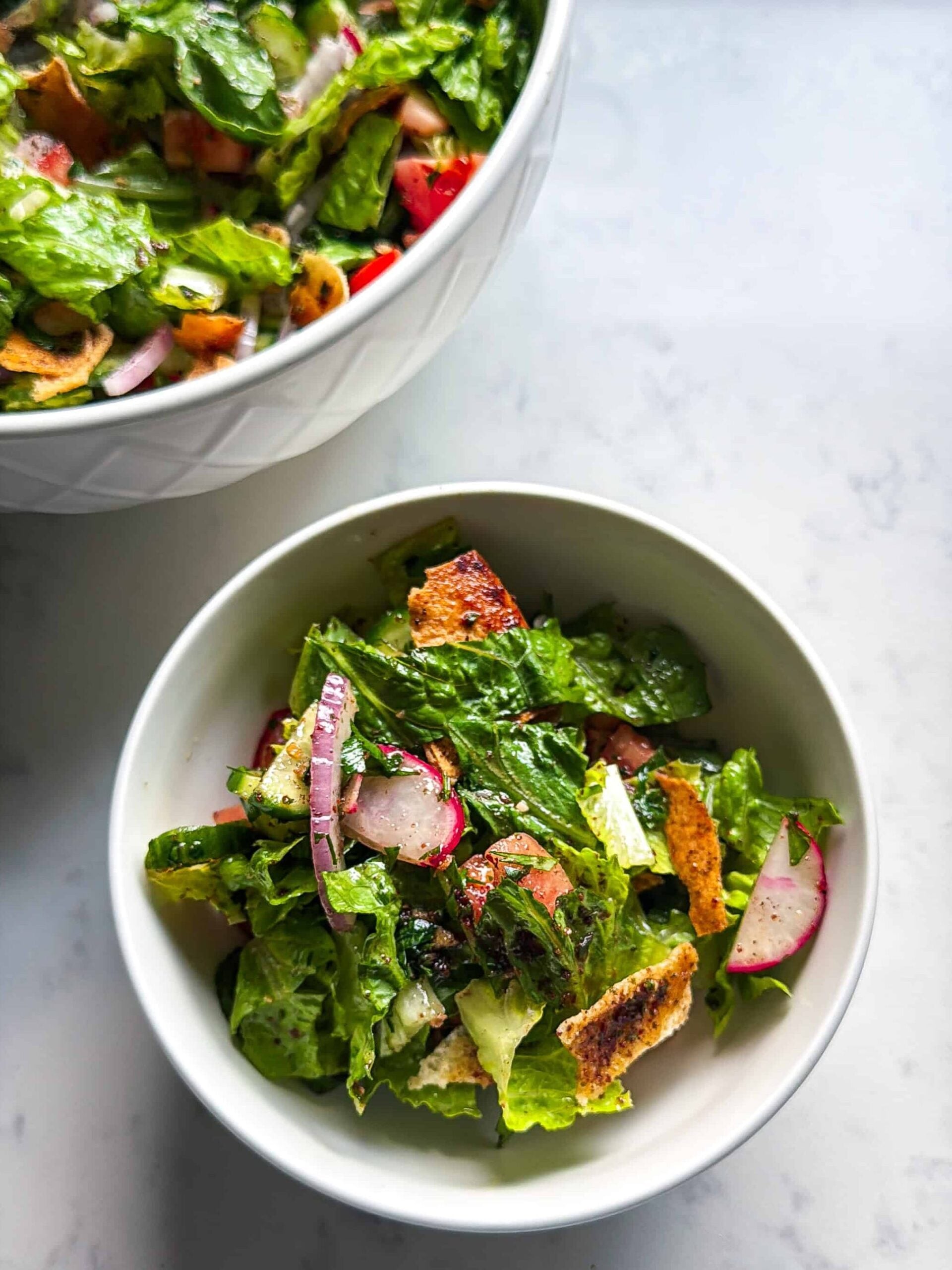
Growing up near Dearborn, Michigan, I was surrounded by one of the largest Lebanese communities in the country, and this is the fattoush salad I fell in love with there. It is bright, tangy, and built on two ingredients that make it truly authentic: sumac and pomegranate molasses, finished with pita toasted golden in olive oil. If you have only ever had a fattoush salad recipe that skips those two ingredients, you have not had the real thing yet.
What Makes This Fattoush Authentic
A lot of fattoush salad recipes out there lean on lemon juice alone for the tang and skip the pomegranate molasses entirely, which is where the flavor really falls short. This authentic fattoush recipe leans into both, sumac for that lemony, slightly tannic brightness, and pomegranate molasses for a deep, sweet-tart backbone that regular lemon juice simply cannot replicate. That combination, along with pita toasted crisp in olive oil rather than store-bought pita chips, is what separates a truly authentic Lebanese fattoush salad from a shortcut version.
Other Family Recipes You Might Enjoy
If you loved this fattoush salad, here are a few more family recipes from the blog that pair beautifully with it or bring the same bright, herb-forward flavors to your table.
- Easy Fattoush-Style Salad Dressing (No Pomegranate Molasses)- If you don't have pomegranate molasses, dry this variation I created. You won't be disappointed!
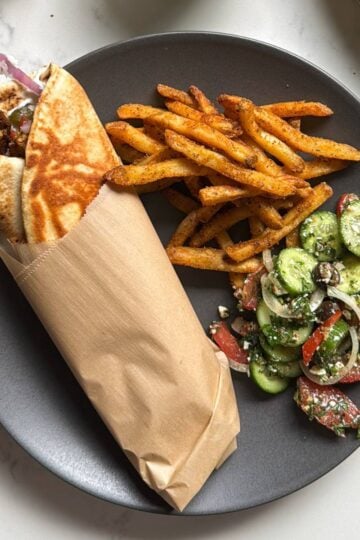
- Chicken Shawarma on a Vertical Spit (Oven Baked)- Shawarma is a Levantine street food made from marinated meat, stacked on a vertical spit, and slow-roasted until the outside is caramelized and the inside is tender and juicy.
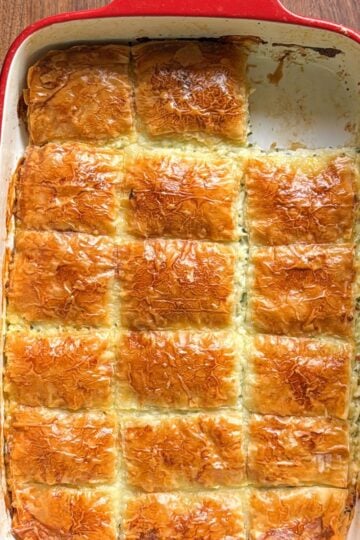
- Vegetarian Stuffed Grape Leaves (Sarma)- These vegetarian stuffed grape leaves come together with humble ingredients: rice, sweet sauteed onions, fresh herbs, warm spices, and plenty of lemon.
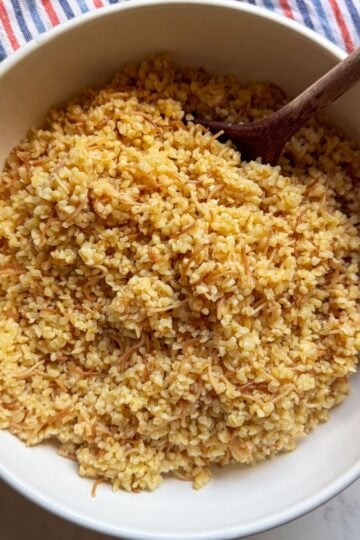
- Rice Pilaf, the classic Armenian side that belongs next to almost everything
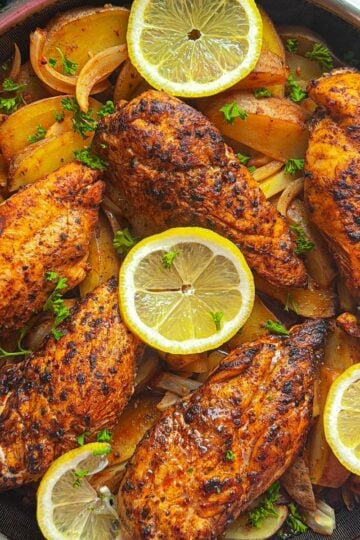
- Aleppo Pepper Chicken and Potatoes, a one pot main that shares the same warm Aleppo pepper note
- Easy Mediterranean Cucumber and Tomato Salad, fresh and cooling against the lemony leaves
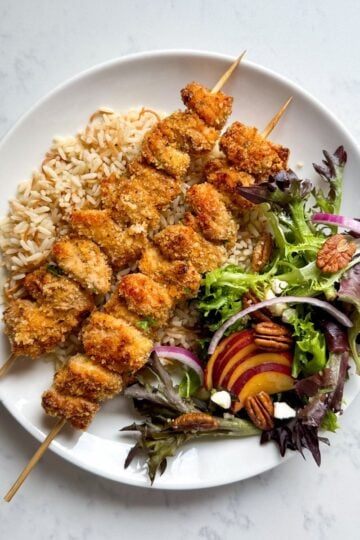
- Oven Baked Ground Beef Kofta Kebabs, an easy protein to round out the meze table
Jump to:
- What Makes This Fattoush Authentic
- Other Family Recipes You Might Enjoy
- The History of Fattoush
- Is Fattoush Salad Healthy?
- Ingredients You Will Need
- How to Make Fattoush Salad (4 Simple Steps)
- Tips and Notes
- Substitutions
- Variations
- Equipment
- Storage
- How to Serve It
- Frequently Asked Questions
- Other Recipes You Might Enjoy
- Main Dishes
The History of Fattoush
Fattoush is a Levantine dish with roots that trace back to the rural farming regions of what are now northern Lebanon and Syria, long before modern borders divided the area. It's thought to have originated as a way for farming families to use up stale bread rather than waste it. Local farmers found themselves with day-old flatbread and, rather than throw it away, fried or toasted it until it turned crisp and delicious, then tossed it with whatever fresh vegetables and herbs they had on hand.
The name itself tells that story. Fattoush comes from the Arabic word fatta or fatt, meaning small pieces, a reference to the crumbled bread at the heart of the dish.
It belongs to a larger family of Levantine dishes known as fatteh, all of which use crumbled or torn flatbread as their base. One food writer has pointed to an even older thread: food historian Nawal Nasrallah has noted that a soaked bread dish made with herbs, cucumbers, and olive oil appears in the 10th-century Arabic cookbook Kitab al-Tabikh, compiled by Ibn Sayyar al-Warraq for the Abbasid court in Baghdad, which some see as an early relative of the bread-salad concept, even though that particular cookbook documents Baghdadi court cuisine rather than Lebanese farmhouse cooking specifically. What started as a humble, resourceful farmhouse dish has since become one of the most recognized salads across the entire Middle East.
Is Fattoush Salad Healthy?
Yes, genuinely so. This is a vegetable-forward salad built on romaine, cucumber, tomato, radish, parsley, and red onion, all tossed in a dressing made from olive oil, lemon juice, and pomegranate molasses rather than anything creamy or processed. Fattoush has become a popular choice for those seeking nutritious meals, including vegetarians and vegans, thanks to its largely plant-based ingredient list. This vegan fattoush comes together without any modification at all, since there is no dairy or meat anywhere in the recipe as written.
Ingredients You Will Need
This recipe has two parts, the salad and the dressing, and both come together with simple, easy to find ingredients.
For the salad, you will need:
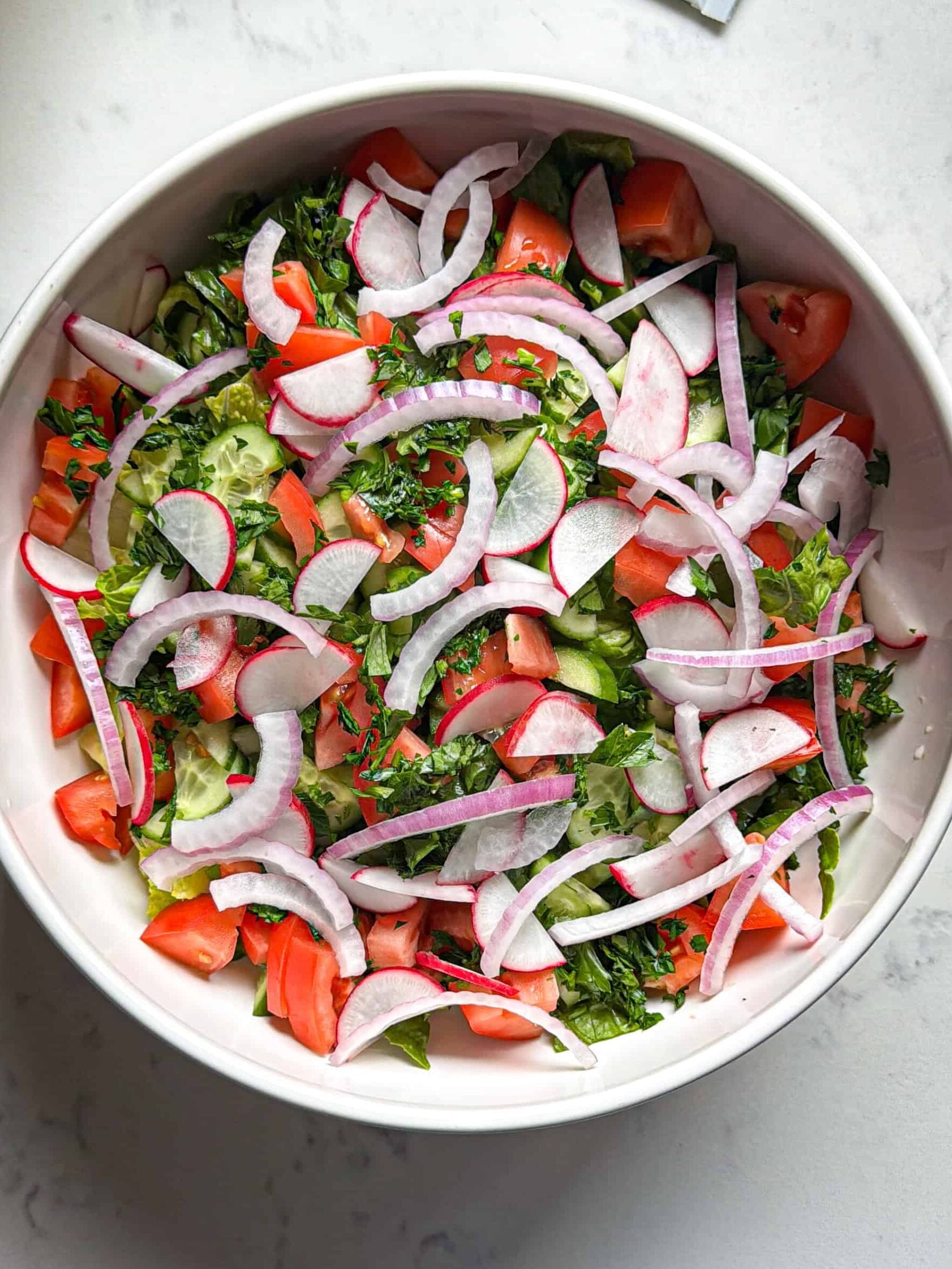
- Romaine lettuce
- Persian cucumbers
- Roma tomatoes
- Radishes
- Fresh parsley
- Red onion
- Pita bread
For the dressing:
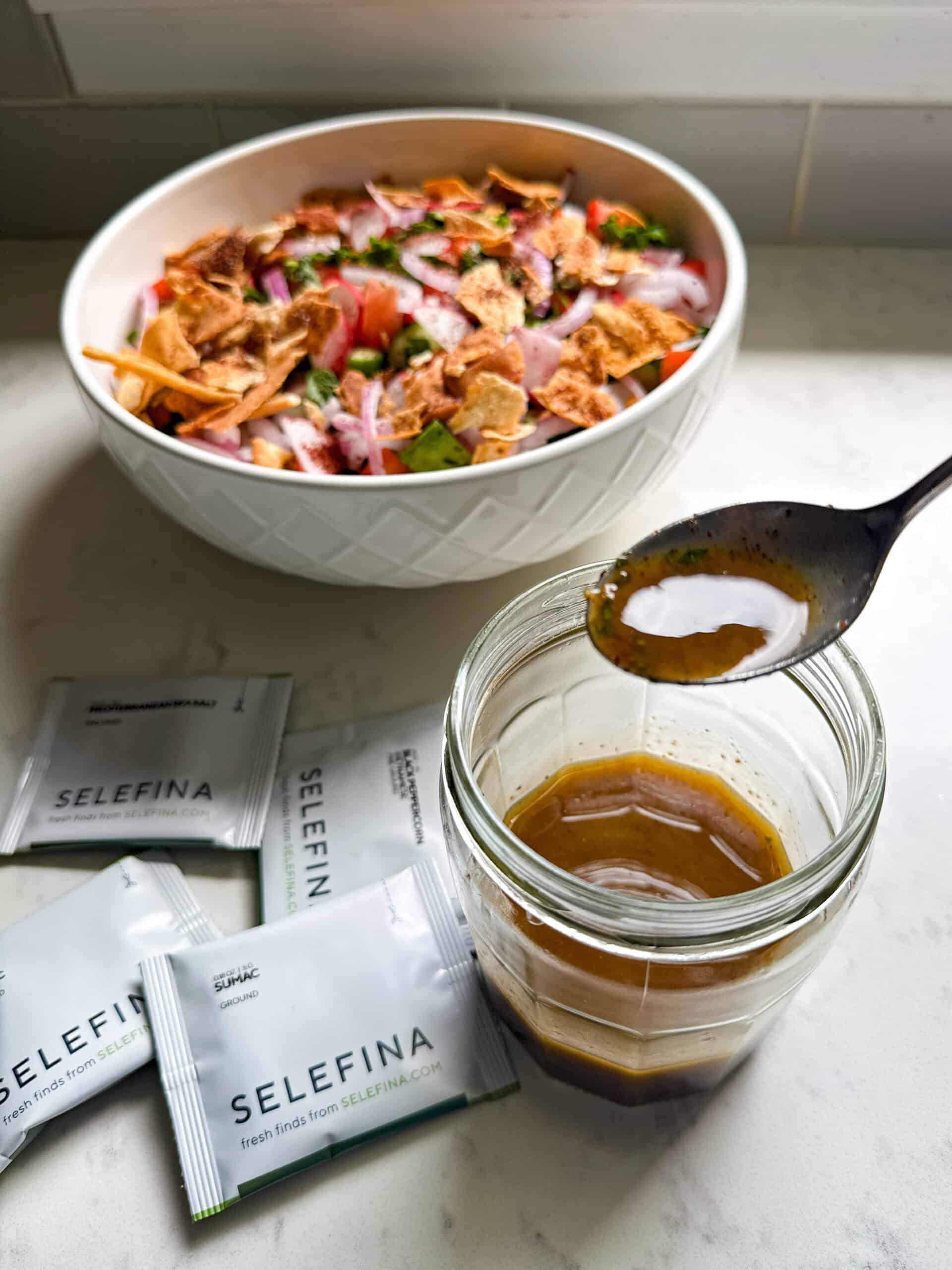
- Fresh lemon juice
- Olive oil
- Pomegranate molasses
- Sumac
- Fresh mint
- Garlic
- Salt
- Pepper
Exact measurements are below in the recipe card, but the dressing is really where the authenticity lives, so don't skip the sumac or the pomegranate molasses.
How to Make Fattoush Salad (4 Simple Steps)
This salad comes together quickly, and the two components, dressing and pita, can even be made ahead of time.
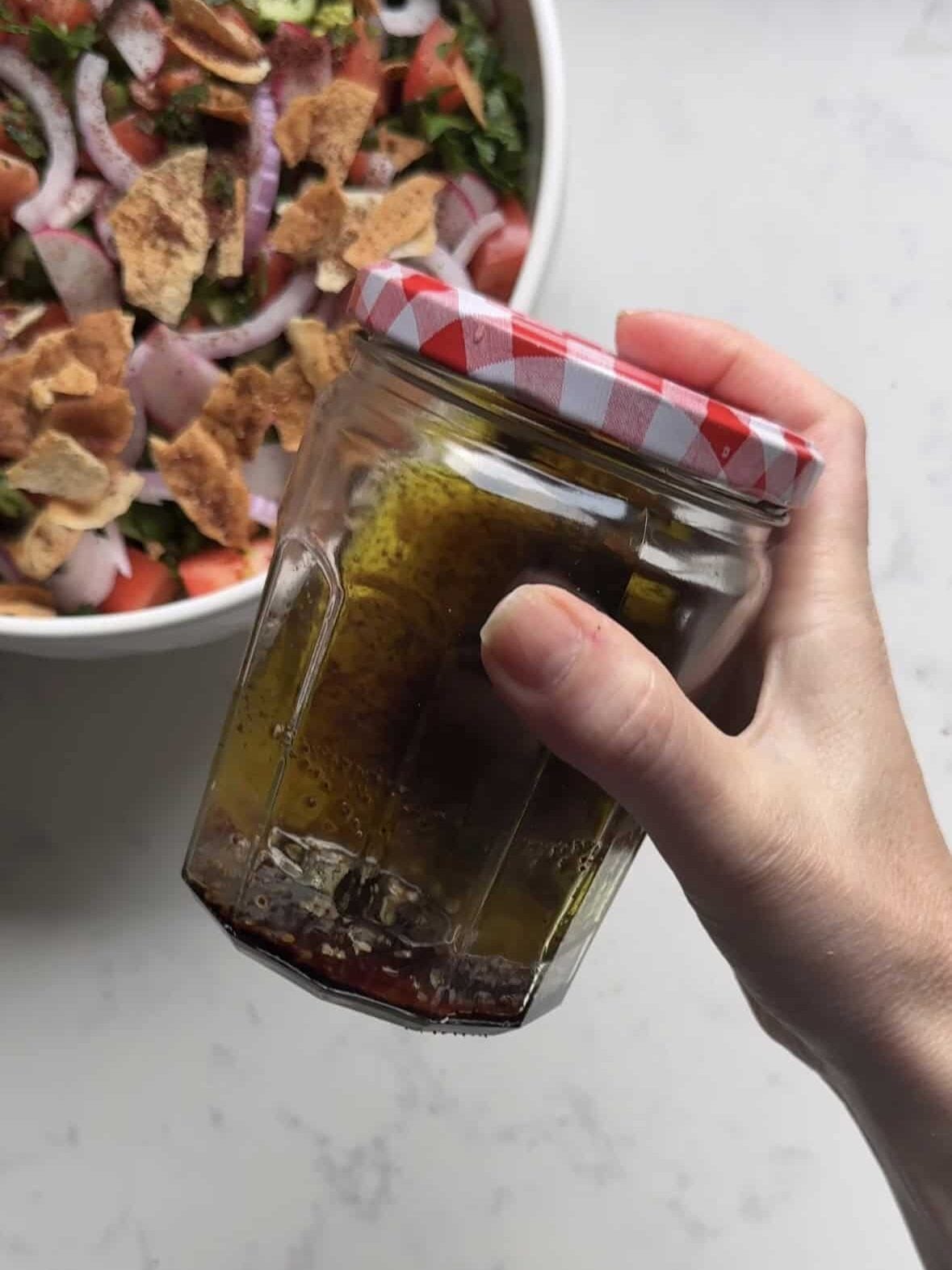
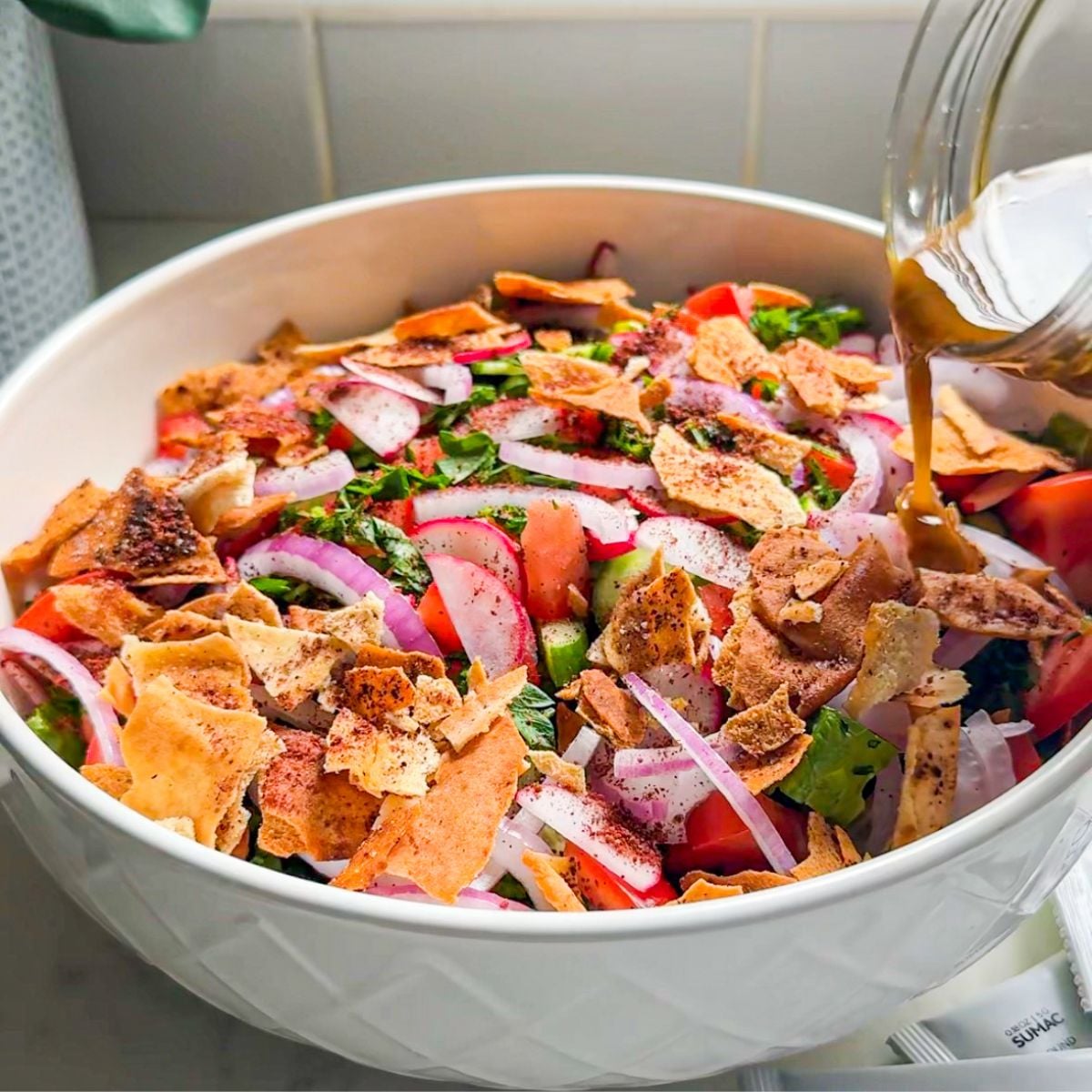
- Step 1: Make the dressing. Combine the lemon juice, olive oil, pomegranate molasses, sumac, fresh mint, garlic, salt, and pepper in a mason jar. Seal tightly and shake until fully emulsified.
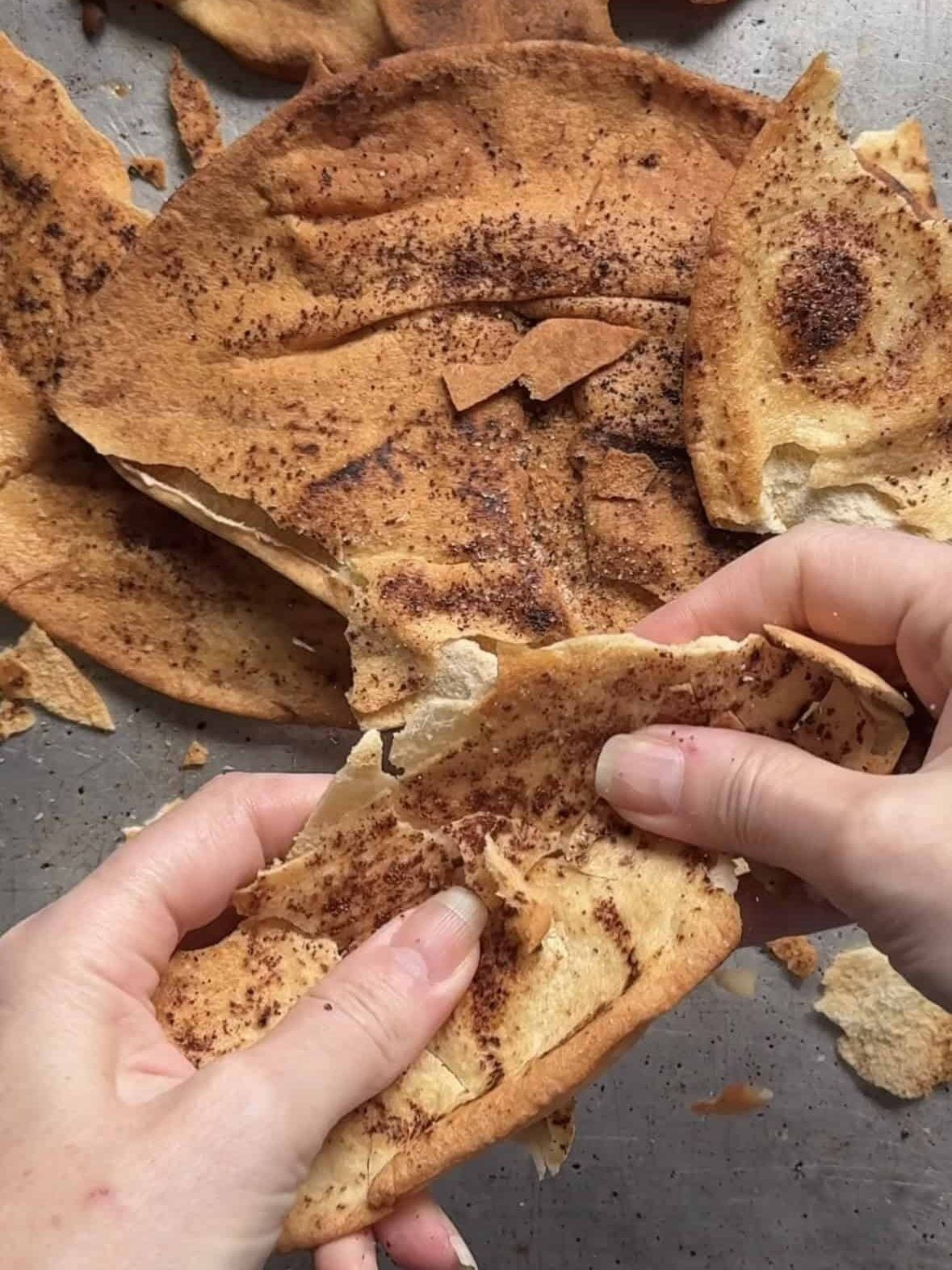
- Step 2: Toast the pita. Spray both sides of flat pita bread with oil spray, season with salt and sumac, and bake until golden and crisp. Break into pieces once cooled.
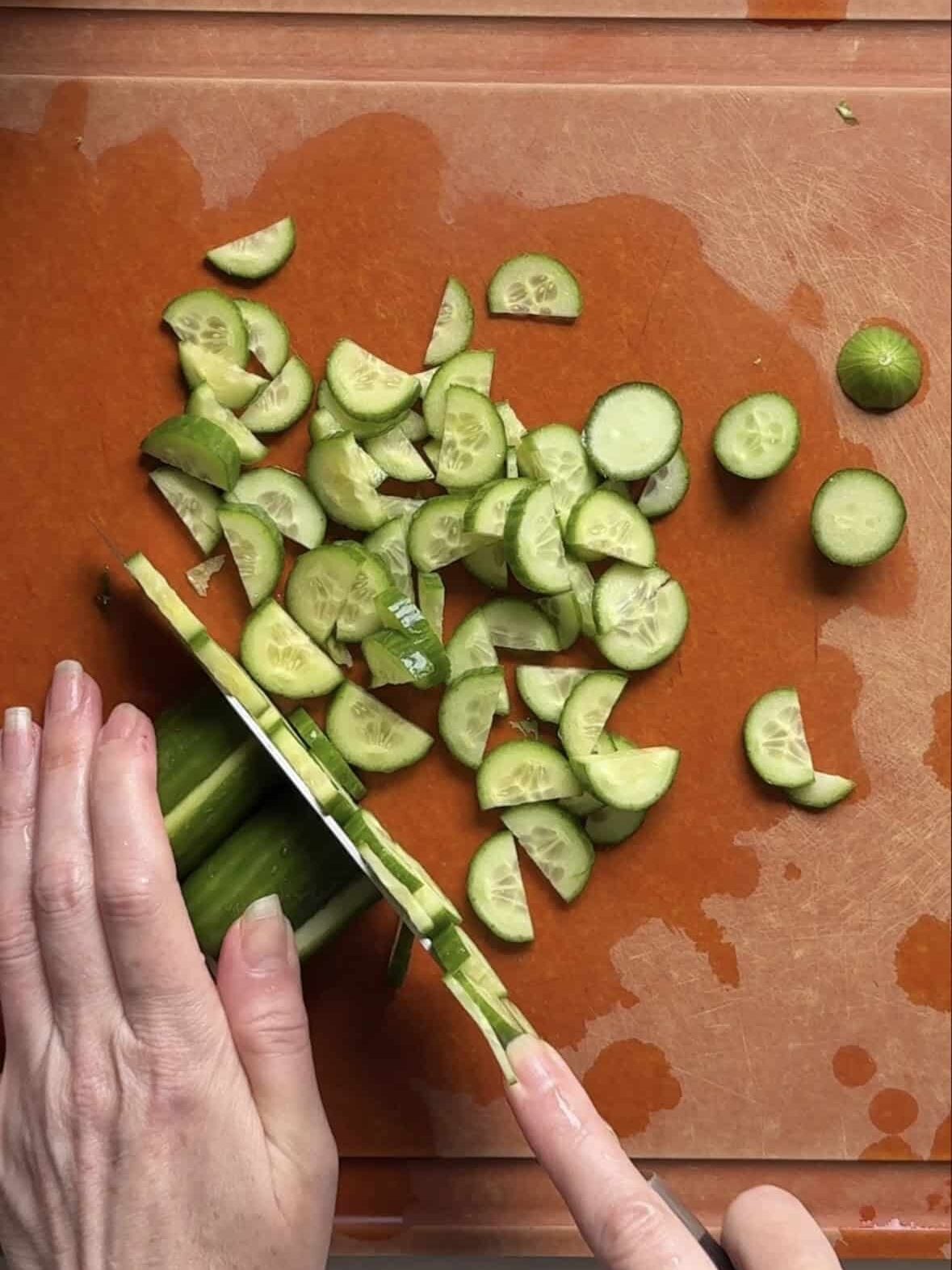
- Step 3: Prep the vegetables. Chop the romaine, dice the cucumbers and tomatoes, slice the radishes, chop the parsley, and slice the red onion. Combine everything in a large salad bowl.
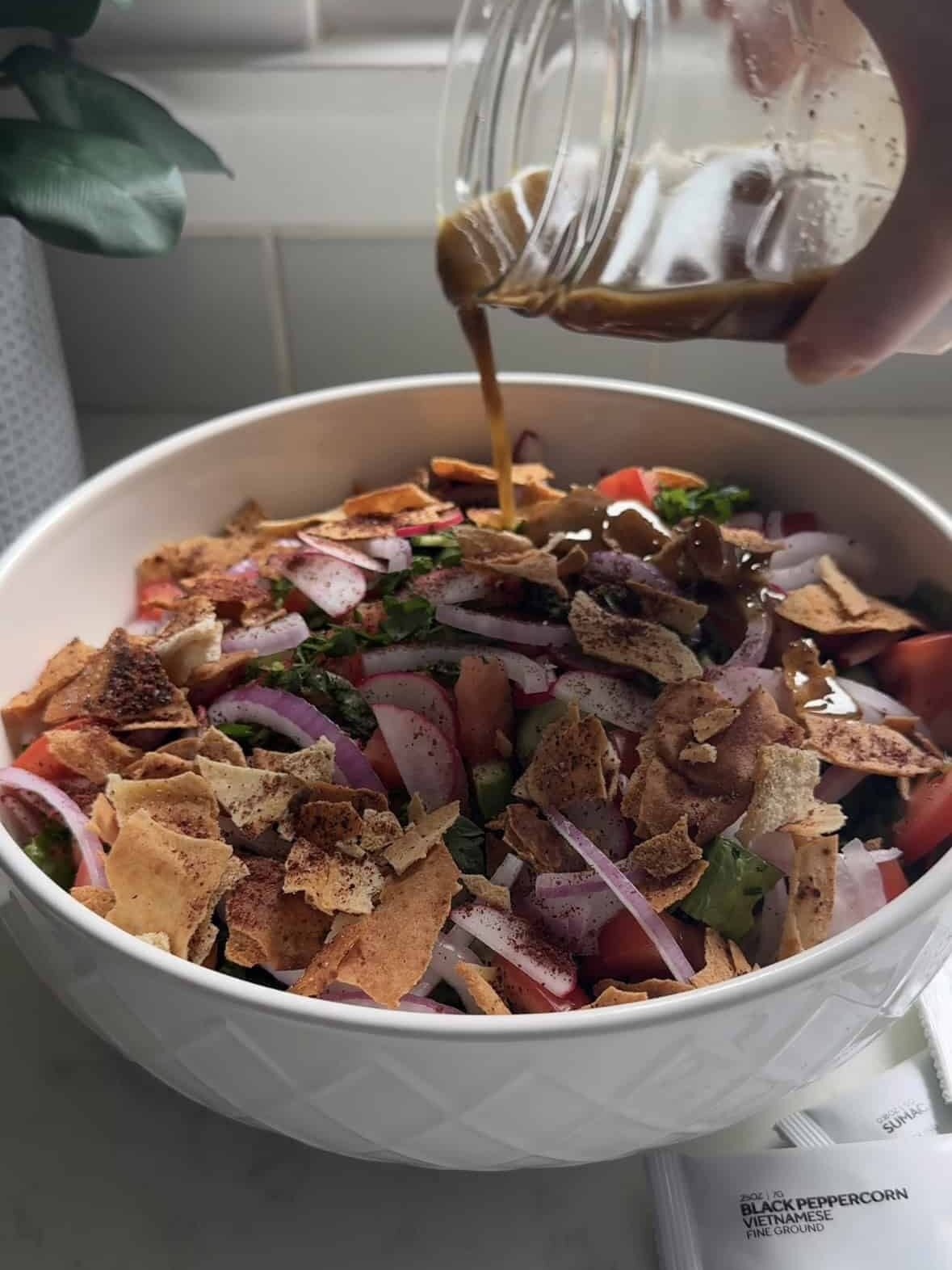
- Step 4: Dress and top. Pour the dressing over the salad immediately before serving and toss gently to coat. Top with the toasted pita and an extra sprinkle of sumac, then serve right away.
Tips and Notes
Add the pita at the absolute last moment before serving. The second it touches the dressing it begins to soften, and fattoush waits for no one. The dressing itself keeps beautifully in the refrigerator for up to 5 days in a sealed jar, just give it a good shake before using since the ingredients will naturally separate.
Substitutions
No Persian cucumbers on hand, English cucumbers work as a close substitute. If you cannot find fresh mint, a smaller amount of dried mint will work in the dressing, though fresh brings a brighter flavor. Romaine is traditional here, but iceberg lettuce is a fine substitute if that is what you have. If you cannot find pomegranate molasses, I also have an Easy Fattoush-Style Salad Dressing (No Pomegranate Molasses) on the blog that uses pantry staples instead, a great option for a quicker, more accessible version of this same flavor.
Variations
For a heartier, main-dish version of this spring fattoush salad, add grilled chicken, salmon, or chickpeas on top. Some regional variations add crumbled feta for a salty, creamy contrast, which is worth trying if you want to move away from a strictly vegan fattoush. If pita is hard to find, pita chips or even torn flatbread work in its place, though nothing quite replaces pita toasted fresh in olive oil.
Equipment
A glass jar with a tight lid, a mason jar works perfectly, is really all you need to mix the dressing. Shaking it in a sealed jar is the easiest way to get a fully emulsified dressing without any special tools.
Storage
The dressing stores in the refrigerator for up to 5 days in a sealed jar. Do not store the dressed salad, since the pita and lettuce will soften quickly once combined. Keep all of the components, the chopped vegetables, the dressing, and the toasted pita, separate and assemble everything fresh right before serving.
How to Serve It
Fattoush is best served as part of a larger spread, alongside hummus, warm pita, and grilled kabobs for a full mezze style meal. It also works wonderfully on its own as a light lunch, especially in the spring and summer months when the vegetables are at their best. This is one of those dishes that shows up at nearly every Lebanese gathering I have ever been to here in metro Detroit, and it earns its spot every time.
Frequently Asked Questions
Yes, fattoush is a vegetable-forward, plant-based salad dressed in olive oil, lemon juice, and pomegranate molasses rather than anything creamy or processed, making it a genuinely nutritious option.
The toasted pita and the sumac and pomegranate molasses dressing are what set fattoush apart. Without those two elements, it is really just a chopped vegetable salad rather than an authentic fattoush.
The dressing and toasted pita can both be made ahead and stored separately. The vegetables can also be chopped in advance, but everything should only be combined and tossed with the dressing right before serving.
Yes, this fattoush salad recipe is naturally vegan as written, with no dairy, eggs, or meat in either the salad or the dressing.
Pomegranate molasses is a thick, tangy-sweet syrup made from reduced pomegranate juice. It is available at most Middle Eastern grocery stores and increasingly in the international aisle of larger grocery chains.
Other Recipes You Might Enjoy
Looking for other recipes like this? Try these:

Main Dishes
These are my favorite dishes to serve with Fattoush Salad:

Authentic Lebanese Fattoush Salad
Equipment
- Glass Jar with lid i.e. mason jar
- Bowl for the salad
- Knife for cutting the vegetables
Ingredients
For the dressing:
- ½ cup fresh lemon juice
- ½ cup extra virgin olive oil
- 2 tablespoons pomegranate molasses
- 1 ½ teaspoons sumac plus more for finishing
- 1 teaspoon fresh mint
- 1 clove garlic minced
- ½ teaspoon salt
- ½ teaspoon black pepper
For the salad:
- 1 head romaine lettuce chopped
- 2 Persian cucumbers diced
- 2 Roma tomatoes diced
- 4 radishes thinly sliced
- ½ bunch fresh parsley finely chopped
- ½ red onion sliced
- 2 pieces pita bread torn and toasted in olive oil
Instructions
- Add the lemon juice, olive oil, pomegranate molasses, sumac, fresh mint, garlic, salt, and pepper to a mason jar. Seal tightly and shake until fully emulsified.
- Spray both sides of the flat pita bread with oil spray, and season with salt and sumac. Bake at 400°F for 5 to 7 minutes. Break into pieces after baking.
- Chop the romaine, dice the cucumbers and tomatoes, slice the radishes, chop the parsley, and slice the red onion. Combine in a large salad bowl.
- Pour the dressing over the salad immediately before serving. Toss gently to coat.
- Top with the toasted pita and an extra sprinkle of sumac. Serve immediately.

Comments
No Comments