

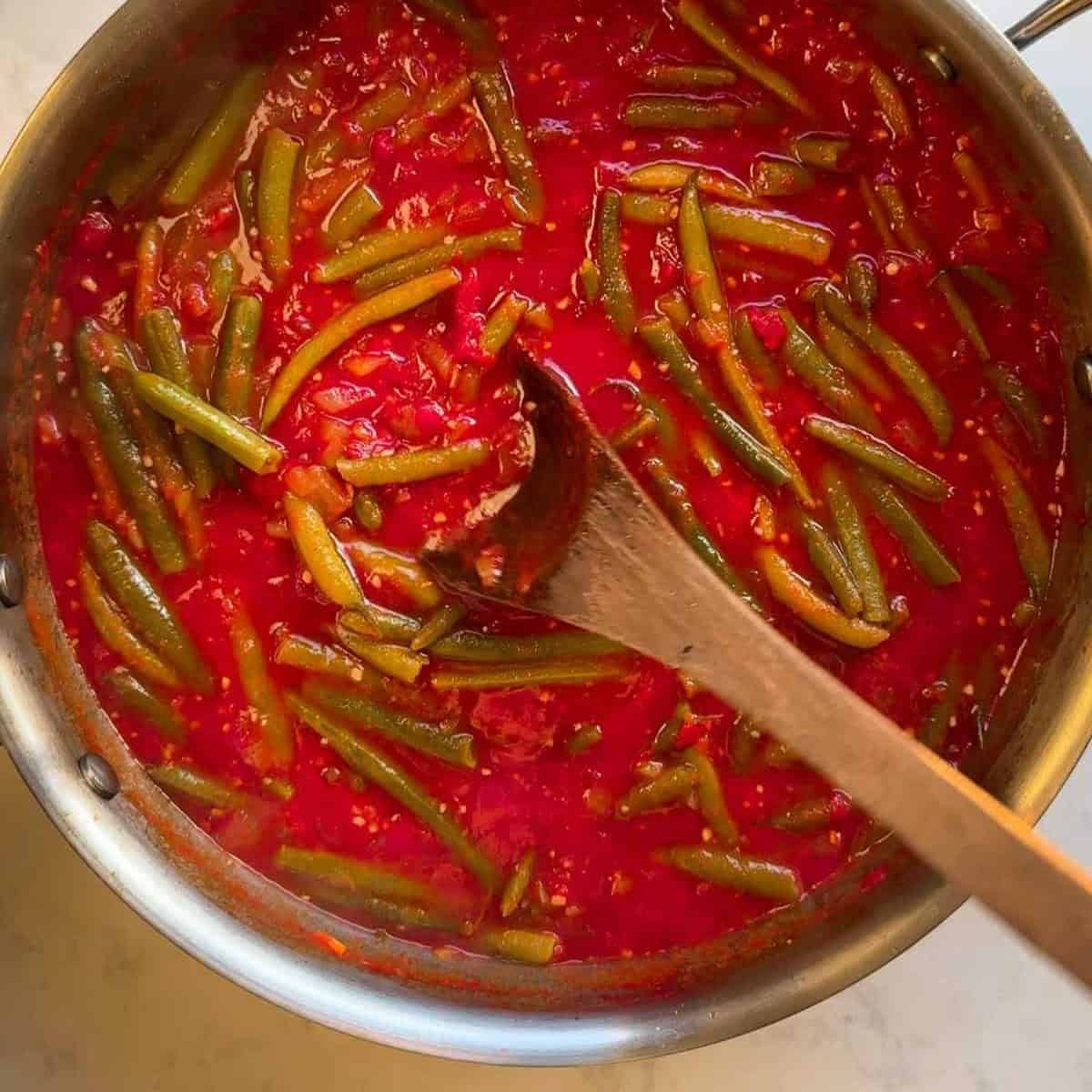
Quick answer: These vegetarian Armenian green beans are green beans and tomatoes braised with onion, garlic and pepper paste until the beans are tender and coated in a silky tomato sauce. It takes about an hour, but only 10 minutes of it is hands on. Serve them over bulgur or rice pilaf with a spoonful of labneh, or next to your holiday turkey or ham. They taste even better the next day, so you can make them ahead.
If you are looking for a green bean side dish that is not another casserole, this is it. Armenian green beans are simple, budget friendly and so comforting. A handful of pantry ingredients turns a pound or two of green beans into stewed green beans in tomato sauce that you will want to eat straight from the pot.
This version is vegetarian, so it works as a side for Thanksgiving, Christmas or any family dinner, and it is easy to double for a crowd. And if you love it, stay tuned, because a lamb or beef version is coming next.
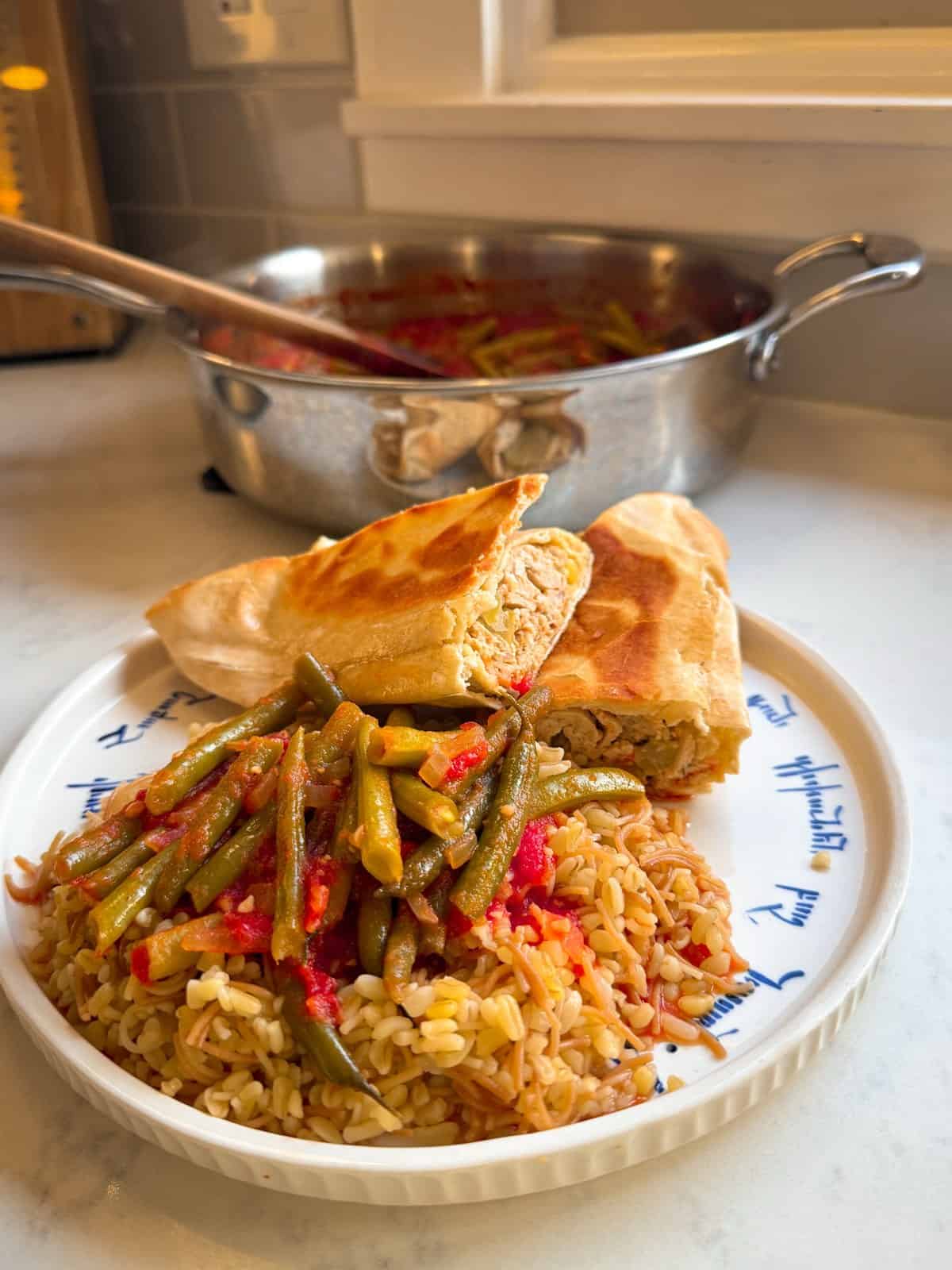
Why I Love Armenian Green Beans for the Holidays
Green beans always remind me of my mom. It seems like she was always making them for us. Our neighbor had green beans growing along our fence, and she never minded when we picked them. Year after year, my mom and I would go out and pick fresh green beans together.
Now when I make these, I sometimes wonder: do I really love this food, or is it the memory it brings back? Maybe it's both.
Holiday tables are full of rich, heavy dishes. These green beans bring something bright and savory to the plate, and they ask almost nothing of you on a busy day. You can make them the day before, warm them up while everyone arrives, or serve them right at room temperature.
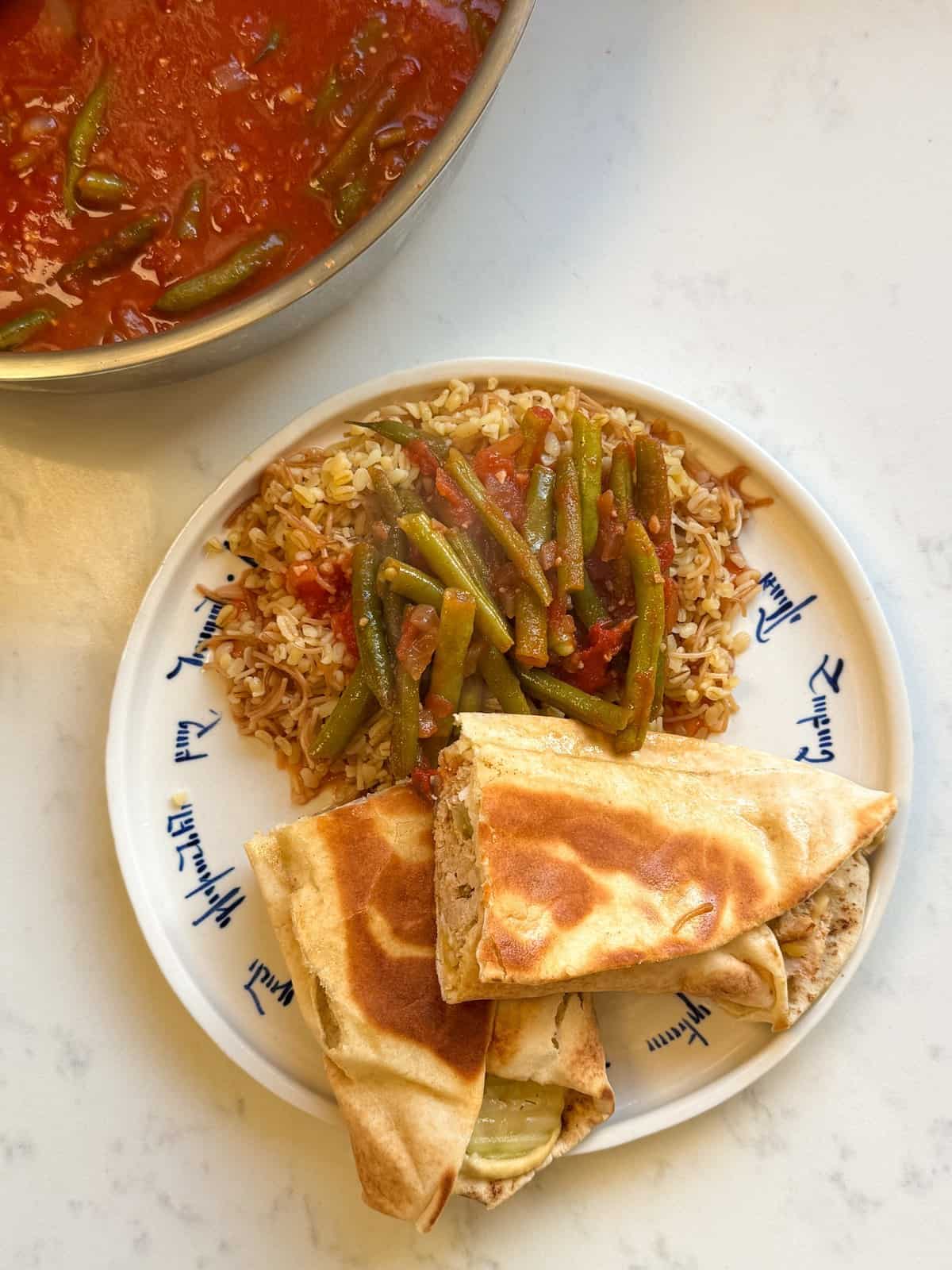
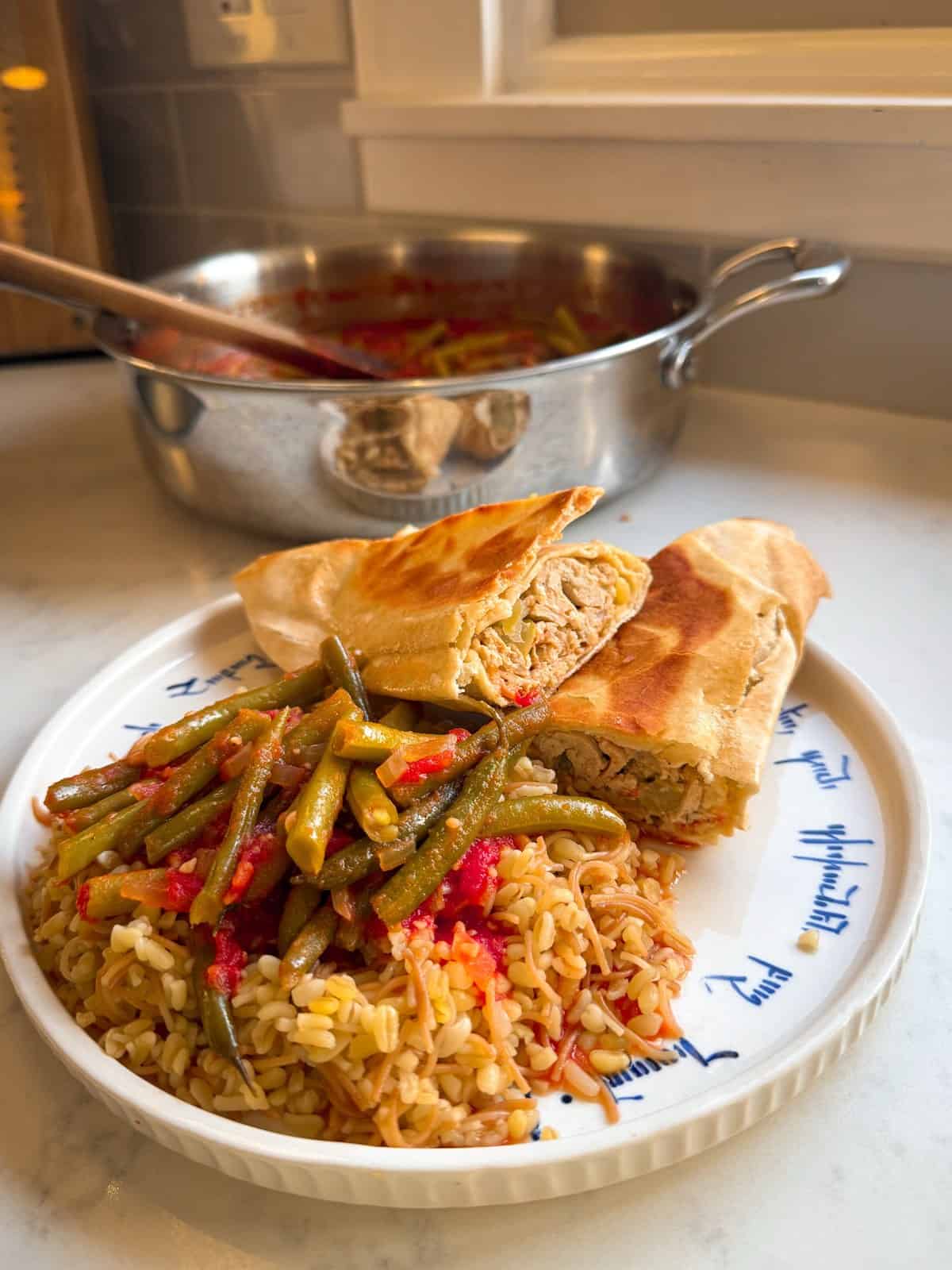
My favorite way to eat them is spooned over a pile of pilaf, so all that tomato sauce soaks into the grains. Whether you use my grandmother's bulgur pilaf or fluffy Armenian rice pilaf, it turns a simple side into a meal.
A Little History: What Is Ganach Lupia?
In my family, we just called these Armenian green beans. In Armenian, ganach means green and lupia means bean, so ganach lupia simply means green beans. Many Armenian families from Syria, Lebanon and Turkey call it fasulia (or fassoulia, fasolia), from the Arabic and Turkish word for bean. Braised green beans with tomatoes are loved all around the Mediterranean, from Greek green beans (fasolakia) to Lebanese green beans (loubieh bi zeit). Every culture has its own version of these Mediterranean green beans, and this is ours.
In many Armenian homes, the beans are cooked with lamb or beef and served over pilaf with a spoonful of yogurt for a hearty dinner. The vegetarian version is just as common as a side dish, and it is the one I am sharing today.
More Armenian Recipes to Try
Serve these with Armenian bulgur pilaf or Armenian rice pilaf, add tourshi (Armenian pickled vegetables) to the table, and find more ideas in my Armenian Thanksgiving recipes roundup.
Jump to:
- Why I Love Armenian Green Beans for the Holidays
- More Armenian Recipes to Try
- Why You'll Love These Armenian Green Beans
- Ingredients for Vegetarian Armenian Green Beans and Tomatoes
- How to Make Armenian Green Beans and Tomatoes in 4 Simple Steps
- Things I Learned While Making These Armenian Green Beans
- Armenian Green Bean Variations
- How to Store, Freeze and Reheat Armenian Green Beans
- Armenian Green Beans FAQ
- What to Serve With Armenian Green Beans
- Did You Love This Recipe?
- Vegetarian Armenian Green Beans (Ganach Lupia)
Why You'll Love These Armenian Green Beans
- Budget friendly. About $8 for the whole pot.
- Mostly hands off. Just 10 minutes of prep, then the pot does the work.
- Make ahead friendly. They taste even better the next day.
- Vegetarian and vegan green beans. A side dish everyone at the table can eat.
- Frozen beans work. Perfect for busy holiday weeks.
- Holiday ready. A bright, savory break from heavy casseroles.
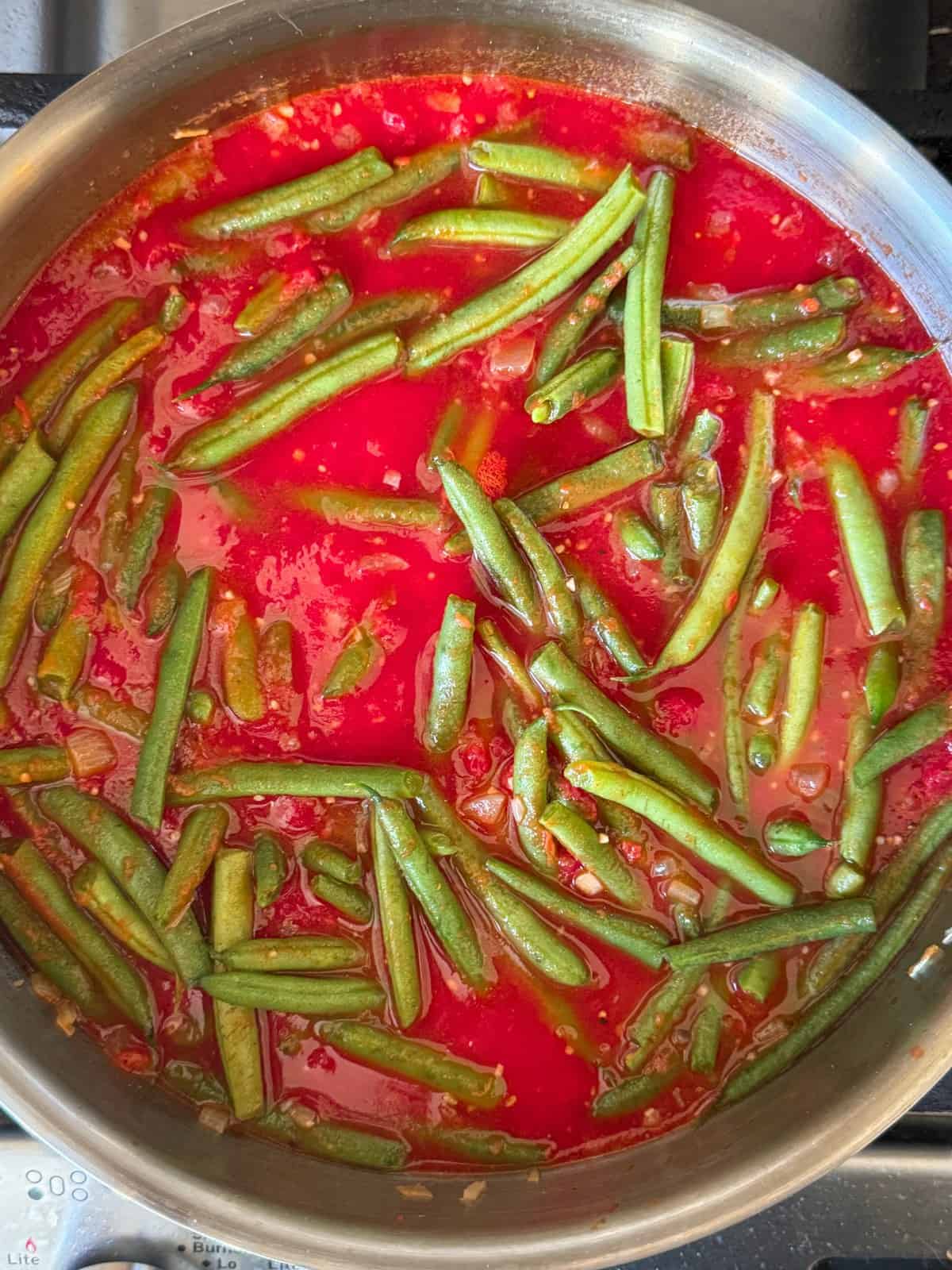
Ingredients for Vegetarian Armenian Green Beans and Tomatoes
- Green beans: Fresh or frozen. Trim the ends and cut fresh beans into 2-inch pieces.
- Crushed tomatoes: They cook into a silky sauce that coats every bean. Diced tomatoes stay chunky and watery.
- Pepper paste: Armenian or Turkish red pepper paste adds a sweet, savory depth. No pepper paste? Use 2 tablespoons of tomato paste total.
- Tomato paste: Deepens the tomato flavor.
- Sweet onion and garlic: The savory base.
- Olive oil: Just 2 tablespoons to cook the onion and enrich the sauce.
- Salt, black pepper and allspice: Two dashes of allspice is the classic Armenian touch.
See the recipe card for full ingredients and quantities.
Equipment You'll Need
- Large pot or deep skillet with a lid
- Cutting board and knife
- Wooden spoon
How to Make Armenian Green Beans and Tomatoes in 4 Simple Steps
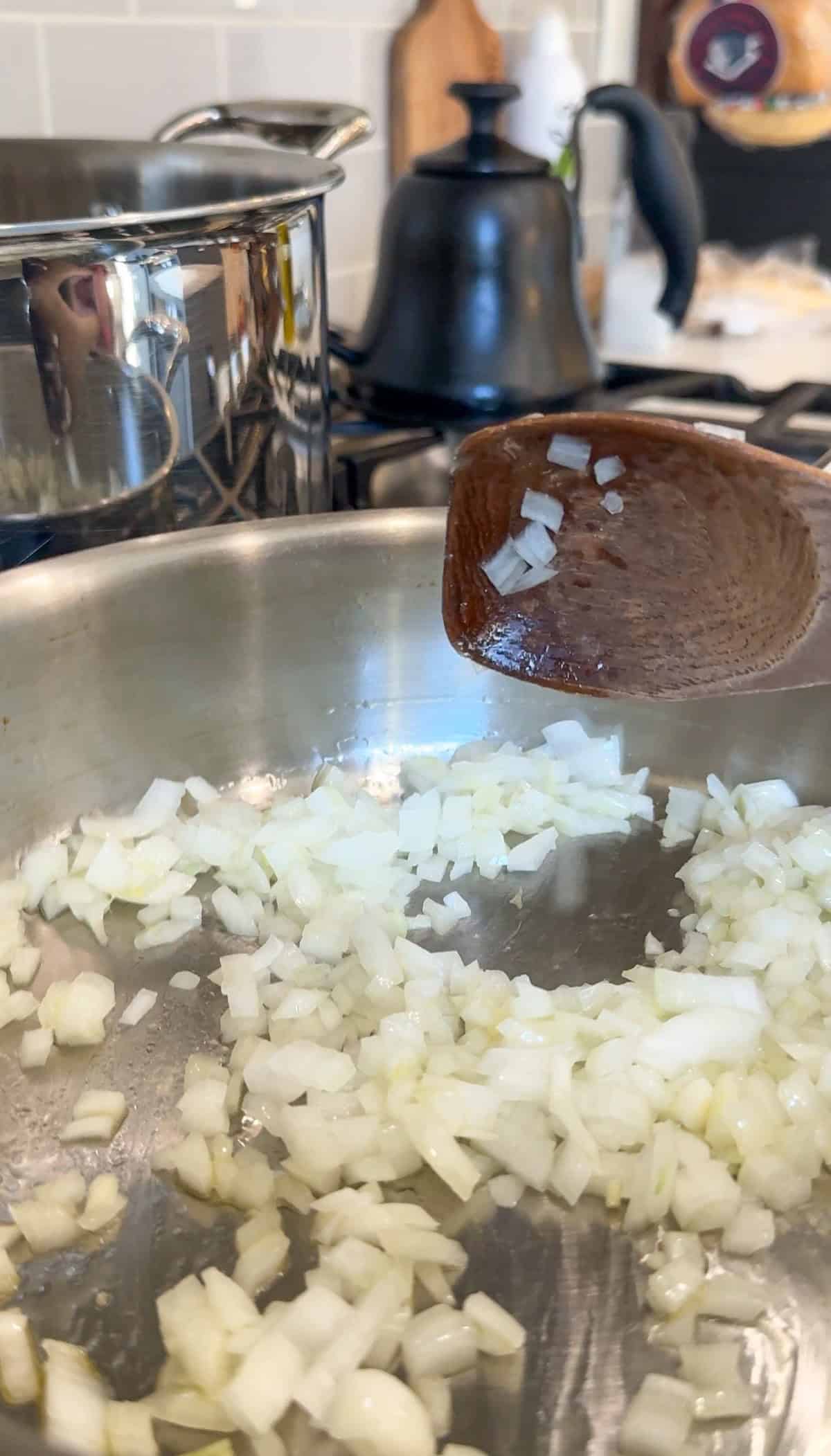
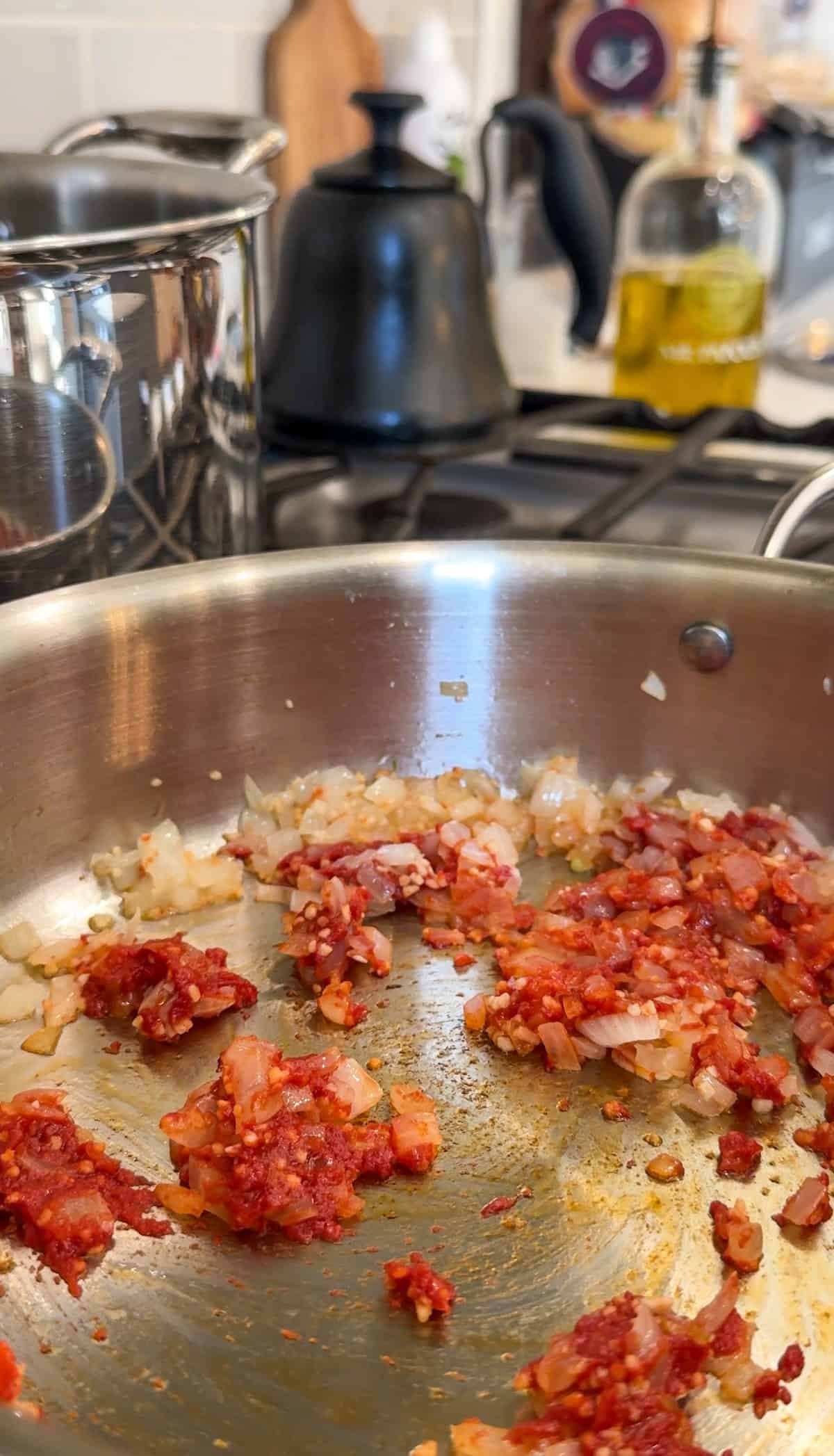
1. Cook the onion and garlic. Soften the onion in olive oil, then add the garlic for a minute.
2. Toast the pastes. Stir in the pepper paste and tomato paste for a minute or two, until they darken a little.
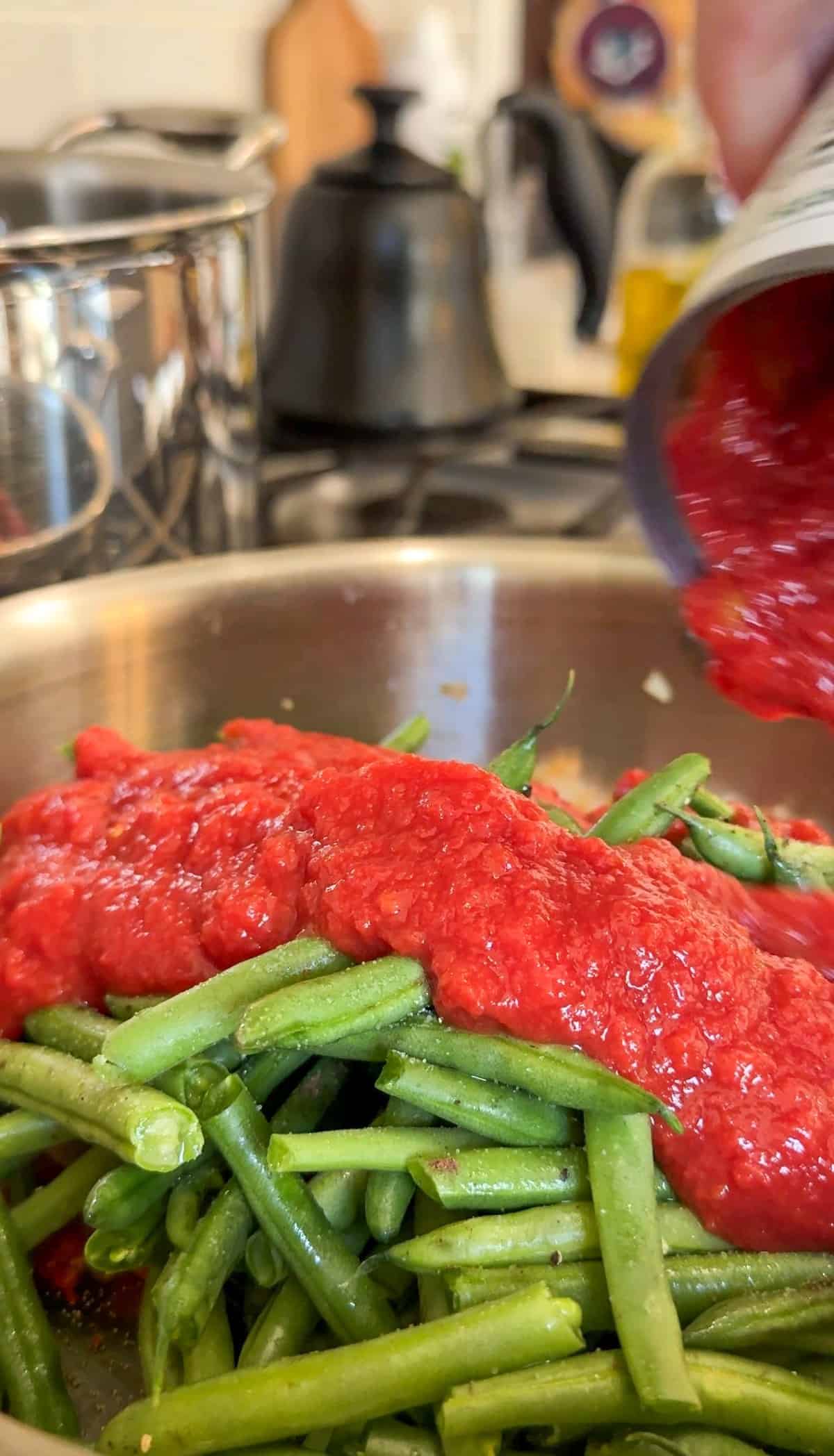
3. Add the beans and simmer. Add the green beans, crushed tomatoes, water and seasonings. Bring to a boil, cover and simmer on low 35 to 45 minutes, until very tender.
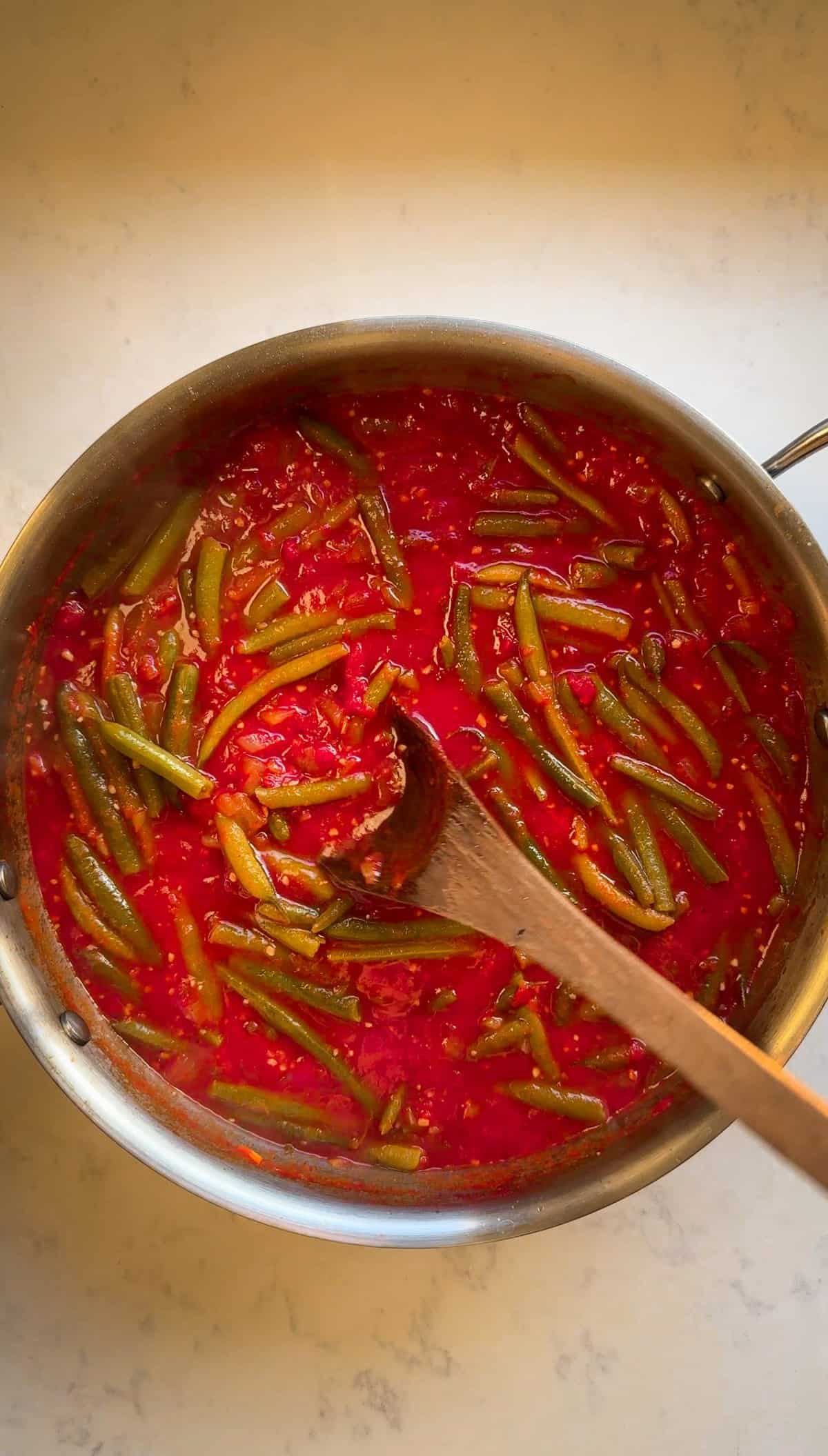
4. Uncover and thicken. Take the lid off for the last 5 to 10 minutes so the sauce thickens and clings to the beans. Serve over pilaf.
Things I Learned While Making These Armenian Green Beans
- Crushed tomatoes are the way to go. For green beans with tomatoes, crushed tomatoes make a smooth sauce that coats the beans instead of a watery, chunky one.
- Toast the pastes. Giving the pepper paste and tomato paste a minute in the hot oil deepens their flavor.
- Soft is the goal. Like most stewed green beans, Armenian style green beans are cooked until very tender, not crisp. Give them the full time.
- Watch the water. If the pot looks dry before the beans are tender, add ¼ to ½ cup more water.
- Uncover at the end. The last 5 to 10 minutes without the lid is what turns the liquid into a sauce.
- Top it with labneh. A spoonful of labneh on top of the warm beans is so good. The cool, tangy cream with the garlicky tomato sauce is the perfect bite.
- Taste before you add more salt. Pepper paste can be salty, so start with 1 teaspoon and adjust at the end.
Armenian Green Bean Variations
- With lamb or beef: The classic main dish version. Recipe coming soon.
- No pepper paste: Use 2 tablespoons of tomato paste total.
- A little heat: Use hot pepper paste or add a pinch of red pepper flakes or Aleppo pepper.
- Frozen green beans: Add them straight from the freezer and simmer 20 to 25 minutes.
How to Store, Freeze and Reheat Armenian Green Beans
- Fridge: Store in an airtight container for up to 4 days.
- Freezer: Freeze cooled beans for up to 3 months. Thaw overnight in the fridge.
- Reheat: Warm gently on the stove with a splash of water, or serve at room temperature.
How Much Do Armenian Green Beans Cost?
About $8 for the whole pot, or about $1.35 per serving (6 servings).
Prices are based on approximate U.S. average grocery prices as of November 2026 and may vary by store and region.
Armenian Green Beans FAQ
Ganach lupia (also called ganach fassoulia) is the Armenian name for green beans braised with onion, garlic and tomato. Ganach means green and lupia means bean. Families make it with lamb or beef as a main dish, or vegetarian as a side.
Fasulia (also spelled fasolia or fassoulia) is what many Armenian, Lebanese and Syrian families call green beans cooked in tomato sauce. It is often made with lamb or beef. This vegetarian version is the same dish without the meat, and Armenians also call it ganach lupia.
Yes. There is no need to thaw them. Add them straight to the pot and simmer 20 to 25 minutes instead of 35 to 45.
Use 2 tablespoons of tomato paste instead of 1 tablespoon pepper paste plus 1 tablespoon tomato paste. You will lose a little of the sweet pepper flavor, but it is still delicious.
Yes, and they taste even better the next day. Make them up to 4 days ahead, refrigerate, and reheat gently or serve at room temperature.
Yes. This version uses olive oil and no meat or dairy, so it is vegetarian and vegan. Just skip the yogurt on top or use a dairy free yogurt.
They are classically served over bulgur pilaf or rice pilaf. My favorite way is with a spoonful of labneh on top, and plain yogurt works too. They also make a great holiday side next to turkey, ham or roast chicken.
What to Serve With Armenian Green Beans
- Armenian bulgur pilaf
- Armenian rice pilaf
- Labneh. A cool, creamy spoonful of labneh on top is amazing with the warm, garlicky tomato sauce. Plain Greek yogurt works too.
- Roast turkey, ham or chicken for the holidays
- Tourshi (Armenian pickled vegetables)




Did You Love This Recipe?
Please leave a 5-star rating and tell me in the comments whether you served these over bulgur or rice. It helps other families find the recipe, and I read every single one.
Want to Save This Recipe?
Enter your email and I'll send it straight to your inbox.
Vegetarian Armenian Green Beans (Ganach Lupia)
Ingredients
- 2 tablespoons olive oil
- 1 small sweet onion diced, or ½ large
- 1 tablespoon minced garlic
- 1 tablespoon pepper paste or use 2 tablespoons tomato paste total
- 1 tablespoon tomato paste
- 1½ to 2 pounds green beans trimmed and cut into 2-inch pieces, fresh or frozen
- 1 can (14.5 ounces) crushed tomatoes
- 1½ cups water plus ¼ to ½ cup more if needed
- 1 teaspoon salt plus more to taste
- ½ teaspoon black pepper
- 2 dashes allspice
Instructions
- Cook the onion. Heat the olive oil in a large pot or deep skillet over medium heat. Add the onion and cook about 5 minutes, until soft and translucent.
- Add the garlic and pastes. Stir in the garlic and cook 1 minute. Add the pepper paste and tomato paste and stir 1 to 2 minutes, until they darken a little.
- Add everything else. Add the green beans, crushed tomatoes, water, salt, black pepper and allspice. Stir and bring to a boil.
- Simmer covered. Cover, reduce the heat to low and simmer 35 to 45 minutes, stirring once or twice, until the beans are very tender. If the pot looks dry before the beans are tender, add ¼ to ½ cup more water. Using frozen green beans? Simmer 20 to 25 minutes.
- Uncover and thicken. Uncover for the last 5 to 10 minutes so the sauce thickens and coats the beans. Taste and add more salt if needed.
- Serve. Serve warm or at room temperature over bulgur pilaf or rice pilaf, topped with a spoonful of labneh.